Occasional speciality-soup shoppers
A distinctive recipe or a larger tin may suit a planned lunch or starter. Check the portions and label rather than treating collection branding as a guide to nutrition.


Choose a speciality tin when its recipe and size suit an occasional pantry meal, rather than paying for premium wording alone. For regular bowls, compare recipes with identifiable meat, beans or vegetables; choose condensed soup when you also want an ingredient for cooking. Before stocking several tins, check each label for portions, salt, allergens, preparation and storage after opening.
A distinctive recipe or a larger tin may suit a planned lunch or starter. Check the portions and label rather than treating collection branding as a guide to nutrition.
Look at the actual ingredients if you want chicken, beans, vegetables or barley in the bowl, then check whether the serving count and allergen declaration suit the household.
Condensed soup can serve as soup after preparation or as a recipe ingredient. Check the dilution directions before assuming it works like a ready-to-heat tin.
Decide what each tin is for, then compare the recipe, preparation directions and label at the portion you expect to use.
| Priority | What to check | Your needs |
|---|---|---|
| Speciality recipe | Check the named ingredients, tin size and stated servings. Marks & Spencer lists speciality M&S Collection soups including a 560 g Lobster Bisque; the range name does not establish how a soup will taste. | I want a distinctive soup for an occasional lunch or starter, not simply a different label on an everyday tin. |
| Bowl contents | Compare the ingredient list and serving count. Marks & Spencer lists chicken, vegetables and pearl barley in one chunky soup, and three bean varieties in its Mexican-style chilli and bean soup. | For a ready-to-heat bowl, I would rather choose a recipe with the solid ingredients I want than assume every smooth soup serves the same purpose. |
| Preparation | Read whether liquid must be added and how the soup is intended to be used. Tesco’s listing for Campbell's Condensed Cream of Tomato directs shoppers to add water or a water-and-milk mixture. | I need a tin I can use in cooking as well as for soup, and I can allow for the preparation it requires. |
| Salt and portions | Compare salt per 100 g and per serving, then check how many servings you would eat. Action on Salt & Sugar’s February 2026 analysis of 481 UK ready-to-eat soups recorded a range of 0.1–1.6 g salt per 100 g. | If soup is a regular cupboard meal, I want to compare the amount I would actually eat, rather than judge salt by a premium or vegetable description. |
| Dietary details | Read the exact tin’s ingredients, allergen statement and dietary labelling. Campbell's lists wheat gluten and milk in its Cream of Chicken soup; Marks & Spencer labels its Mexican-style bean soup vegan but also gives a milk-and-egg allergy warning. | Someone in my household may need an allergen check, even when a flavour name or vegan label initially looks suitable. |
| Storage | Check the unopened storage directions, servings and instructions after opening. Product directions can require refrigeration and use within two days once opened. | I want tins that fit our cupboard and our likely portions. In a 2022 UK canned-goods survey reported by Princes Group with KICR, 64% of respondents who were likely to buy more canned goods cited cupboard storage as a reason; that figure concerns canned goods, not soup specifically. |
Premium positioning says nothing definite about a particular soup’s salt content. In its February 2026 analysis of 481 UK ready-to-eat soups, Action on Salt & Sugar found that 23% exceeded UK salt-reduction targets.
Compare salt per 100 g and per serving on the tins you are considering, separately from flavour and format.
Condensed soup may need added liquid, while a chunky tin and a cooking base serve different plans. Campbell's describes its Cream of Chicken condensed soup as a recipe ingredient; Tesco gives dilution directions for its Cream of Tomato variant.
Decide whether the tin is for a bowl on its own or for cooking, and check its preparation directions.
Recipes and allergy warnings differ even within familiar soup types. Marks & Spencer’s vegan-labelled Mexican-style bean soup has a separate warning concerning milk and egg allergy.
Read the ingredients and allergen statement on the exact current pack, particularly when switching flavours.
Unopened storage directions do not apply after a tin is opened. The Marks & Spencer chicken soup and Tesco’s Campbell's tomato listing both specify refrigeration and use within two days after opening.
Choose a serving size that fits the household, then follow that tin’s directions for unused soup.
These brand examples illustrate different tinned-soup formats; each recipe still needs its own label check.
Marks & Spencer lists speciality M&S Collection soups alongside chunky chicken and bean recipes.
Heinz Big Soup is a chunky-style route. A Joybuy listing for the Lamb & Vegetable 400 g variant names meat, vegetables and barley.
Campbell's sells condensed soups intended for preparation; the brand also describes its Cream of Chicken variant as a recipe companion.
These tins cover speciality-style bowls and meat-, bean-, pea- and corn-based pantry options. Compare their serving and label details against the way you plan to use them.
 No image available
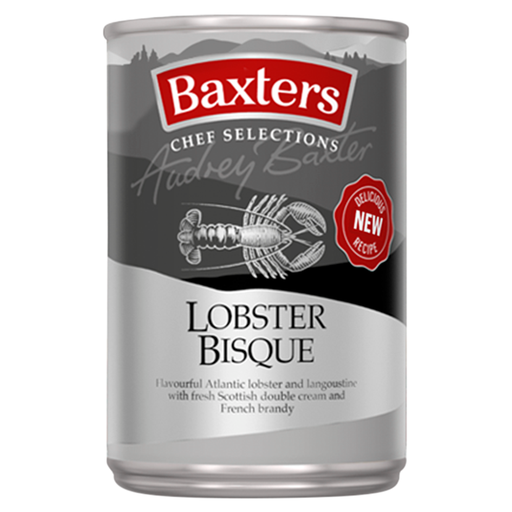
A lobster bisque for a speciality-style pantry bowl. Check the current pack for crustaceans, milk, sulphites and celery if these affect your household, and follow its instructions after opening.
 No image available
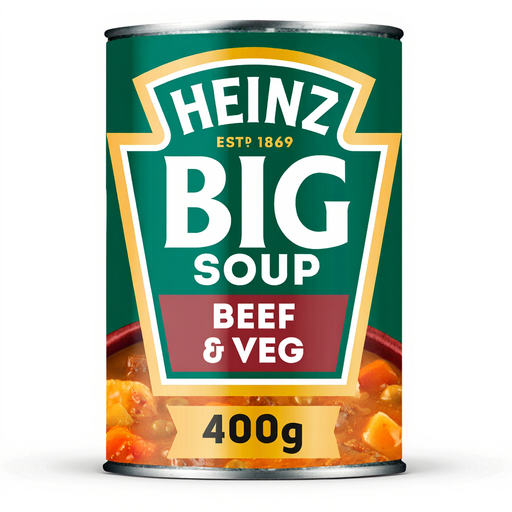
A beef-and-vegetable option for a ready-to-heat pantry bowl. Check the tin’s serving count against the portions you need, and follow its directions for refrigerating leftovers.
 No image available
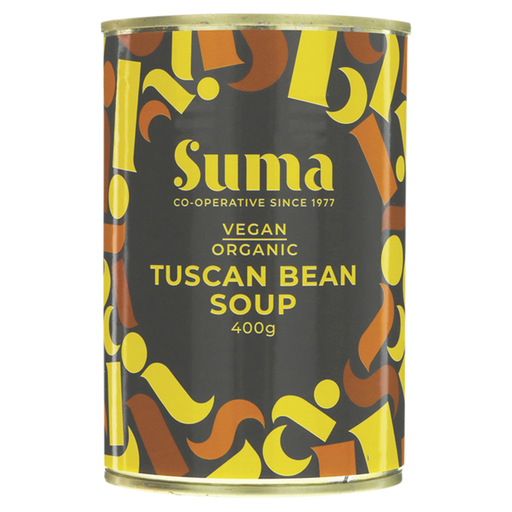
A bean-based choice when you want that ingredient in a pantry soup rather than a speciality bisque. Check the current pack’s celery allergen declaration and its directions for storing leftovers.
 No image available
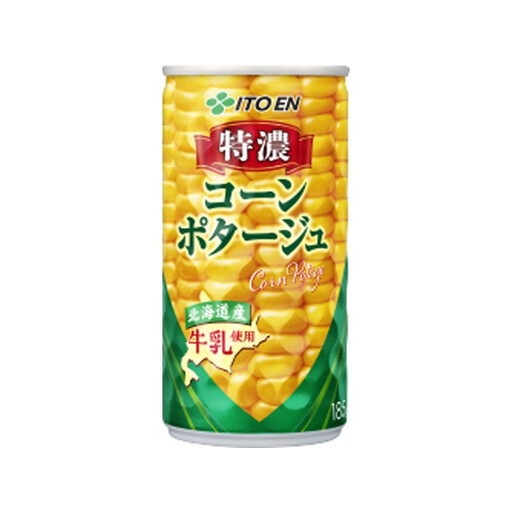
A 185 g corn potage option for the cupboard. Check energy, carbohydrate and sugars on the current pack before comparing nutrition values: the figures listed for this product conflict. Check its ingredients and allergens if avoiding milk or chicken.
 No image available
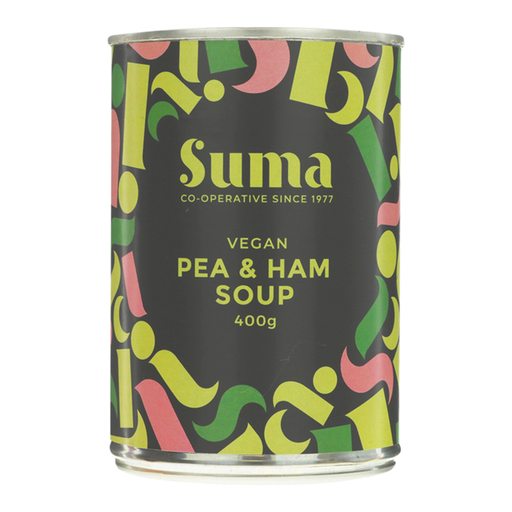
A pea-based alternative for a pantry bowl. Although the name says vegan, the supplied allergen information also lists milk; check the current pack’s ingredients and allergen statement before relying on its dietary label.
Premium positioning does not establish a soup’s salt content. Compare the current packs per 100 g and per serving: Action on Salt & Sugar’s February 2026 analysis of 481 UK ready-to-eat soups recorded values ranging from 0.1 g to 1.6 g salt per 100 g.
Start with the salt per listed serving, then account for how much of the tin you expect to eat. The NHS advises adults to have no more than 6 g salt a day in total, including salt already in food; Tesco’s listing for Campbell's Condensed Cream of Tomato gives two 147.5 g portions and 1.34 g salt per portion.
No: follow the product’s after-opening directions rather than its unopened pantry instructions. The Marks & Spencer chicken soup and Tesco’s Campbell's tomato listing both direct shoppers to refrigerate unused soup and use it within two days.
No. A dietary label and an allergy warning answer different questions: Marks & Spencer labels its Mexican-style chilli and bean soup vegan and vegetarian but says it is not suitable for people with milk or egg allergy. Check the exact current pack’s ingredients and allergen statement.