Shoppers comparing fat content
If you want a cupboard lunch that fits a low-fat approach, compare total fat and saturates on the exact can. A tomato or vegetable flavour does not establish its nutrition values.


Compare calories and total fat per 100g when choosing tinned soup for a low-fat lunch; a low-fat description alone does not tell you how many calories are in your meal. Then check the amount you plan to eat, salt and any dietary or allergen requirements. Condensed soups also need to be assessed as prepared, rather than compared directly with ready-to-heat soups.
If you want a cupboard lunch that fits a low-fat approach, compare total fat and saturates on the exact can. A tomato or vegetable flavour does not establish its nutrition values.
Compare kcal per 100g, then work out what the amount you expect to eat means for your meal. A manufacturer’s stated serving may be smaller than your bowl.
Fat and calorie figures do not establish whether a soup meets vegetarian requirements or avoids an allergen. Check the current can’s ingredients and allergen declaration separately.
Start with per-100g figures for a like-for-like comparison, then use the pack size and intended portion to assess the meal you will actually have.
| Priority | What to check | Your needs |
|---|---|---|
| Total fat | Compare total fat per 100g on the nutrition table. Read saturates separately; do not infer either figure from the flavour or front-of-pack wording. | I’m choosing soup for a low-fat diet, so I want the fat figures for the exact variety I’ll buy. |
| Calories and portion | Compare kcal per 100g, then check the can weight and stated serving size. The NHS notes that labels give values per 100g and sometimes per portion. | A half-can serving may not be my lunch. I want to assess the amount I’ll eat, including any bread or toppings. |
| Salt | Read salt per 100g and, where given, per serving. Check the figures for your intended portion rather than treating a lower-fat description as a salt assessment. | Even when fat is my starting point, I want to compare salt between the soups on my shortlist. |
| Preparation | Check whether the nutrition figures describe soup as sold or as prepared. Keep condensed cooking soups separate from ready-to-heat soups when comparing a lunch portion. | If I’m heating a can for lunch, I need figures that reflect how I’ll prepare it. |
| Ingredients | Check the current ingredient list, allergen declaration and any stated vegetarian suitability on the exact product. | Milk, wheat, celery or another ingredient may matter to me regardless of the calorie and fat figures. |
Fat, calories and salt are separate label values. A stated serving may also be smaller than the amount you intend to eat.
Compare the per-100g nutrition table first, then check the can size and anything you plan to serve with the soup.
Preparation changes which nutrition figures describe the soup you will eat. For example, Campbell's UK lists 90 kcal and 6.7g fat per 100g for its Condensed Cream of Mushroom Soup as prepared, while Tesco Groceries lists 31 kcal and 0.4g fat per 100g for its Low Fat Tomato Soup.
Check the preparation basis on each label before comparing products.
A soup with less fat can still contribute salt to the meal. Action on Salt reported in its 2026 UK soup survey that 23% of the soups assessed exceeded the Government’s voluntary maximum salt target; that finding does not describe every soup.
Compare salt per 100g and calculate it for the portion you intend to eat.
Soups with similar names can have different allergens, and storage directions for opened soup differ by product.
Read the purchased can’s allergen and storage instructions, including how to refrigerate leftovers and when to use them.
These examples illustrate why the exact variety matters; a figure for one soup does not describe every soup made by that brand.
Tesco Groceries lists Low Fat Tomato Soup and Low Fat Lentil & Vegetable Soup in 400g cans.
ASDA Groceries lists a 400g Cream of Tomato Soup.
Marks & Spencer lists both Chunky Vegetable Soup and Chunky Chicken and Vegetable Soup.
Heinz has vegetable and cream-of-tomato tinned soup varieties in the UK.
Sainsbury's lists a 400g Cream of Tomato Soup.
Campbell's UK includes condensed soups that can be used as cooking ingredients as well as prepared soup.
These Joybuy listings cover chicken, bean, vegetable and sausage varieties in 400g cans. Compare their per-100g figures and ingredients against the lunch you intend to make; the list is not an ordering by calories or fat.
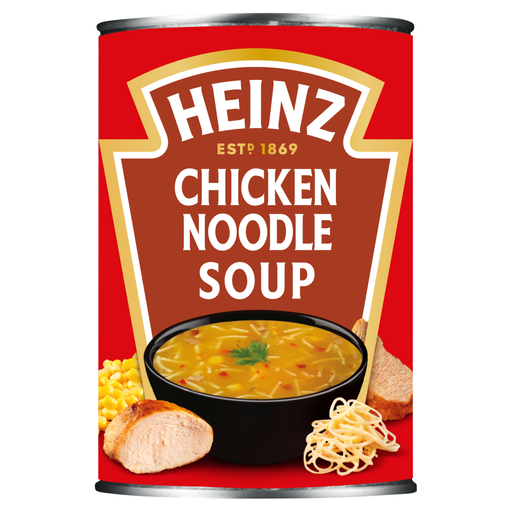 No image available
For a non-vegetarian tinned lunch, the listing gives 32 kcal, 0.3g fat and 0.6g salt per 100g. It contains celery, eggs and wheat; check the current can if these allergens matter to you.
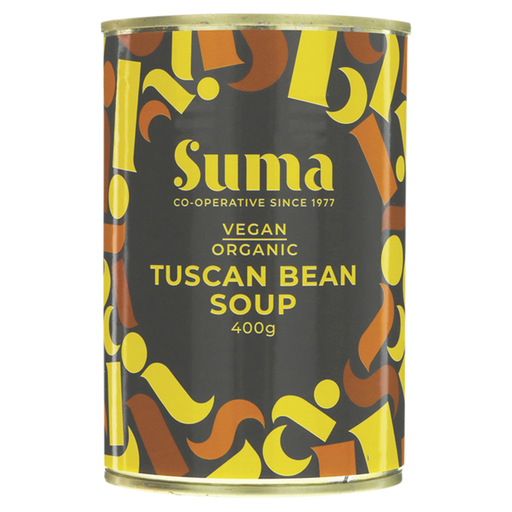 No image available
If you want a bean-and-vegetable soup, the listing gives 47 kcal, 0.8g fat and 0.70g salt per 100g. It contains celery. Check the can weight against the portion you intend to eat.
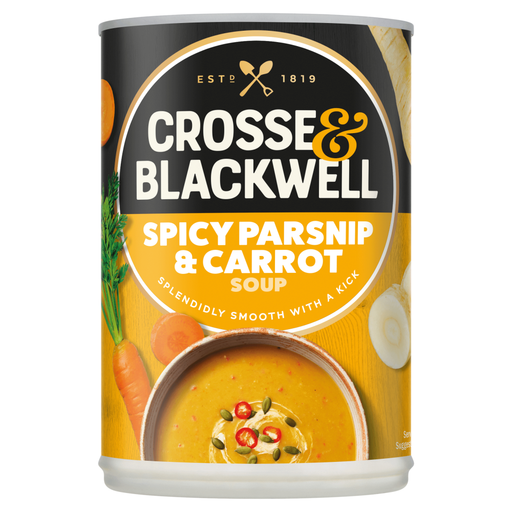 No image available
For a parsnip-and-carrot option, the listing gives 49 kcal, 2.6g fat and 0.50g salt per 100g. It contains celery, milk and wheat; check the current can before choosing it for a dietary requirement.
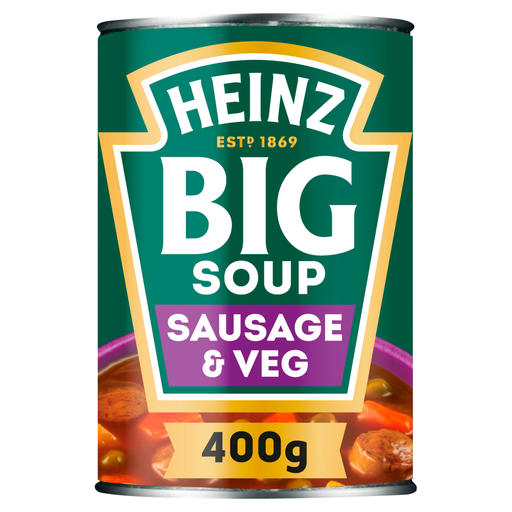 No image available
If you prefer a sausage-and-vegetable soup, check how its listed 69 kcal, 2.5g fat and 0.6g salt per 100g fit the portion you plan to have. It contains wheat.
No. Fat and calories are separate nutrition values; the NHS notes that fat provides 9 kcal per gram, but other ingredients also contribute energy. Compare both figures per 100g, then assess the portion you intend to eat.
Use per 100g to compare different cans, then use the serving information and pack weight to assess your meal. The NHS explains that nutrition labels give per-100g values and may also give values per portion; the stated portion need not be the amount you eat.
Yes. For example, Tesco Groceries lists 0.35g salt per 100g for its Low Fat Tomato Soup and 0.47g per 100g for its Low Fat Lentil & Vegetable Soup. Read salt separately and account for the amount you plan to have.
No. A flavour name does not establish allergen suitability: the product information for several tomato soups in this selection identifies milk, while the Tesco lentil and vegetable variety identifies wheat and celery. Check the ingredient and allergen statement on the can you purchase.
Follow that can’s instructions for transferring, refrigerating and using the leftover soup. Storage periods differ between products, so do not apply one brand’s directions to another can.