Families comparing dinner portions
If several people will share a can, compare kcal per 100g first, then work out how much soup each person will actually have.


For a family dinner, compare soup by kcal per 100g and by the amount each person will eat, rather than choosing by a “low fat” description alone. Tesco Groceries lists 31 kcal per 100g for its Low Fat Tomato Soup and 44 kcal per 100g for its Low Fat Lentil & Vegetable Soup; recipe, salt, dietary needs and any sides also matter when choosing the complete meal.
The useful comparison depends on who will eat the soup and whether it is the main part of dinner or one part of a larger meal.
If several people will share a can, compare kcal per 100g first, then work out how much soup each person will actually have.
Tomato, vegetable and lentil recipes offer different textures. Check the vegetarian statement separately from the ingredients and allergen declaration.
Compare the recipe and labelled protein alongside energy, then account for any bread, cheese or other accompaniment when planning dinner.
Start with the amount going into each bowl, then compare nutrition on the same per-100g basis and check whether the recipe suits everyone at the table.
| Priority | What to check | Your needs |
|---|---|---|
| Energy and portions | Compare kcal per 100g, the can size and the amount to be served. A labelled serving may differ from your bowl. | I want to know what each person will eat, not just the figure for 100g. Tesco Groceries lists its Low Fat Tomato Soup at 31 kcal per 100g and 61 kcal per 200g half-can serving. |
| Salt | Read salt per 100g and for the intended portion; include any salty sides in the meal comparison. | If soup is the centre of dinner, I need to consider its salt as well as its calories. Tesco Groceries lists 0.69g salt for a 200g half-can serving of Low Fat Tomato Soup. |
| Recipe and protein | Compare smooth and chunky recipes, then read protein per 100g without treating it as a measure of how filling a meal will be. | A smooth soup may suit a lighter bowl; for a lentil or chicken-and-vegetable recipe, I would also consider what else is being served. Tesco Groceries lists 2.0g protein per 100g for its Low Fat Lentil & Vegetable Soup, while Marks & Spencer lists 3.5g per 100g for its Chunky Chicken and Vegetable Soup. |
| Dietary suitability | Check the current ingredients, allergen declaration and any vegetarian statement for the particular recipe. | Everyone eating dinner needs a suitable option. A vegetable-based name or vegetarian statement does not answer an allergy question. |
| Storage | Read the can’s instructions for any unused soup and plan how much to open. | If we are saving some for another meal, I need to refrigerate leftovers promptly. GOV.UK advises putting leftovers in the fridge within two hours and eating them within 48 hours or freezing them. |
A low-fat description does not replace the energy and salt figures. Tesco Groceries lists 31 kcal per 100g for Tesco Low Fat Tomato Soup and 47 kcal per 100g for the Heinz Vegetable Soup it sells.
Compare kcal and salt per 100g across cans, then check the figures against the portion you intend to serve.
The soup with the lowest energy figure may not be the recipe or portion your family wants for a main meal. Sides change the meal’s overall energy and salt.
Compare smooth, lentil and chunky recipes, read the labelled protein, and decide on accompaniments as part of the same meal.
Meat-free suitability and allergen suitability are different questions; ingredients vary by recipe.
Check the current pack’s ingredient and allergen information for every can being served.
Leftovers need timely storage. GOV.UK advises refrigerating them within two hours and eating them within 48 hours or freezing them.
Serve the amount needed, follow the product’s storage instructions for the remainder and use the more cautious applicable timeframe.
These particular soups illustrate different recipes and label figures; a brand name alone does not establish the nutrition of another product in its range.
Tesco’s 400g Low Fat Tomato and Low Fat Lentil & Vegetable soups offer two recipes to compare on a per-100g basis.
Heinz has vegetable soup options with different ways of expressing energy on retailer listings.
M&S lists both chunky chicken-and-vegetable and cream-of-tomato soups, giving families a choice of recipe styles.
Tesco Groceries lists Campbell’s condensed mushroom and chicken soups. Condensed soup calls for a different serving comparison from a ready-to-heat soup.
These Joybuy options are Heinz 400g soups for households considering meat-containing or vegetarian recipes for dinner. Compare each current pack with your intended portion before deciding whether it fits a lower-calorie meal.
 No image available
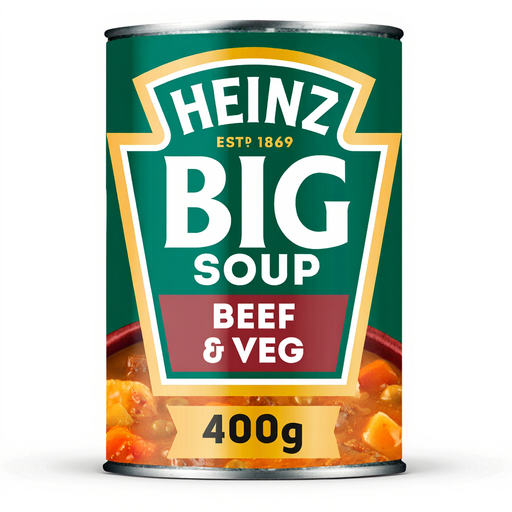
A beef-and-vegetable option when a meat-containing soup suits the dinner plan. The 400g can is not suitable for vegetarian diners; check the current pack’s energy, salt, allergens and portion information for everyone being served.
 No image available
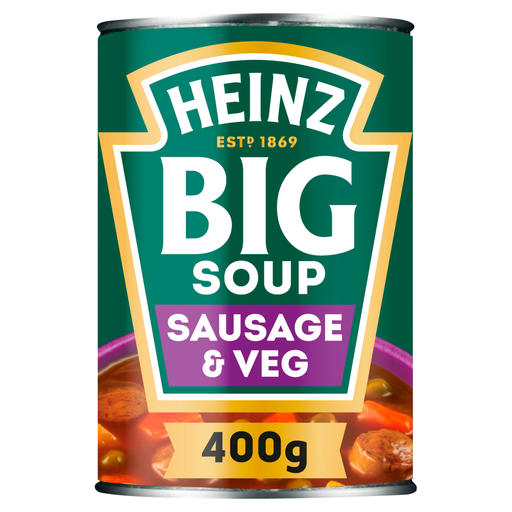
Consider this sausage-and-vegetable recipe if a meat-containing soup is wanted. It contains pork sausage and wheat; check the 400g can’s current nutrition and allergen label against the portion and dietary needs at your table.
 No image available
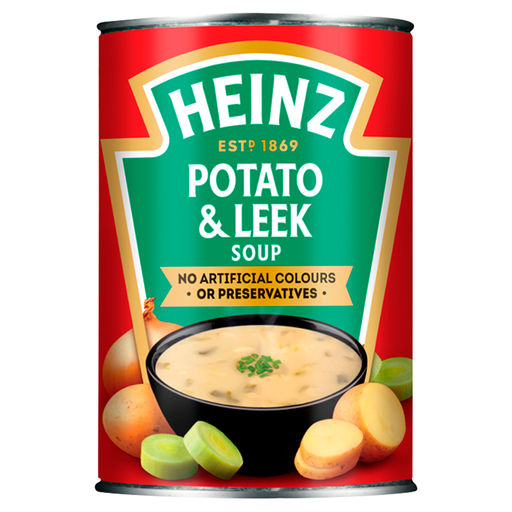
A vegetarian potato-and-leek option for a meat-free dinner. It contains milk, so it is unsuitable for anyone with a milk allergy; compare the current pack’s portion, energy and salt figures with the rest of the meal.
Compare kcal per 100g first, then use the label and your intended bowl size to assess each person’s portion. Tesco Groceries, for example, lists its Low Fat Tomato Soup at 31 kcal per 100g and 61 kcal per 200g half-can serving.
No: read energy and salt separately for each soup. Tesco Groceries lists Tesco Low Fat Tomato Soup at 31 kcal per 100g and Heinz Vegetable Soup, also described as low fat, at 47 kcal per 100g; compare their salt figures and the amounts you will serve as well.
That depends on the portion, recipe and what else is served. If soup is the main dish, compare the labelled protein and planned bowl size, then include any bread, cheese or other sides when assessing the complete meal.
Yes. A vegetarian statement addresses meat-free suitability, not whether the recipe suits someone with an allergy; read the current ingredients and allergen declaration on each can.
Follow the can’s storage instructions and refrigerate unused soup promptly. GOV.UK advises putting leftovers in the fridge within two hours and eating them within 48 hours or freezing them; where instructions differ, follow the more cautious applicable timeframe.