For a storecupboard lunch, compare salt per 100g and in the amount you plan to eat, then check the exact tin for ingredients, fibre, protein and allergens. A ready-to-heat soup is the simpler option for a quick bowl; a condensed soup may also be intended as a cooking base, so follow its preparation instructions. Vegetable names and front-of-pack claims alone cannot tell you what the whole lunch will provide.
Who needs to compare tinned soups?
The useful checks depend on whether the soup is a quick lunch, a frequent cupboard choice or a meal that must meet specific ingredient requirements.
Shoppers planning workday lunches
If you want a tin you can keep in the cupboard and heat for lunch, compare the portion you would eat with the nutrition panel. A vegetable name does not tell you how much salt, fibre or protein that portion contains.
People comparing salt levels
Look at salt per 100g to compare recipes, then check the salt in your intended bowl or full tin. The stated serving may be smaller than the amount you normally eat.
Shoppers with ingredient requirements
Check the current label on the exact tin for ingredients and allergens. Creamy and condensed recipes can contain milk or wheat, and a vegetarian or vegetable name does not settle allergen suitability.
What should you check on the tin?
Start with comparable per-100g figures, then work out what the portion you will actually eat provides. Check whether the soup is ready to heat or needs preparation before treating it as a quick lunch.
| Priority |
What to check |
Your needs |
| Salt and portion |
Compare salt per 100g, the tin weight and the number of servings. The NHS describes 0.3g salt or less per 100g as low and more than 1.5g per 100g as high. |
I may eat more than the suggested serving, so the salt in my whole bowl matters as well as the per-100g figure. |
| Lunch contribution |
Check the ingredient list and fibre and protein figures for the portion you expect to eat. Assess any 5 A Day statement against the exact recipe and stated portion. |
Will this tin make the lunch I have in mind, or would I want something alongside it? A tomato, vegetable or bean name cannot answer that on its own. |
| Preparation |
Read whether the soup is ready to heat or condensed, and follow the preparation and storage instructions for that product. |
For a short lunch break, I want to know what needs doing before I can eat it; for cooking, a condensed soup may serve a different purpose. |
| Ingredients and allergens |
Read the current ingredients and highlighted allergens on the exact tin. Check dietary wording against the full label rather than the flavour name alone. |
If I need to avoid an ingredient, the current product label matters more than an older online description or a broad range name. |
Common mistakes when choosing soup
-
Assuming vegetable or low-fat wording means low salt
Recipes differ. Action on Salt reported that 23% of the soups in its 2026 UK audit exceeded the Government’s voluntary maximum salt target; that finding does not identify the salt level of any particular tin.
Use the front-of-pack colour coding as a quick comparison, then read salt per 100g and for the amount you plan to eat.
-
Looking only at the suggested serving
A tin can contain more than one stated serving. If you eat the whole tin, a smaller serving figure will not describe your lunch.
Check the tin weight and serving count, then use the per-100g panel to assess your intended portion.
-
Treating condensed soup like a ready-to-heat bowl
Campbell’s presents its condensed soups as cooking ingredients as well as soups. Preparation changes the amount and composition you serve.
Check the preparation instructions and allergens, and compare the nutrition information on the basis stated on the product.
-
Relying on an old online description for allergens
Ingredient or recipe changes can affect whether a soup meets a dietary requirement.
Before eating, check the ingredients and allergen statement on the current physical tin, particularly if you need to avoid milk, wheat or another ingredient.
Brands and retailer ranges to compare
Use these as starting points for finding a type of soup, not as a nutrition judgement about every recipe a brand or retailer sells.
Heinz
Heinz has tomato and vegetable soups relevant to a cupboard lunch. Compare the exact variant rather than carrying a claim across the range.
- Sainsbury’s listing for Heinz No Added Sugar Cream of Tomato Soup 400g states no added sugar and 25% less salt than standard Heinz Cream of Tomato Soup.
- That comparison is with the named standard recipe; check the salt and other nutrients for the portion you intend to eat.
Campbell’s
Campbell’s condensed cream soups are relevant when you want a soup that can also be used in cooking.
- Campbell’s presents its condensed Cream of Chicken soup as suitable for cooking as well as serving as soup.
- Campbell’s Cream of Chicken contains wheat and milk. Check the exact recipe and its preparation instructions before choosing it for lunch.
Sainsbury’s
Its listing for Heinz No Added Sugar Cream of Tomato Soup provides an example of why product-level details matter more than a general brand impression.
- The listing identifies the 400g variant and its specific no-added-sugar and comparative salt claims.
- Those details describe that Heinz product, not other soups sold by Sainsbury’s.
M&S
The M&S tinned-soup range includes chunky vegetable and bean options alongside cream soups.
- Its listed options include Eat Well Chunky Vegetable Soup and Eat Well Chunky Mexican-style Chilli and Bean Soup.
- Check each recipe separately. For M&S Cream of Chicken Soup, the retailer instructs customers to transfer leftovers to an airtight container, refrigerate them and eat them within two days.
Joybuy tinned soup options
These tinned soups offer vegetable, bean and cream-style options for a storecupboard lunch. Compare the exact tin and your intended portion; their names and formats do not establish that they have the same nutrition or allergen profile.
 No image available
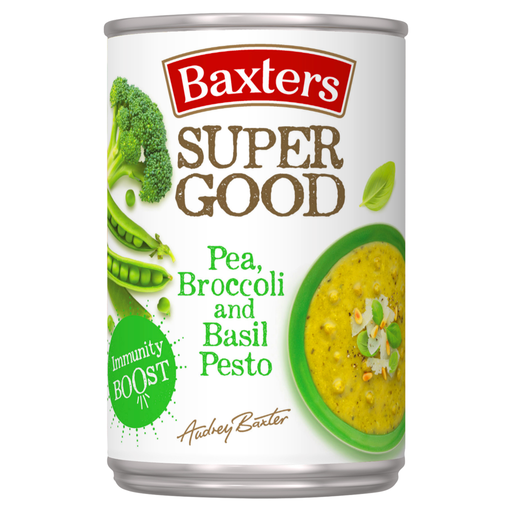
Baxters Super Good Pea, Broccoli & Basil Pesto Soup 400g
A pea and broccoli soup to consider if you want a vegetable-and-pulse option. The listed whole-can salt is 1.83g, so compare that with the portion you would eat. It contains milk.
View on Joybuy
 No image available
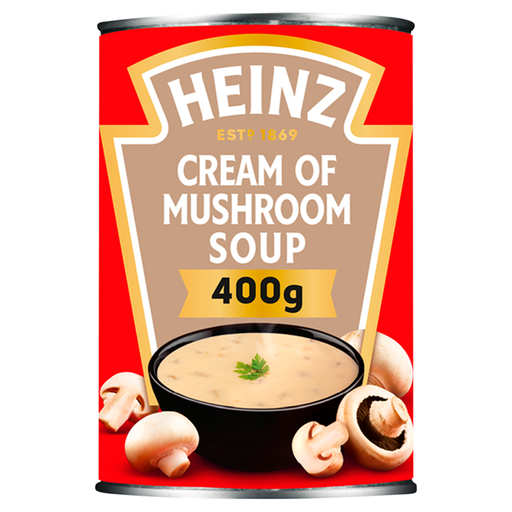
Heinz Cream of Mushroom Soup 400g
A cream-style mushroom soup for shoppers who prefer that flavour. It contains milk and wheat; check the current label and the nutrition for the amount you plan to eat.
View on Joybuy
 No image available
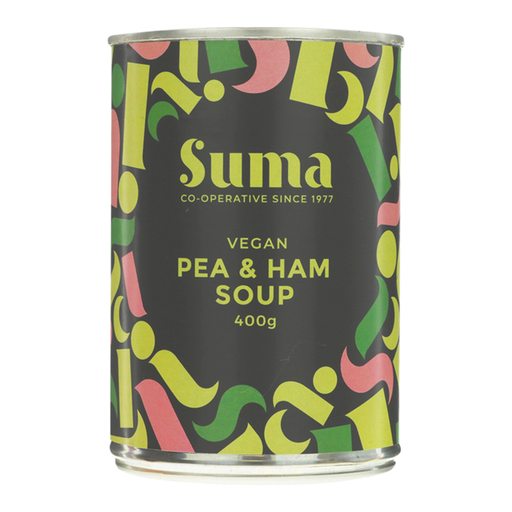
Suma Pea & Vegan Ham Soup 400g
A pea-based soup for a cupboard lunch. Its product descriptions give conflicting ingredient and allergen information, so check the current physical tin before relying on its vegan wording or choosing it for an allergy or other dietary restriction. The listed salt is 0.96g per 100g.
View on Joybuy
 No image available
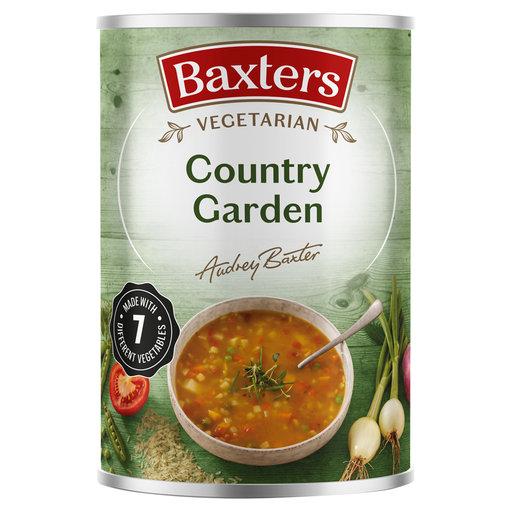
Baxters Vegetarian Country Garden Soup 400g
A vegetable-and-rice option if that combination appeals for lunch. It contains milk. Check the current tin for its serving size, the nutrition in your intended portion and preparation instructions.
View on Joybuy
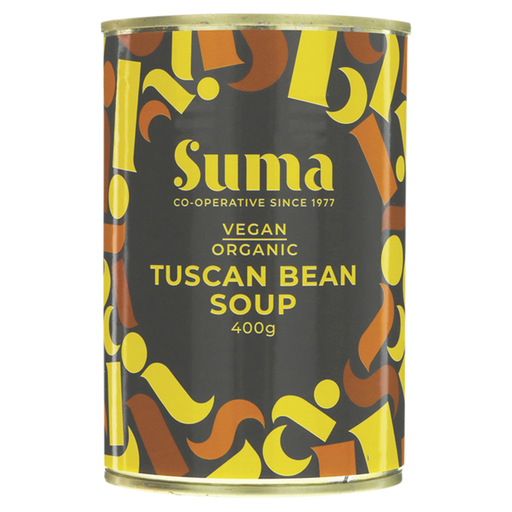 No image available
Suma Organic Tuscan Bean Soup 400g
A bean-based option if you want to compare fibre and protein as well as flavour. The listed salt is 0.70g per 100g, so check the figure for the portion you would eat. It contains celery.
View on Joybuy
Questions about buying and using tinned soup
Which salt figure should I compare between soups?
Compare salt per 100g first, then check the amount in the portion you expect to eat. The NHS describes more than 1.5g per 100g as high and 0.3g or less per 100g as low. A per-serving figure may describe less than the whole tin.
Can tinned soup count towards 5 A Day?
It can contribute when the exact recipe and portion contain qualifying fruit or vegetables; do not assume every soup does. Sainsbury’s listing says half a can of Heinz No Added Sugar Cream of Tomato Soup counts as one of 5 A Day as part of a balanced diet. The NHS says beans and pulses count as no more than one portion of 5 A Day, regardless of the amount eaten.
Does a vegetarian or vegetable soup suit someone avoiding allergens?
Not necessarily. Check the current ingredients and allergen statement on the exact tin: Campbell’s Cream of Chicken condensed soup, for example, contains wheat and milk. A flavour or dietary name does not replace that label check.
How should I store soup left over from an opened tin?
Follow the instructions for the exact product. For M&S Cream of Chicken Soup, M&S says to transfer the opened soup to an airtight container, refrigerate it and eat it within two days.


