Families packing a hot school lunch
Soup is an option when there is time to heat it and transfer it to a suitable food flask before school. Check the school’s arrangements for hot packed lunches before making it a regular choice.


Buy a soup multipack for secondary school lunches when the pupil likes that flavour, the household will use the remaining cans, and heating and packing soup in a suitable flask fits the morning routine. If you are testing a flavour or need only a few lunches, individual cans give you more flexibility. Check the school’s arrangements for hot packed lunches, the portion size and the exact product’s allergen and nutrition labels before buying.
Soup is an option when there is time to heat it and transfer it to a suitable food flask before school. Check the school’s arrangements for hot packed lunches before making it a regular choice.
A four-can pack makes more sense when several lunches or meals will use it. The Heinz Cream of Tomato pack listed by Joybuy contains four 400 g cans, with two labelled servings per can; that is more soup than a single pupil needs for one lunch.
Different soups call for different checks. Compare the exact can’s serving guidance, ingredients, allergens and nutrition information, then decide what else to pack for the pupil’s lunch.
Start with whether hot soup will work at school, then choose a quantity the household will use and a portion that fits the pupil’s lunch.
| Priority | What to check | Your needs |
|---|---|---|
| Preparation | Check the can’s heating instructions, the food flask’s instructions and the school’s arrangements for hot packed lunches. Plan how to heat and decant the soup before leaving home. | A hot lunch needs to fit our morning routine without relying on the pupil to open a can or heat soup at school. |
| Pack and portion | Compare the number of cans, their net weight, labelled servings and the flask’s capacity. Joybuy’s Heinz Cream of Tomato four-pack contains 4 x 400 g; each can is labelled as two servings. | If we will use several cans, a multipack could suit our cupboard. To try a new flavour, I would rather start with fewer cans. |
| Ingredients and labels | Read the exact product’s allergen statement and dietary labelling. Compare salt and other nutrition values on the same per-serving or per-100 g basis, accounting for how much will be packed. | The soup must fit the pupil’s dietary requirements, and I want to know what the planned portion contains rather than compare unlike serving sizes. |
| The rest of lunch | Consider the soup portion alongside other packed foods. NHS Healthier Families suggests basing a lunchbox’s main item on foods such as bread, rice, pasta or potatoes. | For this pupil’s appetite, soup may work better alongside other lunch items than as the entire packed lunch. |
Extra cans provide cupboard stock, not lunchtime heating or a way to carry hot soup. You still need a workable preparation and flask routine.
Check the school’s hot-food arrangements and try the routine before committing to several cans of one flavour.
The Heinz tomato four-pack and the Asda and Sainsbury’s creamy tomato examples are labelled as two servings per can, while the Asda Tomato & Three Bean Soup is described as one serving per can. The same can weight does not establish the same planned portion.
Use the selected product’s serving guidance, the pupil’s appetite and the flask’s capacity to decide how much to pack. Compare nutrition values for the amount that will be eaten.
Asda’s Cream of Tomato Soup lists milk, while Campbell’s UK Cream of Chicken Condensed Soup lists wheat gluten and cow’s milk and says it may also contain egg. A vegetable or creamy description is not an allergen statement.
Read the ingredients and allergen information on the exact product each time, particularly if its recipe or packaging has changed.
A can’s labelled serving does not tell you what else a particular pupil will want at lunchtime. NHS Healthier Families’ lunchbox guidance includes a main item based on foods such as bread, rice, pasta or potatoes.
Plan the soup portion together with the other foods being packed, using the pupil’s usual appetite rather than assuming soup alone will be enough.
These examples illustrate different pack formats and soup types; check the current label of the specific product you intend to buy.
Joybuy lists a Cream of Tomato Soup pack containing four 400 g cans.
Campbell's UK describes its Cream of Chicken condensed soup as suitable for cooking as well as serving as soup.
Tesco Groceries has listed the Heinz Cream of Tomato Soup 4 x 400 g pack in its food-cupboard category.
Sainsbury's Cream of Tomato Soup is an individual 400 g can labelled as two servings.
Asda’s individual 400 g examples include Cream of Tomato Soup and Tomato & Three Bean Soup.
M&S lists vegetarian and vegan options in its tinned-soup range.
These six-can Heinz packs are options for households planning to use soup across several lunches or other meals. Neither pack removes the need to check the pupil’s portion, the product label and the school’s arrangements for hot packed lunches.
 No image available
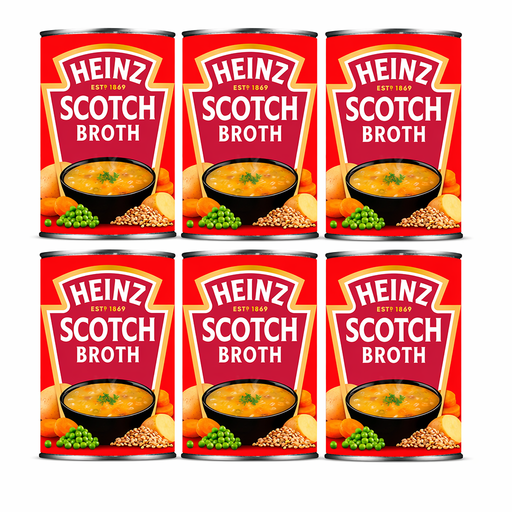
Consider this pack when the household will use six cans and Scotch broth suits the pupil’s tastes. Check the planned portion against the flask’s capacity. The listing identifies gluten from barley and wheat and gives salt information for a half-can portion; read the current label when planning the lunch. Heat and pack the soup according to the product and flask instructions.
 No image available
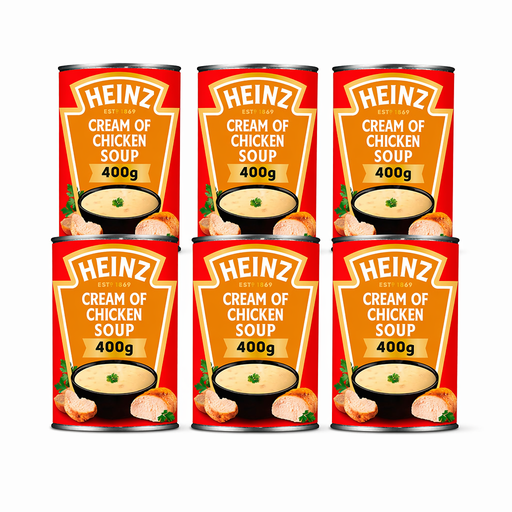
This six-can pack suits a household that expects to use chicken soup beyond one school lunch. Check the label for milk and wheat, then choose an amount that fits the pupil’s appetite and flask; compare its salt information for the amount you plan to pack. The soup requires heating before it is transferred to a suitable food flask.
Not necessarily. The Heinz Cream of Tomato four-pack and the Asda and Sainsbury’s creamy tomato examples label a 400 g can as two servings. Decide how much to pack using the selected can’s guidance, the pupil’s appetite, the flask’s capacity and the other lunch items.
For a hot packed lunch, plan to heat the soup at home and transfer the portion to a suitable food flask, following the product and flask instructions. Check the school’s arrangements rather than expecting the pupil to open or heat a can at lunchtime.
Check the individual school’s packed-lunch and hot-food arrangements. The Department for Education’s September 2026 guidance on school food in England concerns food and drink provided in state-funded schools there; it does not, by itself, answer what a particular school allows pupils to bring from home.
Follow the selected can’s instructions for storing opened soup, including its container, refrigeration and use-by guidance. Check these instructions for the exact product rather than applying another soup’s storage directions.
No. Asda’s Cream of Tomato Soup lists milk, while Asda Groceries labels the Heinz Plant Based Vegan Creamy Tomato Soup as suitable for vegans but lists soya. Read the ingredients and allergen statement on the exact can before buying for a dietary requirement.