People planning a quick cupboard lunch
If you want soup to contribute to a protein-focused meal, compare the protein in the portion you actually eat rather than relying on the soup’s flavour or description.


Heinz No Added Sugar Cream of Tomato Soup is a tinned option if avoiding added sugar is your priority, but its protein content should not be assumed to meet a high-protein meal target: Amazon UK lists 0.8g protein per 100g. Check total sugars and protein for the amount you will eat, and compare the protein total with your own meal target.
If you want soup to contribute to a protein-focused meal, compare the protein in the portion you actually eat rather than relying on the soup’s flavour or description.
A no-added-sugar tin may suit this preference, but its nutrition table still matters: check total sugars as well as protein.
Cambridge University Hospitals NHS Foundation Trust notes that protein needs can vary with age, disease status and activity. If you have a prescribed target, use it when assessing a soup portion.
Start with the nutrition figures per 100g, then work out the amounts for the portion you intend to eat. A claim about added sugar answers a different question from how much protein the meal provides.
| Priority | What to check | Your needs |
|---|---|---|
| Protein | Compare protein per 100g and for the portion eaten. Amazon UK lists 0.8g per 100g for Heinz No Added Sugar Cream of Tomato Soup; ASDA lists 1.1g per 100g for Heinz Vegetable Soup. Neither figure alone establishes whether a portion meets your target. | I want to know how much protein the soup contributes to my meal, rather than assuming tomato or vegetable soup provides enough on its own. |
| Sugars | Read the claim on the tin alongside “of which sugars” per 100g. Amazon UK lists 2.6g sugars per 100g for Heinz No Added Sugar Cream of Tomato Soup: no added sugar does not mean zero total sugars. | Avoiding added sugar matters to me, but I also want to compare the total sugars in the amount I will eat. |
| Portion and salt | Check whether the stated serving is a whole or half tin; calculate sugars, salt and protein on the same portion basis. ASDA lists two 200g servings in a 400g tin of Heinz Vegetable Soup, with 1.2g salt per half-tin serving. | If I eat the entire tin, I need the whole-tin figures rather than the figures for one labelled serving. |
| Ingredients | Check the current pack’s ingredient and allergen declarations, as well as its nutrition table. The Heinz No Added Sugar Cream of Tomato Soup ingredients displayed by Amazon UK include milk. | Before making soup a regular meal, I want to check that its ingredients suit my requirements and its protein fits my plan. |
These are not the same claim. Amazon UK’s listing for Heinz No Added Sugar Cream of Tomato Soup shows 2.6g total sugars per 100g.
Use the “of which sugars” figure to compare tins per 100g, then calculate it for your portion.
Amazon UK lists 0.8g protein per 100g for Heinz No Added Sugar Cream of Tomato Soup, while ASDA lists 1.1g per 100g for Heinz Vegetable Soup. The contribution depends on how much you eat and your meal target.
Check the full-portion protein total. If it falls short of your plan, consider a suitable protein-containing food alongside the soup.
ASDA labels Heinz Vegetable Soup as two 200g servings per 400g tin. Eating the whole tin doubles the listed half-tin amounts of sugars, salt and protein.
Put products on the same per-100g or intended-portion basis before comparing them.
Tesco lists FUEL10K products as instant cup soups, while M&S describes its Chunky Keralan Chicken Soup as a fresh soup. Neither establishes the nutrition of a tin.
If you need a cupboard tin, check the format and nutrition of that exact product.
These examples show different soup products and formats; a brand name alone does not establish a tin’s sugar or protein content.
Heinz names a 400g No Added Sugar Cream of Tomato Soup, also listed by UK retailers.
Tesco lists Plant Chef Lentil & Pepper Soup as a 400g product and separately lists cup and packet soups.
Tesco lists Campbell's Condensed Cream of Chicken Soup in a 295g tin, described for use as soup or in recipes.
M&S describes Chunky Keralan Chicken Soup as a 600g fresh soup and a source of protein.
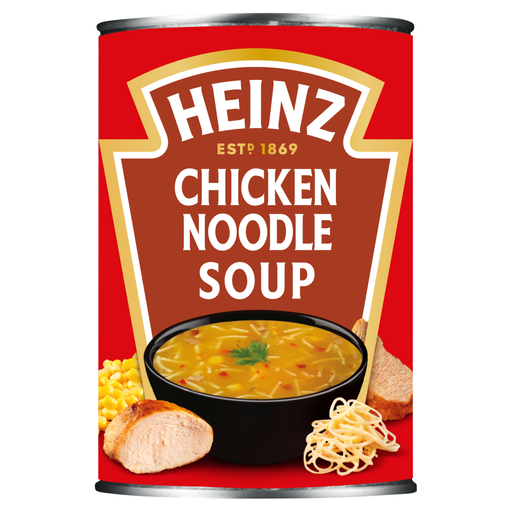
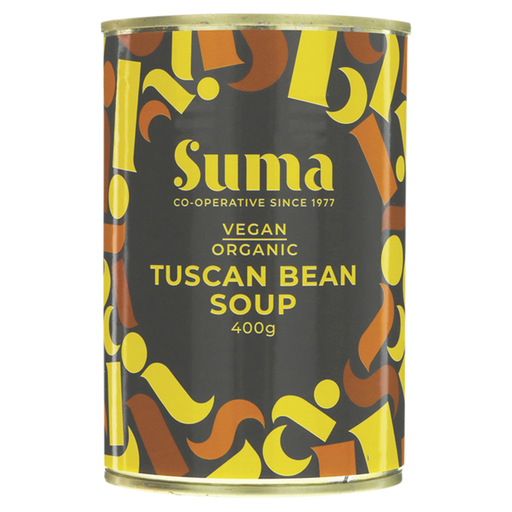
These 400g tinned soups offer chicken-noodle and bean-based options. Compare each current pack’s total sugars and protein for your portion; neither product name establishes a reduced-sugar claim or that the soup alone meets a high-protein meal target.
 No image available
A chicken-noodle tinned soup to consider for a cupboard lunch. Its listed ingredients include sugar, so check the current pack’s total sugars, protein for your portion and allergen declaration rather than treating it as a no-added-sugar option.
 No image available
A bean-based tinned soup if you prefer that type of meal. Compare the current pack’s sugars and protein for the portion you intend to eat, and check its ingredients if you have an allergen restriction; the product name does not establish a reduced-sugar claim.
No. Check total sugars in the nutrition table: Amazon UK lists 2.6g sugars per 100g for Heinz No Added Sugar Cream of Tomato Soup. A claim about added sugar does not replace the total-sugars figure.
Not necessarily. Amazon UK lists 0.8g protein per 100g for Heinz No Added Sugar Cream of Tomato Soup, equivalent to 3.2g for its 400g tin. Compare the amount you will eat with your own meal target; if needed, consider a suitable protein-containing food alongside it.
Multiply per-100g figures by four, or use the tin’s stated servings. ASDA labels a 400g tin of Heinz Vegetable Soup as two 200g servings, so a whole tin contains twice the sugars, salt and protein shown for a half-tin serving.
No. Tesco lists FUEL10K instant cup soups, while M&S describes Chunky Keralan Chicken Soup as fresh. Check the nutrition, preparation and storage information for the exact tinned product you intend to buy.
Use the target given by your clinical team or dietitian when calculating what a soup portion contributes. Cambridge University Hospitals NHS Foundation Trust notes that protein needs vary with factors including age, disease status and activity.