Older adults planning cupboard meals
Tinned soup offers a convenient meal component. Compare the particular can’s protein, fibre, salt, energy, allergens and portion size rather than assuming one soup supplies everything needed for a meal.


Tinned soup can be a convenient part of an older adult’s storecupboard, but choose the individual can by its nutrition label, ingredients, portion size and the person’s eating needs. Check whether the meal needs suitable accompanying food, and never assume that a soup described as smooth meets a prescribed texture level for someone with swallowing difficulties.
Tinned soup offers a convenient meal component. Compare the particular can’s protein, fibre, salt, energy, allergens and portion size rather than assuming one soup supplies everything needed for a meal.
Choose with the person’s preferences, appetite, dietary requirements and ability to eat safely in mind. If they have swallowing difficulties, follow their individual clinical advice rather than relying on the soup’s name or appearance.
Royal Berkshire NHS Foundation Trust advises using dysphagia food guidance alongside tailored speech and language therapy and dietetic advice. Select and prepare soup only in line with the person’s prescribed texture requirements.
Start with the person’s eating requirements, then compare nutrition and ingredients on the same portion basis before choosing a recipe.
| Priority | What to check | Your needs |
|---|---|---|
| Meal contribution | Compare protein and energy per 100g and for the portion to be eaten. Check fibre and the ingredients; decide what other suitable food the meal may need. | I want soup that fits into a varied day’s eating, not a can assumed to be a complete meal. Royal United Hospitals Bath NHS Foundation Trust’s older-adult guidance highlights attention to protein, while the NHS Eatwell Guide considers balance over a day or week. |
| Salt | Compare salt per 100g, then per serving or can where stated. Use front-of-pack traffic-light information, if present, alongside the full nutrition panel. | If salt matters for this person’s diet, I need to compare the amount they would actually eat. GOV.UK advises using traffic-light labels to compare salt and other listed nutrients. |
| Texture | Check for pieces, pasta, beans or meat and consider the soup as prepared. For a prescribed modified-texture diet, follow the individual’s speech and language therapy and dietetic advice. | Someone with swallowing difficulties needs food that meets their assessed requirements. County Durham and Darlington NHS Foundation Trust says speech and language therapists identify safe food and drink consistencies; a smooth-sounding name cannot establish that suitability. |
| Ingredients | Read the current can’s ingredient and allergen declarations. Check the exact recipe rather than relying on a similar variety or an online filter. | I’m buying for someone with an allergy or dietary restriction, so the label on the can must match their requirements. Sainsbury’s cautions that its allergy filters do not replace checking the label. |
| Storage | Read the unopened-can storage directions, best-before information and instructions for storing soup after opening. | I may serve only part of a can at once, so I need to know how this particular soup should be kept afterwards. Marks & Spencer’s cream-of-tomato instructions, for example, specify an airtight container, refrigeration and consumption within two days of opening. |
A can can contribute to a meal without supplying the protein, energy or variety the person needs across the day.
Check the portion’s nutrition information and consider suitable accompanying food in light of appetite, dietary needs and the person’s ability to eat safely.
Salt and other nutrition figures differ by recipe, including within a brand’s range. A phrase about one nutrient does not describe the whole meal.
Compare salt on the same per-100g basis and for the portion to be eaten, then check protein, fibre, energy and allergens.
A soup’s appearance or description cannot establish whether its prepared texture meets an individual’s prescribed requirements.
Follow the person’s speech and language therapy and dietetic advice, including any prescribed IDDSI level. Do not substitute an ordinary soup on the strength of its description.
For someone with an allergy or a specific diet, the current ingredients and preparation instructions are essential to the choice.
Before serving, check the can’s ingredients, allergen declaration, nutrition, best-before information and storage directions.
These ranges offer different recipes and formats; suitability depends on the individual can and the person eating it.
Tesco lists Heinz varieties including lentil and vegetable soups in 400g cans.
A condensed-soup range with cream-of-mushroom, cream-of-chicken and cream-of-tomato varieties represented in supermarket listings.
Tesco’s own-label listings include vegetable and minestrone soups alongside other recipes.
Sainsbury’s lists own-label tinned soups and provides dietary and allergy filters for browsing.
Asda’s own-label soup examples include Just Essentials by Asda Tomato Soup.
M&S lists individual tinned soups with recipe-specific nutrition information.
These 400g cans include meat, mushroom and vegetable recipes to consider for an older adult’s cupboard meals. Choose by the person’s dietary requirements and the current can’s label; none should be assumed suitable for a prescribed modified-texture diet.
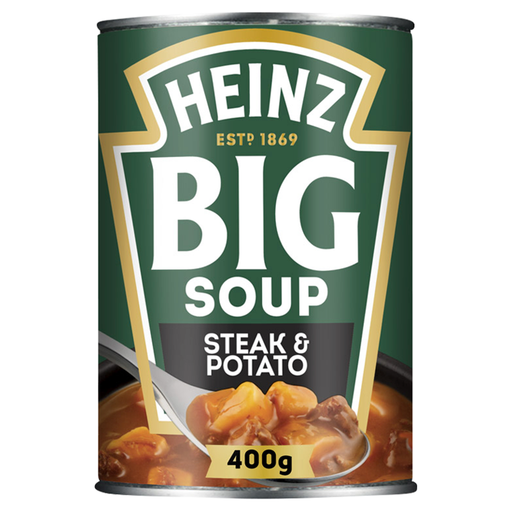 Image unavailable
A steak-and-potato soup to consider if the person can manage its prepared texture. Check the can’s protein, salt, ingredients and portion information when planning the meal; follow individual clinical advice if swallowing is a concern.
 Image unavailable
A broth-style option for someone whose eating requirements allow the ingredients and prepared texture. Check the current can’s allergen declaration, nutrition and serving information before choosing it.
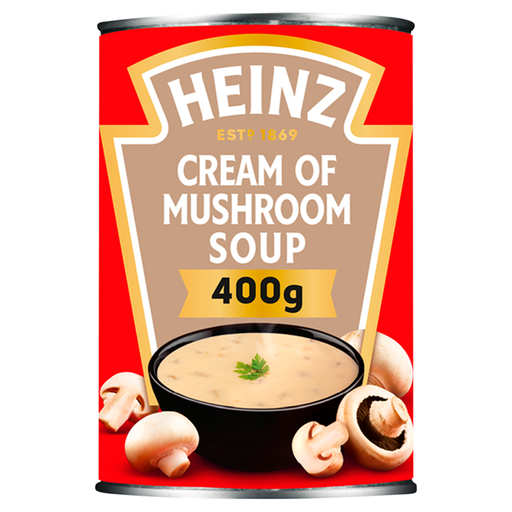 Image unavailable
A cream-of-mushroom recipe for shoppers comparing familiar soup styles. Check its current ingredients, allergens, nutrition and prepared texture; “cream of” does not establish suitability for a modified-texture diet.
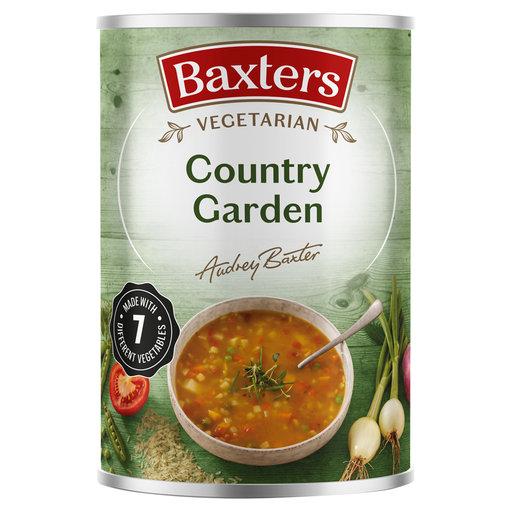 Image unavailable
A vegetarian country-garden soup to compare with other vegetable recipes. Read the can for protein, salt, allergens and the portion you intend to serve, and check that its prepared texture meets the person’s needs.
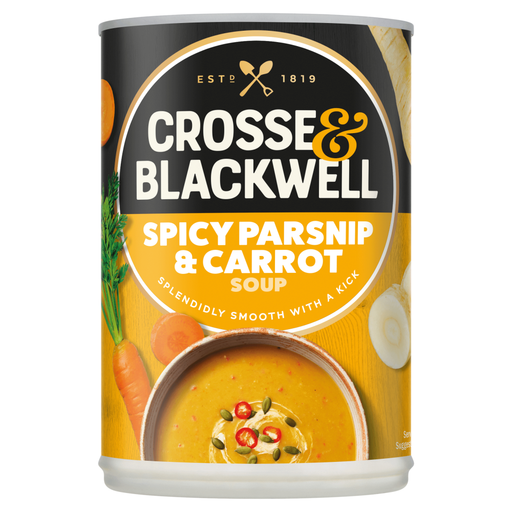 Image unavailable
A spicy parsnip-and-carrot option if that flavour suits the person eating it. Compare the can’s protein, fibre, salt and allergens with other recipes; confirm texture against individual advice where swallowing is a concern.
Not automatically: assess the particular portion and what else the person eats. Royal United Hospitals Bath NHS Foundation Trust’s older-adult guidance highlights protein, while the NHS Eatwell Guide considers dietary balance over a day or week. Check the soup’s label and add suitable food if the meal needs it.
Compare the salt figures on the same per-100g basis, then check the amount for the serving or can the person would eat. GOV.UK says front-of-pack traffic-light labels can help compare salt and other listed nutrients; use them alongside the full label.
The word “smooth” cannot establish that a soup meets an individual’s swallowing requirements. County Durham and Darlington NHS Foundation Trust says speech and language therapists identify safe food and drink consistencies. Follow the person’s prescribed texture level and tailored clinical advice for the soup as prepared.
Follow the instructions on that can. For its cream-of-tomato soup, Marks & Spencer specifies transferring opened soup to an airtight container, refrigerating it and eating it within two days; do not assume every recipe gives the same period.
Yes. Check the current can’s ingredients and allergen declaration each time they matter to the person eating it. Sainsbury’s cautions shoppers to check labels rather than relying on online allergy filters.