What should you check before choosing?
Start with the amount the person is likely to eat, then check nutrition, texture and practical serving details for that amount.
| Priority | What to check | Your needs |
|---|
| Portion and nutrition |
Compare protein and energy per 100g and per stated serving. Check the can size against the amount likely to be eaten; a half-can serving is not the whole can. |
If appetite is limited, I need to judge the soup by the portion served and decide whether the meal needs a suitable accompaniment. |
| Salt |
Compare salt per 100g on the same basis, then check the salt in the portion served. The NHS advises adults to have no more than 6g of salt a day in total, including salt already in food. |
I want to account for the soup alongside the rest of the day’s food, rather than choosing by a front-of-pack description alone. |
| Swallowing texture |
For a prescribed IDDSI level, follow the clinician’s recommendation and use the relevant assessment method on the prepared soup at its intended serving temperature. Check for pieces or mixed textures. |
Where swallowing difficulty is involved, I cannot use “cream” or “smooth” on the tin as a texture classification. |
| Ingredients and allergens |
Read the current can’s ingredients, allergen information and precautionary statements before serving. Check again on repeat purchases because recipes can change. |
For someone with an allergy, I need the label on the can being served, not just an earlier online description. |
| Leftovers |
Check the individual can’s directions for transferring, refrigerating and using opened soup. Consider whether the person will finish the portion within those instructions. |
If one can covers more than one serving, I need a workable plan for what remains after opening. |
Brand and retailer references
These examples show why the label matters more than a brand name or soup format; each figure applies to the named product.
Heinz
Heinz makes both chunky and cream-style tinned soups. Tesco lists chicken, vegetables and potatoes in Heinz Big Soup Chicken & Veg 400g.
- Tesco lists 3.1g protein and 0.5g salt per 100g for that Big Soup product, making its stated half-can serving possible to assess.
- Heinz lists 2.5g protein per can for its Cream of Tomato Soup; do not assume the same nutrition across Heinz ranges or that chunky soup meets a prescribed texture level.
Campbell’s
Campbell’s offers condensed cream soups, including Cream of Chicken, that require preparation before serving.
- Joybuy’s Campbell’s Condensed Cream of Chicken Soup 295g directions say to add one can of water, or half milk and half water, before heating.
- Dilution does not remove salt already in the can. Campbell’s advises reading the current label because ingredients can change.
M&S
M&S lists classic and chunky soups alongside its Cream of Chicken Soup 400g.
- M&S lists 2.3g protein and 0.55g salt per 100g for its Cream of Chicken Soup.
- Its product information says the soup may contain bones and that ingredients and allergen details may change. “Cream” is not an IDDSI classification.
Tesco
Tesco’s tinned- and packet-soup listings include individual cans, condensed soups and multipacks from different brands.
- Listings for differently sized and prepared soups can be compared using their stated pack sizes and nutrition panels.
- A multipack does not establish the nutrition or texture suitability of an individual serving; check the particular product and can.
Tinned soup options on Joybuy
These cans and a six-can pack offer different flavours and pack formats for households choosing soup as a meal component. Assess each person’s portion and the current can label; none should be selected for a prescribed swallowing texture by its name alone.
 No image available
Heinz Cream of Chicken & Mushroom Soup 400g
A chicken-and-mushroom option for a person eating ordinary textures. Check protein and salt for the portion served, and read the current can for allergens; “cream” does not establish suitability for a prescribed IDDSI level.
 No image available
Heinz Cream of Mushroom Soup 400g
For a household choosing mushroom soup as part of a meal, compare the nutrition on the can with the amount the person will eat. Check allergens and any prescribed texture requirements before serving.
 No image available
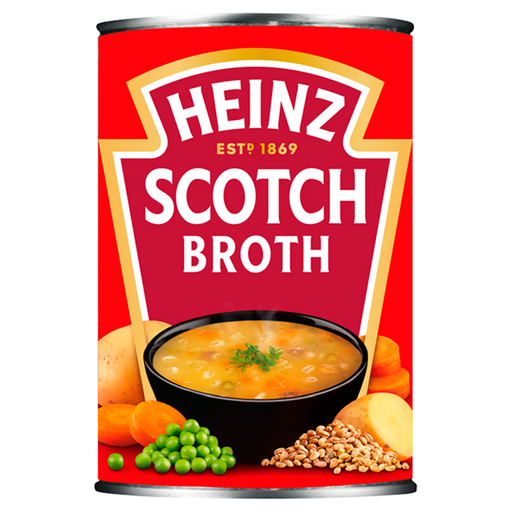
Heinz Scotch Broth Soup 400g
Consider this broth for someone who can eat ordinary food textures, rather than assuming a named soup fits a texture-modified diet. Check the portion’s protein and salt and read the current ingredient and allergen label.
 No image available
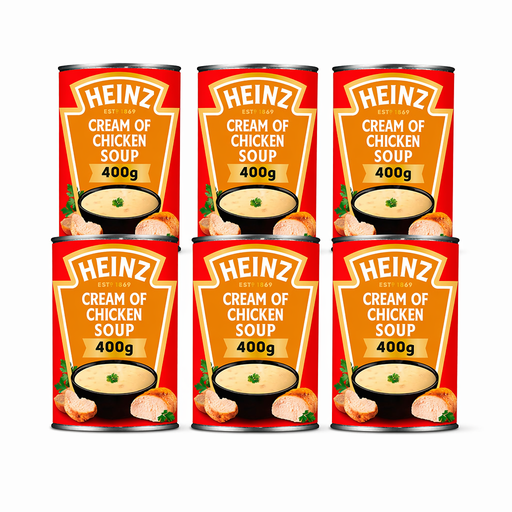
6 x Heinz Cream of Chicken Soup 400g
The six-can format may suit a household using soup across several meals, but assess nutrition per person rather than per pack. Confirm the serving basis on the current can before using its nutrition figures, and check allergens and texture requirements.
 No image available
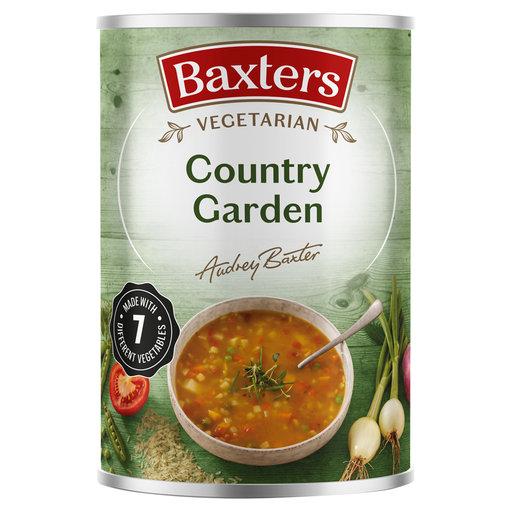
Baxters Vegetarian Country Garden Soup 400g
A vegetarian-labelled soup to consider as one part of a meal. Check the current can’s ingredients, allergens, protein and salt for the portion served; do not assume its texture matches a prescribed IDDSI level.
Questions about serving tinned soup
Is a tin of soup enough for an older person’s main meal?
Not necessarily: check the protein and energy in the amount they will eat, rather than treating the can size as a meal plan. The NHS identifies older adults as particularly at risk of malnutrition; if unintentional weight loss or poor intake is a concern, seek advice from a GP or dietitian about suitable meals.
Can someone with dysphagia have creamy soup?
Only if the prepared soup meets that person’s clinician-prescribed texture level. IDDSI says assessment should take place under the intended serving conditions, including temperature; “creamy” on a product name is not a texture classification.
How do I compare salt in two tins?
Compare the salt figures per 100g, then check the amount in the portion the person will actually eat. NHS guidance advises no more than 6g of salt a day for adults in total, including salt already present in packaged foods.
Does adding water remove salt from condensed soup?
No. Adding water changes the prepared volume and salt concentration, but not the amount of salt already supplied by the can. Joybuy’s directions for Campbell’s Condensed Cream of Chicken Soup 295g specify one can of water, or half milk and half water, before heating; check the label’s nutrition basis and the quantity served.
What should I do with soup left after opening a can?
Follow that can’s storage instructions. Tesco’s Heinz Big Soup Chicken & Veg listing says to transfer unused soup to a covered non-metallic container, refrigerate it and eat it within two days. Check the directions for any different soup rather than assuming the same storage period applies.


