Hosts planning several servings
Work out the number of bowls or cups you intend to serve, then use each tin’s serving guidance to estimate quantities. If you are considering a multi-tin offer, check that you can use the qualifying number.


For a New Year’s Eve party, a 400g ready-to-heat soup makes portion planning straightforward if its ingredients suit your guests. Check each tin’s serving guidance and any multi-tin conditions before choosing between own-label and branded recipes; condensed soup needs a separate check of its prepared yield and heating steps.
Work out the number of bowls or cups you intend to serve, then use each tin’s serving guidance to estimate quantities. If you are considering a multi-tin offer, check that you can use the qualifying number.
Check ingredients for each guest rather than relying on a description such as “vegetable” or “vegetarian”. The listed examples include soups containing milk, mustard, gluten or celery.
Choose a format whose heating steps fit your equipment and serving plan. Check the tin’s instructions for handling any soup left after opening.
Start with the number of servings and your guests’ ingredient requirements, then check how each soup must be prepared and stored.
| Priority | What to check | Your needs |
|---|---|---|
| Party portions | Check the tin size and stated servings. Decide how much soup each bowl or buffet cup will hold before counting tins. | I want enough for the guests who will have soup without assuming that one tin equals one portion. |
| Ingredients and allergens | Read the current ingredients and allergen label. ASDA Groceries lists milk and mustard in its Just Essentials tomato soup; Marks & Spencer lists gluten and celery in its minestrone. | If guests have different dietary requirements, I need to check each recipe separately, even when its name suggests vegetables or it is labelled vegetarian. |
| Preparation | Check whether the soup is ready to heat or condensed, what liquid must be added, and which heating equipment the instructions specify. Waitrose & Partners lists a 295g Campbell’s condensed chicken soup that requires added water. | When serving later in the evening, I want to know how many batches I can prepare and whether I need anything besides the tins. |
| Storage | Check the unopened tin’s date label and follow its instructions after opening. GOV.UK distinguishes best-before dates, which concern quality, from use-by dates, which concern safety. | I may buy tins in advance, but I also need a plan for soup left after serving. |
A smaller condensed tin needs added liquid, so its prepared yield and preparation steps differ from those of a ready-to-heat soup. Waitrose & Partners lists a 295g Campbell’s condensed chicken soup that requires water before heating.
Check the prepared yield on a condensed soup and calculate portions separately from any 400g ready-to-heat tins.
A recipe name or vegetarian designation does not establish allergen suitability. Marks & Spencer lists gluten and celery in its minestrone, while ASDA Groceries lists milk and mustard in its Just Essentials tomato soup.
Ask guests about their requirements and read the current label on every recipe you intend to serve.
Once soup is opened, its storage instructions matter to any portions you do not serve immediately.
Plan batches around the number of guests and follow the product’s directions for transferring, refrigerating and using leftovers.
A branded ready-to-heat option if guests prefer a familiar tomato recipe.
Condensed soup for hosts willing to add liquid before heating or use soup in a recipe.
Own-label 400g tomato soups to consider when planning ready-to-heat portions.
An own-label vegetable option for guests who prefer vegetables and pasta to a smooth tomato soup.
Own-label 400g tomato soups for a ready-to-heat serving plan.
Vegetable and meat-containing recipes for hosts choosing the type of bowl they want to serve.
These 400g Heinz soups offer two different recipes to consider for a party. Check their current labels for serving guidance and guest suitability before deciding how many tins to use.
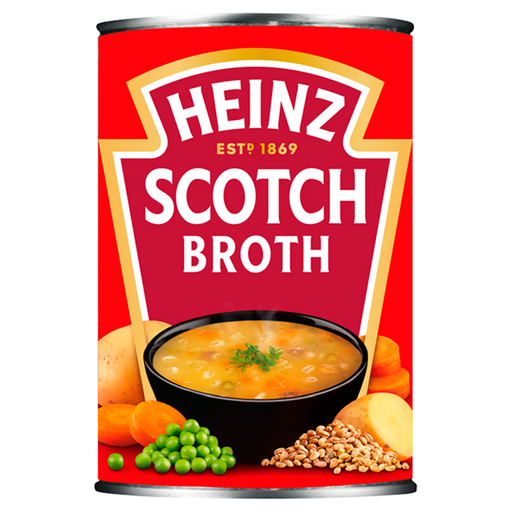 Image unavailable
Consider this 400g broth soup if you want a different recipe from tomato or mushroom. Check the current tin’s ingredients, serving guidance and heating instructions against your plans for guests.
 Image unavailable
Consider this 400g mushroom soup if that recipe suits your guests. Check the current tin’s ingredients, serving guidance and heating instructions before planning portions.
Use the serving guidance on the particular tin as a starting point, then adjust the number of tins to the size of your bowls or buffet cups. Do not assume that every guest will take the same amount.
Follow its preparation instructions rather than treating it as ready-to-heat soup. The Campbell’s Condensed Chicken Soup listed by Waitrose & Partners requires added water before heating; check its prepared yield when planning portions.
No: check the current label against each guest’s requirements. Listed tomato and vegetable soups include ingredients such as milk, mustard, gluten or celery, depending on the recipe.
Follow that product’s instructions for transferring and refrigerating leftovers, including its stated period for use after opening. Planning smaller batches can make it easier to handle any soup that remains.
GOV.UK says a best-before date concerns food quality, whereas a use-by date concerns safety. Store the unopened tin as directed and check its own date label and instructions.