What should you check before serving it?
Start with the resident’s care plan, then assess the exact soup as it will be prepared and served. A premium description can inform menu choice, but not these checks.
| Priority | What to check | Your needs |
|---|
| Nutrition |
Compare the current label’s energy, protein, salt and saturated fat information with the resident’s documented plan. Check the portion actually served, not just the can size. |
I need to know whether this portion fits the resident’s plan and what else the meal will include. |
| Prepared texture |
Check the consistency and any pieces of food after preparation against the resident’s specified texture. Follow individual swallowing advice where it applies. |
A creamy-looking soup cannot stand in for a texture check when someone has a swallowing plan. |
| Ingredients and choice |
Read the delivered can’s ingredients and allergen declaration. Confirm any vegetarian, cultural or religious requirement against the exact product. |
I want to offer flavours residents enjoy without assuming that a tomato or vegetable name tells me everything in the recipe. |
| Portions and storage |
Check serving yield and the pack’s preparation and post-opening instructions. Plan opened-can use around the stated storage period. |
If only a little soup is needed at a time, I need a workable plan for the remainder. |
Brand and retailer ranges to assess
These ranges offer different recipes and formats; assess the particular can rather than treating a brand name as a dietary recommendation.
Heinz
The range includes familiar cream soups, broth-style soups and Big Soup varieties.
- Heinz identifies tomatoes as 89% of its Cream of Tomato recipe, illustrating the value of checking the exact product’s ingredient information.
- A recipe or brand name cannot establish suitability for a resident’s allergens, nutrition plan or required texture.
Campbell's
Campbell's lists condensed soups, including Cream of Chicken, Cream of Mushroom and Cream of Tomato.
- The condensed format is a distinct recipe option for caterers to assess.
- Check the prepared serving and current label; the format alone says nothing about an individual resident’s dietary or texture requirements.
M&S
M&S lists cream-based and other tinned-soup recipes, including soups carrying its Eat Well label.
- Individual product information lets caterers examine recipes separately.
- An Eat Well label or a cream-style description does not replace checking the exact soup against a resident’s requirements.
Tesco
Tesco Groceries lists own-label and branded soups in several flavours and formats.
- Tomato, mushroom, vegetable and minestrone listings provide different menu options to assess.
- Range variety does not establish the ingredients, nutrition or availability of a particular can.
Sainsbury's
Sainsbury's lists own-brand and branded tinned soups and provides dietary and allergy filters for browsing.
- Filters can help narrow an initial product search.
- Sainsbury's advises customers to check the label rather than relying on allergy and intolerance filters.
Tinned soups on Joybuy
These tinned soups offer mushroom, broth, vegetable, spiced and chunky menu options. Assess each delivered can and its prepared texture against the residents who may be served it.
 No image available
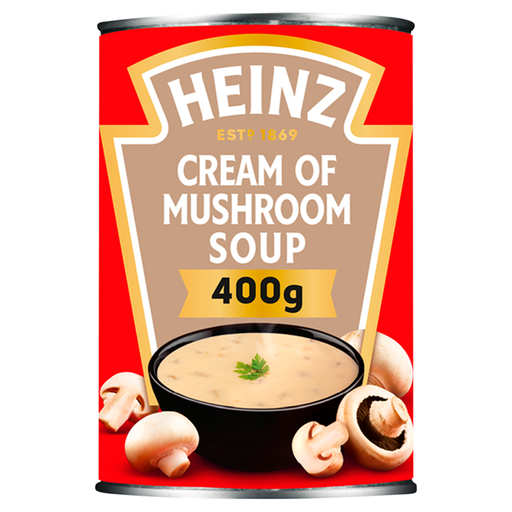
Heinz Cream of Mushroom Soup 400g
A mushroom-flavour option for menu variety. Check the delivered label against residents’ allergen and nutrition requirements, and assess the prepared texture wherever a swallowing plan applies.
 No image available
Heinz Scotch Broth Soup 400g
A broth-style choice for menus that call for a different recipe. Check its current ingredients and allergens, and assess any pieces in the prepared soup against the resident’s swallowing plan.
 No image available
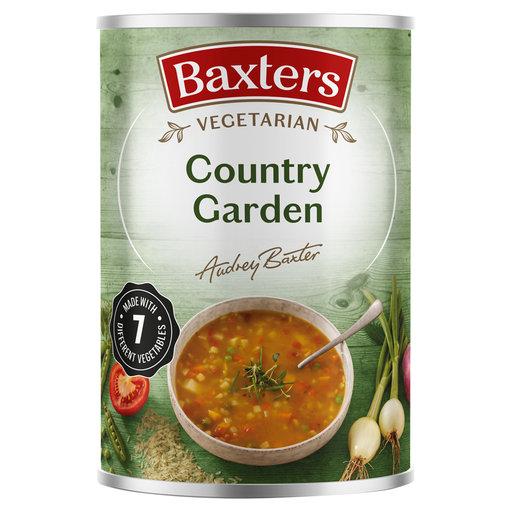
Baxters Vegetarian Country Garden Soup 400g
A vegetarian-labelled option for menu planning. Confirm the delivered can’s ingredients and allergens, and check the prepared soup against any individual texture requirements.
 No image available
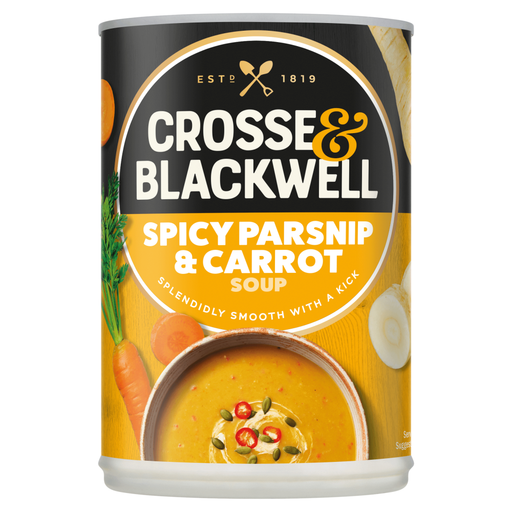
Crosse & Blackwell Best of British Spicy Parsnip & Carrot Soup 400g
A spiced parsnip and carrot recipe to consider where residents’ preferences call for that flavour. Check the current label and preparation directions; a creamy description does not establish swallowing suitability.
 No image available
Heinz Big Soup Steak & Potato 400g
A steak-and-potato variety for a menu that includes meat-based soups. Check the delivered label for dietary requirements and assess its prepared pieces against any swallowing plan before serving.
Questions about care-home soup selection
Does a premium description mean a soup suits every resident?
No. Check the exact soup’s ingredients, nutrition and prepared texture against the individual resident’s assessed needs. The Care Quality Commission’s guidance on nutrition and Public Health England’s residential-care catering toolkit both centre individual requirements rather than product positioning.
Can a creamy soup be served to someone with swallowing difficulties?
Only when its prepared form fits that person’s swallowing assessment and care plan. Leeds City Council explains that Speech and Language Therapists may advise changes to food type, size and consistency; a creamy appearance is not a substitute for that advice.
What should staff check when a soup delivery arrives?
Check the delivered product’s ingredients, allergens, nutrition, dietary designation, date and storage directions against the planned menu and residents’ requirements. Repeat the check for substitutions rather than relying on the flavour name or an earlier product listing.
How should opened soup be planned into service?
Follow the exact can’s post-opening storage and use instructions. Plan portions and label opened containers as needed for the home’s routine, rather than assuming that instructions for one soup apply to another.


