Shoppers planning a cupboard meal
If soup is part of a low-effort Pancake Day shop, check whether a tin covers the number of portions you need and how you will use any remainder.


For a Pancake Day shop, choose a tin by the portions you expect to serve and whether the soup is a ready-to-heat meal or an ingredient for another dish. Own-label and branded tins can both fill the first role; Campbell's presents its condensed soups as cooking bases. Check the exact recipe, allergens and salt rather than treating the brand or tin weight alone as a measure of value.
If soup is part of a low-effort Pancake Day shop, check whether a tin covers the number of portions you need and how you will use any remainder.
If vegetarian or vegan suitability, allergens or salt matter to your choice, compare the exact recipes. Similar-sounding soups can have different ingredients.
If the tin is destined for a sauce or another cooked dish rather than a bowl of soup, a condensed variety may fit the recipe. Check what else the dish requires.
Start with the intended meal and portion count, then check the label details that matter for the people eating it.
| Priority | What to check | Your needs |
|---|---|---|
| Portions | Compare tin weight with the stated serving count and the amount you plan to dish out. A half-tin serving does not mean everyone will eat half a tin. | I need to know whether one tin will cover the meal or leave soup to store. |
| Meal or ingredient | Check whether the recipe is intended to be heated and served or used in cooking. Campbell's UK presents its condensed cream of chicken and cream of tomato soups as cooking ingredients. | If soup is the meal, I want a suitable bowl; if it is going into another dish, I need a tin that fits that recipe. |
| Ingredients | Read the exact tin's ingredient and allergen statements, as well as any vegetarian or vegan designation. Campbell's UK lists milk and celery in its condensed cream of tomato soup. | A vegetable or tomato recipe still needs checking against the dietary requirements of the people eating it. |
| Salt | Compare salt per 100 g and per stated serving, then account for the portion you will actually eat. Sainsbury's lists 1.2 g of salt per half-can serving for Heinz Minestrone Soup 400g. | I want the salt figure for my portion, not just the serving size printed on the label. |
| Storage | Check the date mark and the instructions for storing soup after opening. GOV.UK distinguishes best-before dates, which concern quality, from use-by dates, which concern safety. | If I will use only part of a tin, I need to know how to store and use the remainder. |
Campbell's presents its condensed cream of chicken and cream of tomato soups as cooking ingredients. A tin chosen for a planned dish serves a different purpose from one chosen as a quick bowl of soup.
Decide how you will use the soup before choosing the format, and check the recipe if the tin will be an ingredient.
A dish made with condensed soup may also require other ingredients.
A vegetarian designation does not establish that a soup is vegan or free from allergens. Campbell's UK lists milk and celery in its condensed cream of tomato soup.
Read the ingredients, allergen statement and dietary designation on the exact tin, especially when changing recipes or variants.
The Sainsbury's listing for Heinz Minestrone Soup 400g gives its salt figure as 1.2 g per half-can serving. Eating a different amount changes the salt contribution of that meal.
Work from the amount you intend to serve, and use the label's per-100 g information when comparing different portion sizes.
These examples show differences between particular soup ranges and recipes, not a judgement about every tin carrying the same brand.
A branded ready-to-heat option: the Sainsbury's listing for Heinz Minestrone Soup describes a 400 g vegetarian recipe.
An own-label ready-to-heat example: Sainsbury's lists its 400 g minestrone as containing two servings.
Campbell's UK presents its condensed cream of chicken and cream of tomato soups for cooking as well as serving.
The M&S tinned-soup range lists different recipes and provides vegetarian and vegan filters.
These 400 g tins offer soup options for a Pancake Day cupboard shop. Compare their exact labels and the portions you expect to serve; this selection does not establish which tin offers greater value.
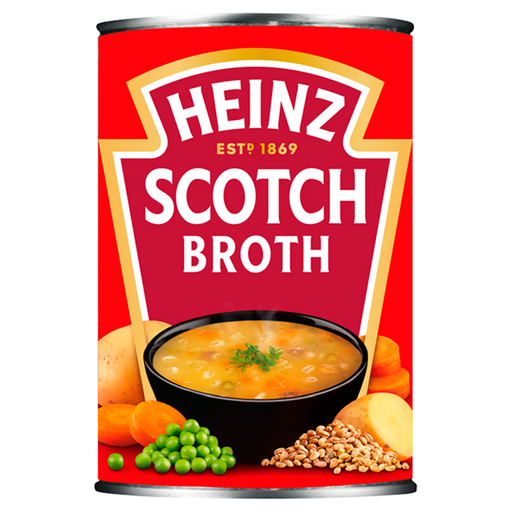 No image available
A 400 g Scotch broth option for a cupboard meal. Check the tin's serving information, ingredients and salt against the portion you intend to serve.
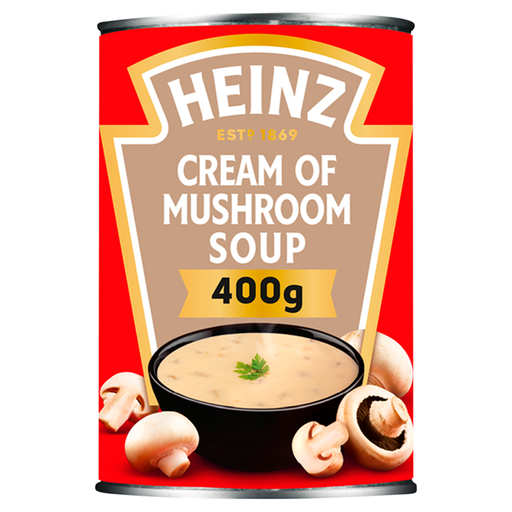 No image available
A 400 g cream of mushroom option if that recipe suits the meal. Check the exact tin's ingredients and dietary designation rather than assuming a cream soup is dairy-free.
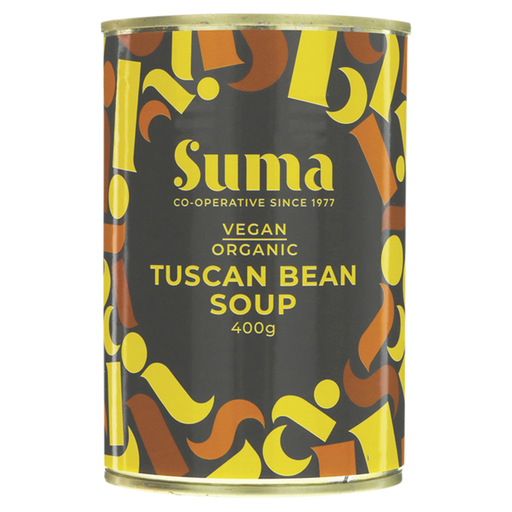 No image available
A 400 g Tuscan bean soup to consider when you want that recipe for the meal. Check the serving information and allergen statement on the exact tin.
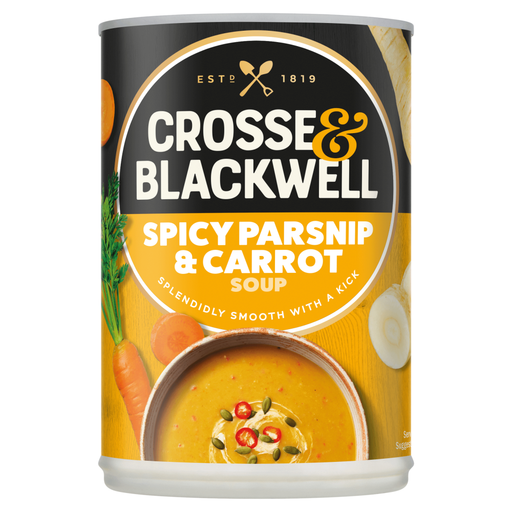 No image available
A 400 g parsnip-and-carrot soup option if that recipe appeals. Check the physical tin's ingredients, preparation directions and portions before planning the meal.
 No image available
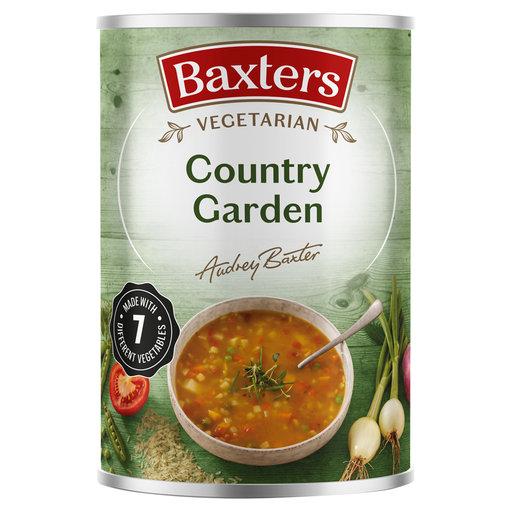
A 400 g country garden soup option for a cupboard meal. Check the exact tin's ingredients, stated portions and heating directions before choosing it for the people eating.
Not necessarily. GOV.UK explains that best-before dates concern quality, while use-by dates concern safety; tinned foods may carry best-before dates. Follow the storage instructions and check the condition of the tin and its contents.
Follow the instructions on the exact product. The Sainsbury's minestrone listing says to transfer opened soup to a non-metallic container, refrigerate it and use it within two days; the M&S cream of tomato listing also calls for refrigeration and use within two days.
Compare the salt figures per 100 g, then work out the amount for the portion you intend to serve. The NHS advises checking food labels for salt rather than relying on the name or style of a packaged food.
No. Check the exact product's ingredients and dietary designation: Campbell's UK lists milk in its condensed cream of tomato soup. A vegetarian or vegetable-based description alone does not establish that a recipe is vegan.