What should you check?
Start with the resident’s assessed texture and dietary requirements, then compare the amount you intend to serve with the nutrition information on the current can.
| Priority | What to check | Your needs |
|---|
| Texture |
Check whether the soup is smooth or contains pieces. For a prescribed modified-texture diet, follow the documented texture and preparation instructions; appearance alone cannot establish suitability. |
I need a soup the resident can safely manage. South Tees Hospitals NHS Foundation Trust advises that thickened fluids should be given only following advice from a speech and language therapist or doctor. |
| Portion and nutrition |
Compare energy and protein for the amount actually served, not just per tin. Check how the soup fits alongside the rest of the meal and any individual nutrition plan. |
For a resident with a small appetite or identified nutrition risk, I need to know whether the planned portion works as part of their meal. Norfolk and Waveney ICB guidance identifies malnutrition risk in care homes. |
| Salt |
Compare salt per 100g when portions differ, or per intended serving when they match. Sainsbury’s lists 0.89g per 200g half-can of its Cream of Tomato Soup; Tesco lists 1.12g on the same basis for its Cream of Tomato Soup. |
I want to account for the amount served alongside the rest of the day’s food, particularly when the resident’s plan calls for attention to salt. |
| Ingredients and storage |
Read the current can for allergens, ingredients, heating directions and instructions for unused soup. Check each flavour separately rather than relying on another product in the range. |
The resident’s allergies, food preferences and cultural or religious requirements matter to this choice. If I plan to serve only part of a tin, I also need a way to follow its opened-storage instructions. |
Relevant soup brands and ranges
These brand examples help distinguish soup formats and label details; a brand name alone does not establish whether a particular tin suits a resident.
Heinz
Heinz has 400g Cream of Tomato Soup and a separate Big Soup range with chunky varieties in the cited Tesco listings.
- Tesco lists 1.1g salt and 1.7g protein per half-can of Heinz Cream of Tomato Soup.
- Check texture and ingredients by variety; a chunky Big Soup should not be treated as interchangeable with smooth tomato soup.
Campbell’s
Campbell’s UK lists condensed Cream of Chicken and Cream of Tomato soups, so preparation and the stated quantity as consumed matter when comparing them with ready-to-heat soup.
- The Cream of Tomato listing gives nutrition information per 147.5g portion as consumed.
- Campbell’s Cream of Chicken ingredient information identifies wheat gluten and cow’s milk; check the current tin for the chosen flavour.
Tesco
Tesco lists 400g own-label Cream of Tomato and Vegetable soups, allowing comparisons between individual recipes rather than across a whole brand.
- Tesco Cream of Tomato Soup is described as smooth and lists 2.0g protein and 1.12g salt per half-can.
- Tesco cautions that ingredients and nutrition information may change; check the can being served.
Sainsbury’s
Sainsbury’s lists its 400g Cream of Tomato Soup as two servings.
- Its listing gives 0.89g salt and 2.1g protein per half-can.
- For unused soup, the listing instructs transfer to a non-metallic lidded container, refrigeration and use within two days; follow the current can label.
Asda
Asda lists a 400g Cream of Tomato Soup described as smooth and made with double cream.
- The listing gives 59kcal, 2.0g protein and 0.9g salt per hob-heated half-can.
- Check milk against the resident’s dietary requirements and confirm the current can’s instructions before serving.
M&S
M&S lists both Cream of Tomato Soup and a separate Chunky Chicken and Vegetable Soup in 400g tins.
- Its Cream of Tomato listing gives 0.45g salt per 100g; the Chunky Chicken and Vegetable listing gives 3.5g protein per 100g.
- M&S says the chunky chicken soup may contain bones. Check its pieces and allergens against the resident’s assessed needs.
Joybuy chunky soup options
These 400g broth and chunky-soup options are for considering when a resident can manage the relevant texture. Check each current can against their care plan; this selection does not establish suitability for a modified-texture diet.
 No image available
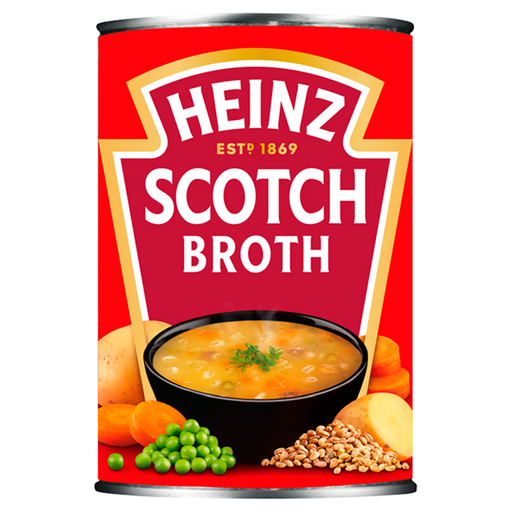
Heinz Scotch Broth Soup 400g
For a resident considering broth rather than smooth tomato soup, check the texture against their care plan. Check barley and wheat against dietary requirements and use the current can’s nutrition figures for the intended portion.
 No image available
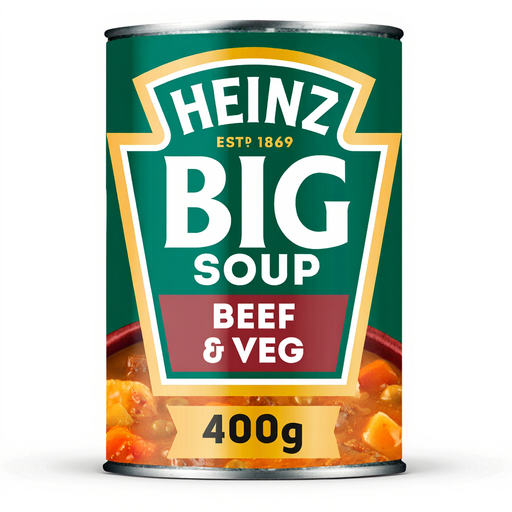
Heinz Big Soup Beef & Vegetable 400g
If beef and vegetable soup fits the resident’s preferences, confirm that its texture suits them before serving. The product information presents the 400g can as two portions; choose the amount according to the meal plan and read the physical can for allergens.
 No image available
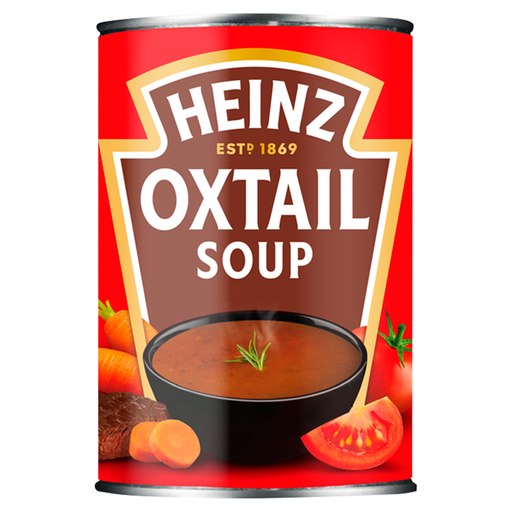
Heinz Oxtail Soup 400g
Consider the oxtail flavour only if it fits the resident’s preferences and the soup’s texture fits their plan. Check the current can for wheat, heating directions and nutrition information for the portion served.
 No image available
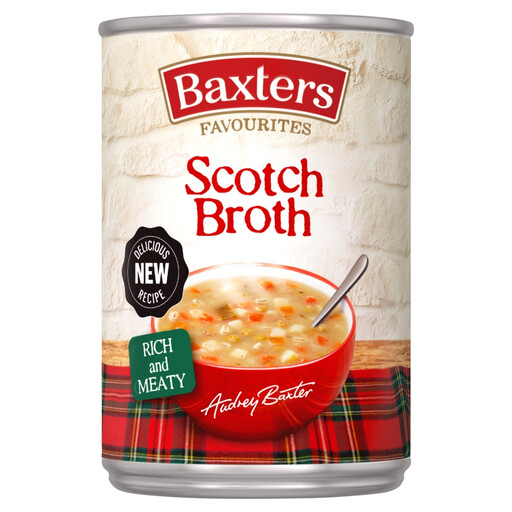
Baxters Favourite Scotch Broth 400g
For a resident who can manage the soup’s texture, decide how much of the 400g tin to serve using their appetite and nutrition plan. Check barley against dietary requirements and follow the current can’s preparation and storage directions.
 No image available
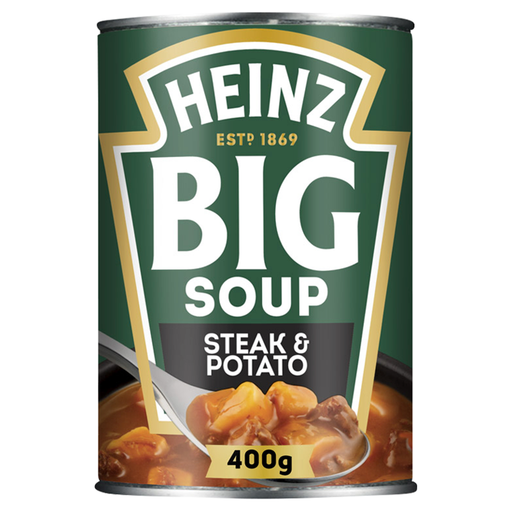
Heinz Big Soup Steak & Potato 400g
Choose a portion only after checking that this soup’s texture and ingredients fit the resident’s plan. Read the current can for allergens and heating directions, and compare its per-100g nutrition figures for the amount intended.
Frequently asked questions
Is a 400g tin one serving for a care-home resident?
Not automatically. Sainsbury’s lists its 400g Cream of Tomato Soup as two servings, and Tesco and Asda give figures per half-can for their 400g tomato soups. Decide the amount using the resident’s appetite, nutrition plan and the rest of the meal.
Can a resident with dysphagia have ordinary tinned soup?
Only when the soup as prepared meets that resident’s documented swallowing requirements. South Tees Hospitals NHS Foundation Trust advises that modified textures follow assessment and that thickened fluids should be given only following speech and language therapist or doctor advice; do not assume a soup qualifies because it looks smooth.
Is chunky soup necessarily more nutritious than smooth soup?
No; compare specific products and the amount served. M&S lists 3.5g protein per 100g for its Chunky Chicken and Vegetable Soup, while its Cream of Tomato Soup lists 1.2g per 100g. That protein difference does not override texture, allergen or individual care-plan requirements; M&S also notes that the chunky soup may contain bones.
How should staff compare salt in different soups?
Compare salt for the same quantity, using per-100g figures or the intended portion. For example, Sainsbury’s lists 0.89g per half-can of its Cream of Tomato Soup and Tesco lists 1.12g per half-can of its own Cream of Tomato Soup. Account for the actual portion and the resident’s wider menu.
What should happen to soup left after opening a tin?
Follow that product’s current label. Sainsbury’s Cream of Tomato Soup listing instructs users to transfer unused contents to a non-metallic lidded container, refrigerate them and use them within two days. Do not apply another soup’s storage period to the tin being served.


