Hosts planning a starter for several guests
Check the servings stated on each can before working out how many to buy. Two soups of the same weight need not provide the same number of stated servings.


For a dinner-party starter, a smooth soup is a straightforward choice; bean, vegetable or chunky soups offer a different format if soup is a more substantial course. Choose the flavour and texture around your menu, then use each can’s stated servings to plan quantities and check its current allergen, dietary, heating and storage instructions.
Check the servings stated on each can before working out how many to buy. Two soups of the same weight need not provide the same number of stated servings.
Check the exact soup for allergens and vegetarian or vegan suitability. A dietary filter can help you make a shortlist, but the current product label is the check to make before preparation.
Consider whether a smooth starter fits the menu or whether a bean, vegetable, minestrone or other textured soup is the course you want to serve. Check its stated portions rather than judging them by the soup’s name.
Settle the soup’s role in the meal, then check portions and every guest’s dietary requirements before planning preparation.
| Priority | What to check | Your needs |
|---|---|---|
| Portions | Read the stated servings for the exact can and check its weight. Plan the quantity around whether soup is a starter or a larger course; do not assume every 400g can serves two. | I need enough soup for the guest count without relying on can size alone. |
| Dietary suitability | Read the current ingredients and emphasised allergens on each can. Check vegetarian or vegan suitability for the exact flavour, even if you used a shop’s dietary filter to find it. | Some guests may need a different soup, so I want to check what is in each one before finalising the menu. |
| Role in the meal | Choose between a smooth soup and a bean, vegetable, minestrone or other textured format. Check the recipe and stated servings rather than assuming that a chunky or larger can provides more portions. | Is soup a small starter, or am I planning it as a more substantial course? |
| Preparation and leftovers | Follow the exact product’s heating and post-opening directions. If any soup remains, transfer and refrigerate it as directed and use it within that product’s stated period. | I want to prepare the soup for guests and know how to handle any leftovers afterwards. |
ASDA’s Cream of Tomato Soup 400g suggests two servings, while the Baxters Favourites Cream of Tomato 400g listing states one. Can weight alone cannot settle the guest count.
Use the serving guidance for the soup you choose, then decide what portion makes sense alongside the other courses.
The ASDA and Heinz cream-of-tomato listings identify milk; the Baxters cream-of-tomato listing identifies both milk and wheat. A range-level dietary filter does not establish what is in an individual can.
Ask guests about relevant dietary requirements and read the current label of every soup you intend to serve.
Post-opening directions differ. The ASDA Cream of Tomato listing says to refrigerate unused soup in a suitable container and use it within four days; the cited Heinz, Baxters and M&S examples state two days.
Follow the directions on the exact can, including its container and refrigeration instructions.
These ranges illustrate different soup formats; check the individual product rather than assuming a whole brand has the same ingredients or serving guidance.
Tesco lists Heinz cream-of-tomato and Big Soup products among its tinned soups.
Tesco’s listed soups include standard own-label varieties, Plant Chef Sweet Potato & Coconut Soup and Chunky Chicken & Vegetable Soup.
Sainsbury's lists own-label and other branded tinned soups, with filters that can help narrow a search.
ASDA Cream of Tomato Soup 400g is a smooth, vegetarian example with two suggested servings on its product listing.
M&S lists tomato, vegetable, minestrone, chicken and other soup formats, including selected larger Collection cans.
Tesco lists Campbell's Condensed Cream of Mushroom and Condensed Cream of Chicken soups in 295g cans.
These Joybuy options cover mushroom, bean, vegetable and corn soups for different starter or soup-course menus. Check portions and dietary suitability for each can before choosing.
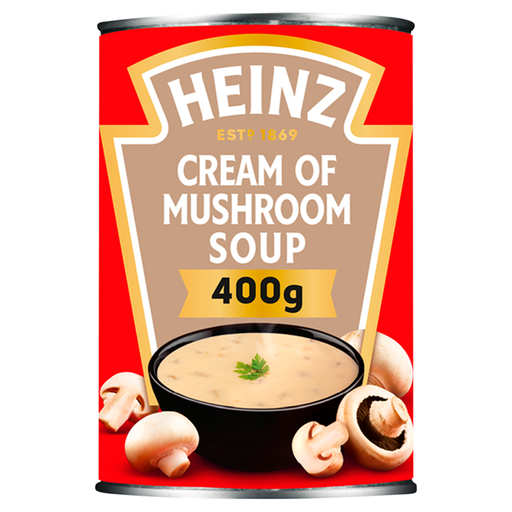 Image unavailable
A mushroom soup to consider for a starter. The can is 400g; check its serving guidance, heating directions and label for milk and wheat before preparing it for guests.
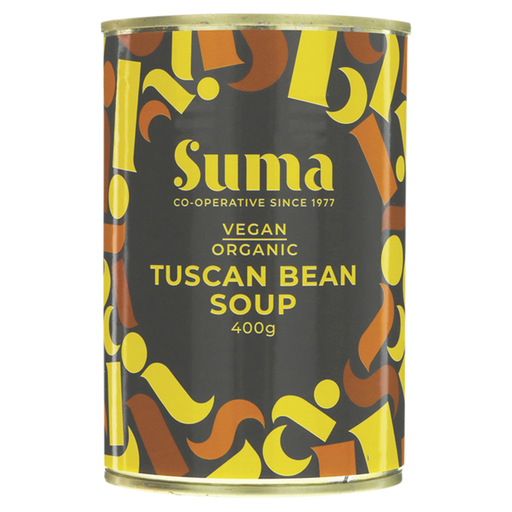 Image unavailable
A bean-soup option if you want a different format from a smooth starter. This is a 400g can; check its stated servings and current label for celery when planning for guests.
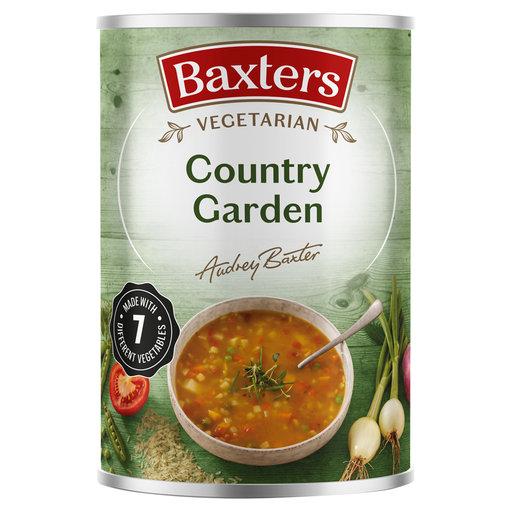 Image unavailable
A 400g vegetarian soup to consider for a vegetable-based course. Vegetarian does not mean dairy-free: check the current label for milk, along with the servings and heating directions.
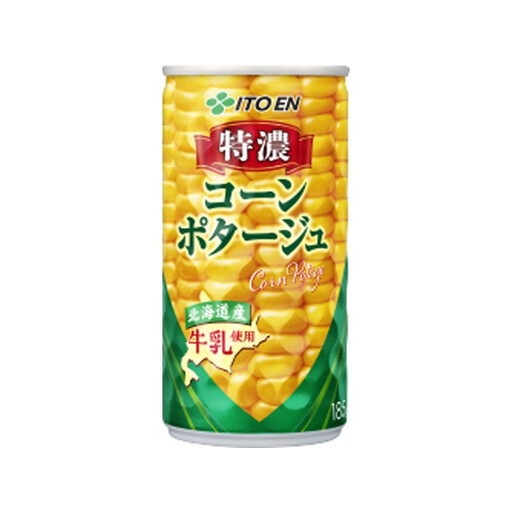 Image unavailable
A smaller, 185g corn-potage option for a different starter flavour. Check the stated serving and preparation directions, and read the current label for milk and chicken-derived ingredients before offering it to guests.
Use the stated servings on the exact soup you choose, then work out how much you intend to serve per guest. ASDA Cream of Tomato Soup 400g suggests two servings, whereas Baxters Favourites Cream of Tomato 400g states one, so weight alone is not a portion guide.
Use a filter to shortlist soups, but check the current physical label of every exact can before preparation. Sainsbury's explicitly says its allergy and intolerance filters should not replace checking the label.
Do not assume so. The cited ASDA, Heinz, Baxters and M&S cream-of-tomato products identify milk, and the Baxters example also identifies wheat. Check the ingredients of the particular soup you plan to serve.
Follow that can’s directions for transferring, covering and refrigerating unused soup. The cited Heinz, Baxters and M&S examples specify use within two days; the ASDA own-label cream-of-tomato listing specifies four days.
GOV.UK explains that a best-before date concerns quality, while a use-by date concerns safety; tinned foods commonly carry best-before dates. Food is usually safe after its best-before date but may have declined in quality. Check the can and follow its storage instructions rather than treating the two types of date as interchangeable.