What should you compare?
Start with the portion you would actually eat, then decide whether the soup must be a cupboard tin or can be kept chilled. The figures below describe specific products listed by Tesco and Sainsbury's, not every soup in either format.
| Priority |
What to check |
Your needs |
| Protein |
Compare grams for the portion and full pack, alongside kcal. Tesco lists 4.4g protein in a full 400g Heinz Vegetable Soup can; Sainsbury's lists 5.2g in its 400g Vegetable Soup can. The checked chilled BOL pots provide 22.2g or 23.4g per 600g pot, based on Sainsbury's labels. |
I want to know whether the soup itself contributes enough protein for my intended meal, or whether I need another protein food alongside a tin. |
| Portion and calories |
Read kcal per 100g, per labelled serving and for the amount you will eat. The checked 400g vegetable tins and 600g BOL pots each contain two labelled servings. Count accompaniments separately from the soup. |
A whole can or pot may be my lunch, even if its label calls half the pack one serving. I need the figures for my actual portion. |
| Salt |
Check grams of salt for your portion, not just per 100g. Sainsbury's lists 1.5g and 1.8g per 300g serving for the two checked BOL soups: that is 3.0g and 3.6g respectively if the full pots are eaten. |
If I eat the whole pot, its full-pot salt figure matters alongside its protein and calorie figures. |
| Storage and ingredients |
Check whether the soup needs refrigeration before opening, its use-by or storage instructions, and the current ingredient and allergen label. The checked higher-protein BOL and New Covent Garden options are chilled; the checked vegetable tins are cupboard products before opening. |
I may need a tin for pantry storage, or a recipe that fits my ingredient requirements. I cannot choose on protein figures alone. |
Brand and retailer references
These examples illustrate label and format differences; a brand name alone does not establish a soup's protein, calories or storage requirements.
Heinz
Tesco lists Heinz Vegetable Soup as a 400g tin.
- Tesco's label gives 47kcal per 100g, or 188kcal for the full can.
- The same label gives 1.1g protein per 100g, or 4.4g for the full can; check how it fits into the rest of your lunch.
Sainsbury's
Sainsbury's lists its own-label Vegetable Soup in a 400g can with two labelled servings.
- Its label gives 42kcal per 100g, or 168kcal for the full can.
- It provides 1.3g protein per 100g, or 5.2g per can, so assess any additional protein food separately.
M&S
M&S has both cupboard soup and separate chilled soup ranges; check the format of the particular product.
- Its Cream of Tomato Soup label specifies cool, dry storage before opening.
- That 400g tin lists 63kcal and 1.2g protein per 100g; do not assume another M&S range changes this tin's nutrition.
Campbell's
Campbell's presents soup as a cupboard product on its UK site.
- Its range offers another brand to consider when cupboard storage is the deciding format.
- Compare the UK label of the exact soup you choose for portion size, kcal, protein and salt rather than relying on the brand name.
Tesco
Tesco lists both standard tinned soup and New Covent Garden Classic Chicken Soup in a chilled 560g carton.
- The New Covent Garden listing gives 9.8g protein and 153kcal per half pack, making its serving information useful for comparison.
- A full carton is two servings and needs chilled storage; the listing does not describe a Tesco own-label tin.
Tinned soup options on Joybuy
These 400g tins are options to assess when cupboard soup is the starting point for lunch. Check each current pack's nutrition for your portion and include any separate protein food in the meal comparison.
 No image available
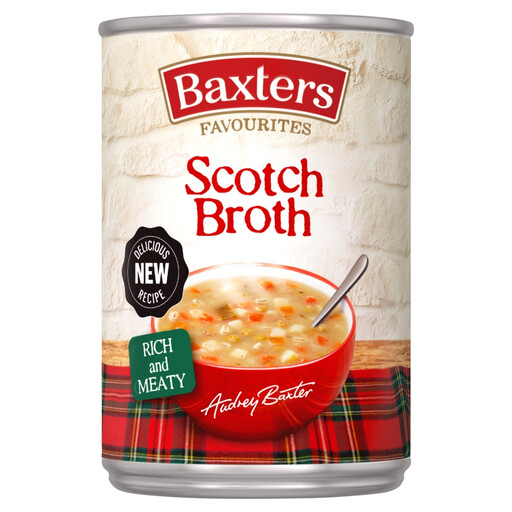
Baxters Favourite Scotch Broth 400g
For a lunch built around a cupboard tin, compare the nutrition for the amount of this 400g soup you will eat with any food served alongside it. Check the current ingredient and allergen label, particularly if barley is a concern.
View on Joybuy
 No image available
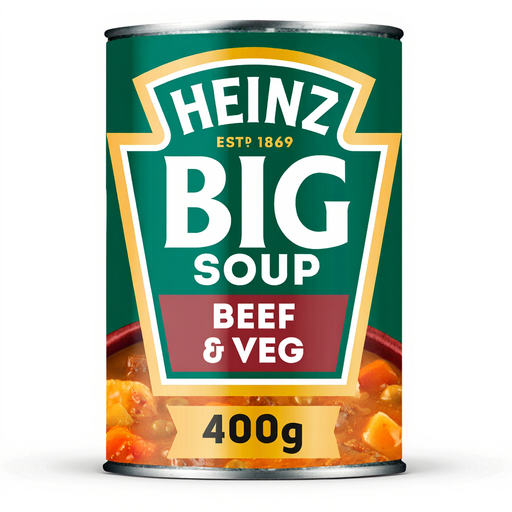
Heinz Big Soup Beef & Vegetable 400g
This beef-and-vegetable tin is an option when you want soup with meat as part of a cupboard-based lunch. Use the current label to compare kcal, protein and salt for your portion; the name alone does not establish whether it meets your meal's protein needs.
View on Joybuy
 No image available
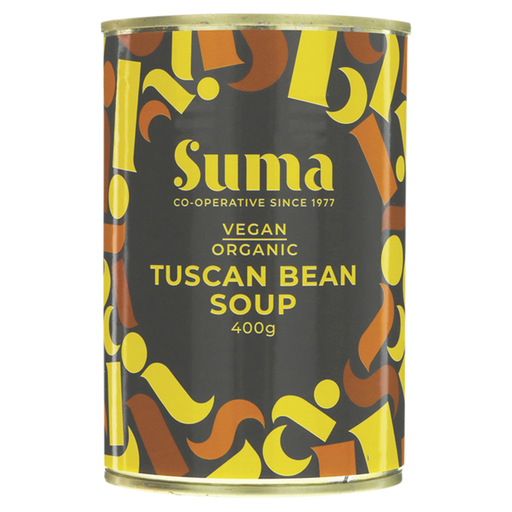
Suma Organic Tuscan Bean Soup 400g
If a bean soup appeals as the base of a cupboard lunch, check this 400g tin's current protein, kcal and salt figures for the portion you intend to eat. Check the ingredient and allergen label for your dietary requirements rather than inferring them from the recipe name.
View on Joybuy
 No image available
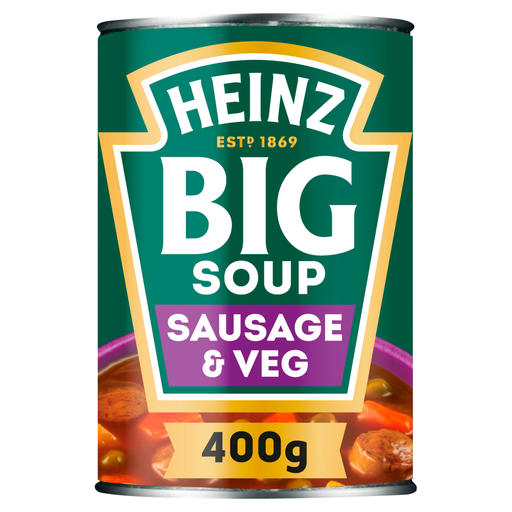
Heinz Big Soup Sausage & Vegetable 400g
This sausage-and-vegetable tin offers a meat-containing cupboard soup option. Compare its current full-portion kcal, protein and salt with other tins before deciding how it fits into a calorie-conscious, higher-protein lunch.
View on Joybuy
 No image available
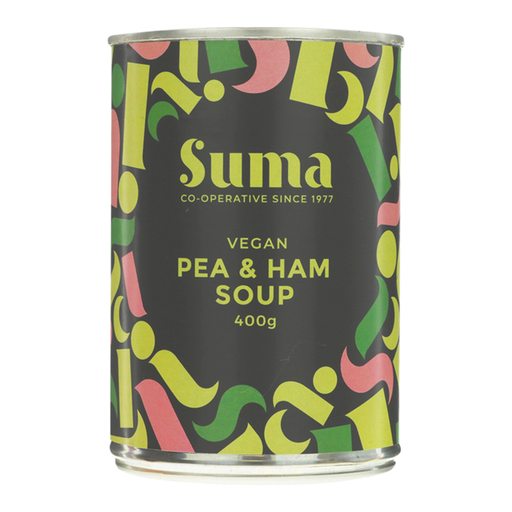
Suma Pea & Vegan Ham Soup 400g
For this 400g pea soup, compare the current label's protein, kcal and salt for your intended portion. If you need to avoid milk or require a vegan product, check the physical pack before buying: the product information gives conflicting milk-allergen and vegan-friendly descriptions.
View on Joybuy
Questions about choosing soup
Does a low-calorie tin provide plenty of protein?
Not necessarily. Tesco's label for Heinz Vegetable Soup gives 4.4g protein per full 400g can, and Sainsbury's gives 5.2g for its 400g Vegetable Soup. Compare those figures with the amount of protein you want from the soup component of your meal, rather than judging it by calories alone.
Should I compare soup per 100g or per serving?
Use per 100g to compare products of different sizes, then calculate the nutrition for the amount you will actually eat. NHS Better Health notes that a manufacturer's portion may differ from yours; several of the tins and chilled packs discussed here are labelled as two servings.
Can a standard tin be part of a higher-protein lunch?
Yes: a tin can be the soup component while a separate food contributes protein. Check the tin and the added food together for the meal's calories and protein. If you have an individually prescribed protein target, follow the advice given by your clinician or dietitian rather than treating a product example as that target.
Do soups with more protein have to be refrigerated?
Not as a general rule, but the checked BOL pots and New Covent Garden carton discussed here are chilled products. The checked standard tins are cupboard products before opening. Follow the storage and post-opening instructions on the exact pack you buy.
How do I check whether a soup fits my dietary requirements?
Read the current pack's ingredients, allergen statement and dietary declaration for the exact recipe. The checked BOL chilled soups are labelled vegan, while the checked New Covent Garden Classic Chicken Soup includes milk; a different soup or variant needs its own label check.


