
24/7 Customer Support

Free returns

Same-day & Next-day Delivery

Quality Guaranteed

Unlock Your Welcome Offers: FREE Delivery | Up to 80% OFF | Free 30-day JoyPlus trial
Download the APP
Finding tinned soup and ready meals in the UK should be straightforward, but product pages can make comparison difficult. Large claims such as “hearty”, “wholesome” or “authentic” do not always explain what you are actually buying.
Three common pitfalls are worth avoiding:
The right choice depends on how quickly you need to eat, where you can store it and whether you are buying for one person, a family or a young child.
Tinned soup and tinned ready meals are useful cupboard staples because they have a long ambient shelf life. Heinz soup varieties such as Beef & Vegetable, Steak & Potato and Chicken Noodle are supplied in 400g tins and can be heated on the hob or in a microwave-safe dish.
For a desk drawer, student kitchen or emergency lunch, instant soup sachets are lighter and faster to prepare. Grace Chicken Noodle Soup uses 250ml of boiling water and needs three to four minutes to rehydrate. Batchelors Cup a Soup Chicken comes in four sachets, making it suitable for keeping several servings at home or work.
For a more substantial dinner, frozen ready meals can provide a larger prepared dish. However, check freezer capacity, cooking time and whether the meal needs to be thoroughly cooked rather than simply reheated.
Per-100g figures are useful for comparing products, but they can hide the amount you will actually eat. Check both the serving size and number of servings per pack.
For example, Heinz Chicken Noodle Soup lists 0.6g of salt per 100g and 1.2g per half tin. Master Kong Sour Beef in Golden Soup is supplied as five 105g packets and lists 2,489mg of sodium per 100g in the supplied product information. These products serve different purposes, so comparing only the front-of-pack wording can give an incomplete picture.
Also check:
Food labels should be checked every time, as recipes and packaging may change. Common allergens in this selection include:
Follow the stated storage instructions. Once opened, many tinned products should be transferred to a covered container, refrigerated and eaten within two days. Baby food pouches and trays have shorter after-opening instructions, often requiring immediate use or refrigeration for up to 24 hours. Never microwave a baby food pouch unless the packaging specifically permits it; the Ella’s Kitchen products listed here instruct customers to serve from a bowl or spoon.
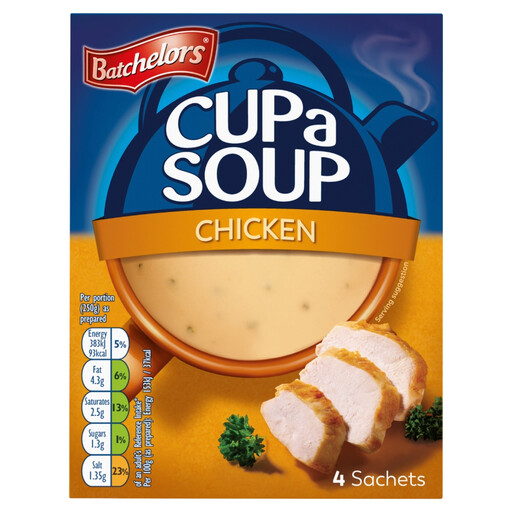
Why This Fits Their Persona: Four individually portioned sachets suit shoppers who want a cupboard-friendly hot drink or light lunch without opening a large tin.
The multi-sachet format makes the serving count clear. Buyers should still check the stated allergens, including barley and milk, and the salt value before ordering.
Four sachets; preparation requires boiling water and a short standing time; suitable for dry cupboard storage.
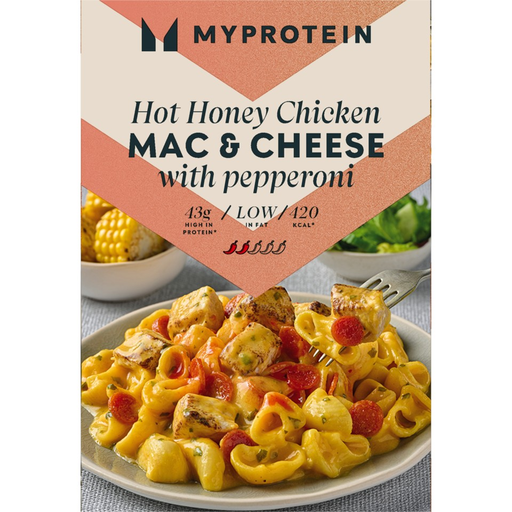
Why This Fits Their Persona: A frozen single-meal option for shoppers seeking a prepared dish with chicken, pasta, cheese and a sweet-spicy sauce.
The product description identifies the frozen format, cooking requirement and allergens rather than presenting it as a shelf-stable meal.
350g meal; 14.5g protein per 100g; contains wheat, milk and mustard, which are clearly identified for checking.
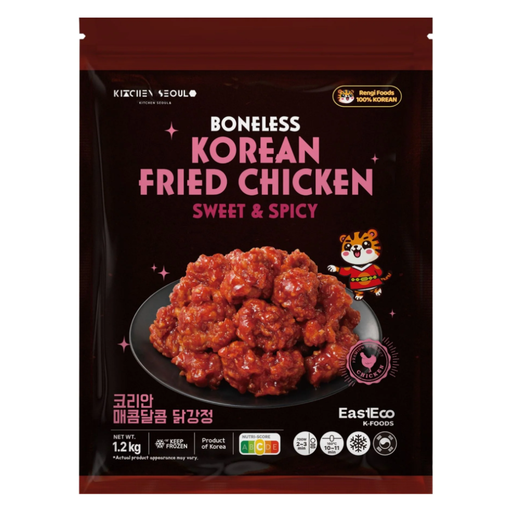
Why This Fits Their Persona: The 1.2kg frozen pack suits households planning sharing plates, family meals or several Korean fried chicken servings.
The pack weight and frozen storage requirement are explicit, helping shoppers distinguish a bulk meal from a small ready-to-eat portion.
1.2kg pack; boneless chicken; suitable for oven or air-fryer preparation; contains wheat and soya.
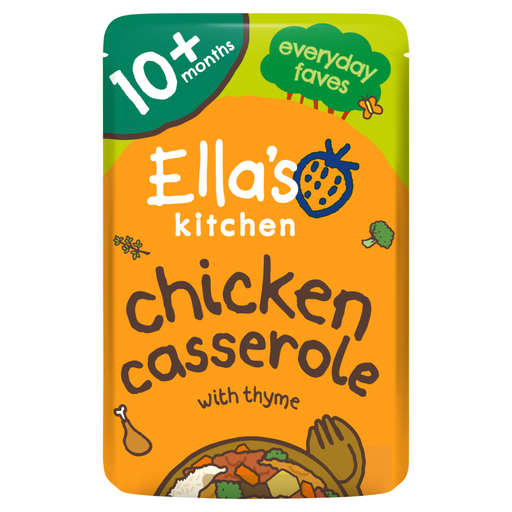
Why This Fits Their Persona: A portioned organic baby food pouch for toddlers aged 10 months and over, with a textured recipe containing chicken, rice and vegetables.
The age suitability and preparation directions are stated clearly. Parents should serve it from a bowl or spoon, supervise feeding and refrigerate unused food for no more than 24 hours.
190g pouch; organic ingredients; textured consistency; no artificial additives listed in the supplied product information.
We have compiled a complete, real-time list of products that fully satisfy these strict selection criteria and UK safety regulations.
Many unopened tinned soups and ambient ready meals can be stored in a cool, dry place until the best-before date shown on the packaging. Check the label before purchase, as frozen meals and chilled products require different storage. Once a tin is opened, transfer leftovers to a covered container, refrigerate and follow the stated consumption period.
They usually require less equipment and preparation time: most need only boiling water. However, the total cost depends on serving size, pack price and whether the sachet is a snack or a complete meal. Compare the cost per serving rather than the headline pack price.
Check the age recommendation, texture, allergens, portion size and after-opening storage instructions. Baby food pouches should generally be squeezed into a bowl or served on a spoon, not used as an unsupervised feeding method. Always check the temperature before serving and follow the label’s guidance for leftovers.