Families planning a simple shared meal
If soup is a Valentine’s starter or light supper, work from the number of servings on the tin. A 400g can should not automatically be treated as enough for the whole family.


For a low-preparation Valentine’s meal, choose ready-to-heat soup for a starter or light supper, or a chunky variety if you want pieces of vegetables or meat in the bowl. Condensed soup makes more sense when you plan to cook it into a shared dish. Whichever format you choose, use the labelled servings to work out how many tins you need, and check salt, allergens and storage instructions on the current pack.
If soup is a Valentine’s starter or light supper, work from the number of servings on the tin. A 400g can should not automatically be treated as enough for the whole family.
When choosing between ready-to-eat soups, compare salt per 100g as well as per labelled serving. The two figures answer different questions when tin and serving sizes vary.
Check the ingredients and allergen information on each exact pack before serving. Campbell’s lists milk and celery in its condensed tomato soup, while its condensed chicken soup lists wheat and milk and says it may contain egg.
Decide whether soup is the meal, a starter or an ingredient first; then compare portions and the details that matter to everyone eating.
| Priority | What to check | Your needs |
|---|---|---|
| Meal format | Check whether the tin is ready to heat, contains chunky ingredients or is condensed for preparation or cooking. Read its directions before using it in a recipe. | For a quick starter, I want soup I can heat and serve. For a shared pasta bake or sauce, I would consider condensed soup instead. |
| Portions | Compare the pack size with its labelled serving size and count. Work out the quantity needed for a starter separately from a main meal. | If several people are eating, one 400g tin may not cover the portions I plan to serve. |
| Salt | Compare salt per 100g between soups, then check salt per labelled serving for the portion you intend to serve. | I want to compare similar soups without mistaking a smaller serving for a difference in salt content. |
| Ingredients and allergens | Read the current ingredients list, highlighted allergens and any precautionary statement. Check any vegetarian or vegan statement against the exact product. | Everyone at the table needs a soup that fits their dietary requirements; the flavour name alone cannot tell me that. |
| Storage | Check the date marking, packaging condition and instructions for storing soup after opening. Follow the open-life period for that product. | If I expect leftovers, I need to know how to store them and when the pack says to use them. |
Pack sizes and serving information differ, and soup served as a starter calls for a different quantity from soup served as supper.
Plan the meal first, then add up the labelled servings needed rather than counting tins alone.
Too few servings can leave you needing an unplanned side dish or another tin.
In its February 2026 analysis of 481 ready-to-eat soups, Action on Salt & Sugar reported that 23% exceeded UK salt reduction targets. That product finding does not tell you the salt content of any particular vegetable or branded soup.
Compare the nutrition labels of the tins you are considering, using salt per 100g and per labelled serving.
Recipes with similar names can have different ingredients. Campbell’s condensed tomato soup lists milk and celery; its condensed chicken soup lists wheat and milk and may contain egg.
Read the current tin’s ingredients, highlighted allergens and precautionary wording before serving it.
The Food Standards Agency says whether canned food is acceptable after a best-before date depends on the product, storage conditions and brand. The Joybuy instructions for Heinz Cream of Tomato Soup 400g say to transfer unused soup to a suitable container, refrigerate it and eat it within two days; that is a product-specific instruction.
Check the condition of the tin and follow its own date and storage directions, including the instructions for leftovers.
These ranges illustrate different soup formats; a brand name does not replace a check of the exact tin’s ingredients, servings and nutrition label.
Tesco lists Heinz 400g soups, while the Big Soup range offers meal-style varieties alongside classic flavours.
Campbell’s presents its condensed soups both for serving as soup and for use in recipes.
Tesco’s tinned and packet soup category includes own-label and branded products, including 400g options.
M&S lists tinned soup options including a 400g chunky vegetable variety, with vegetarian and vegan category filters.
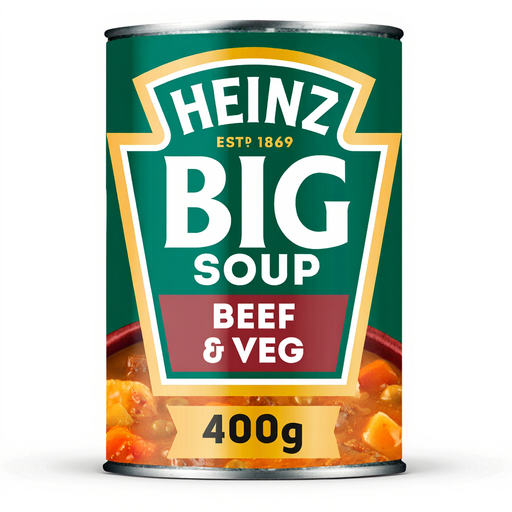
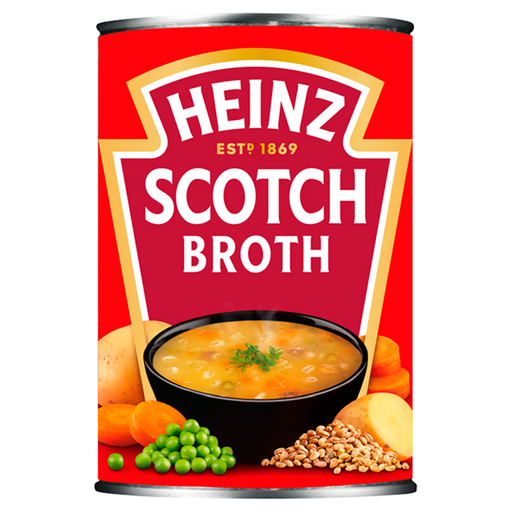
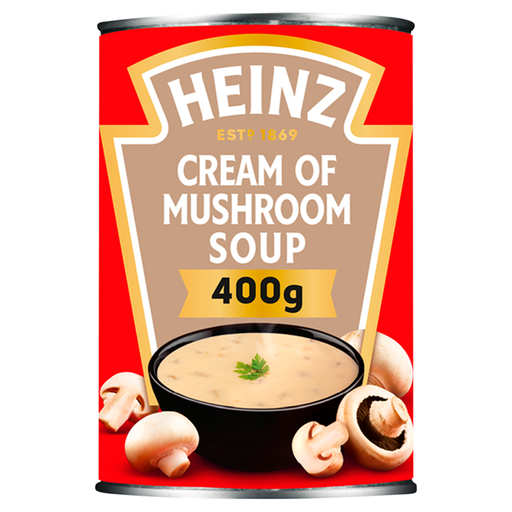
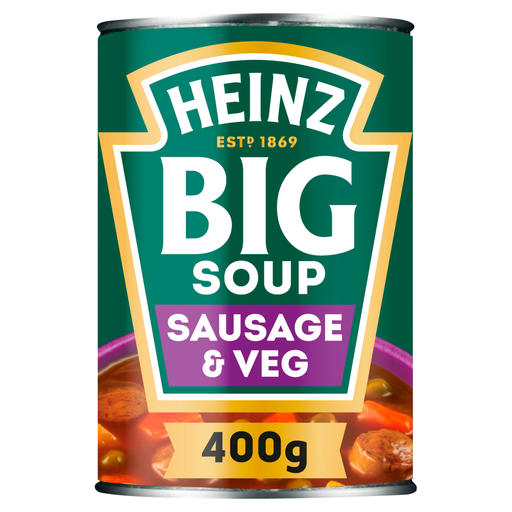
These Heinz tins cover meal-style Big Soup varieties, Scotch broth and a cream of mushroom soup for a family meal. Use the current pack to confirm portions, ingredients and preparation before choosing how many to serve.
 No image available
For a beef-and-vegetable soup served as part of the meal, check the labelled portions before deciding how many 400g tins your household needs. Read the current allergen information before serving.
 No image available
For a broth alongside the rest of the meal, check portions on the 400g tin. The listed recipe identifies gluten from barley and wheat, so check the current pack for anyone managing an allergy or dietary restriction.
 No image available
If cream of mushroom soup suits the planned starter, check the 400g tin’s serving information. Its listed dietary details identify vegetarian suitability and milk and wheat allergens; confirm these on the current pack.
 No image available
For a sausage-and-vegetable soup, check the labelled servings and heating directions before planning a shared meal. The listed allergen information identifies wheat; read the current tin before serving.
 No image available
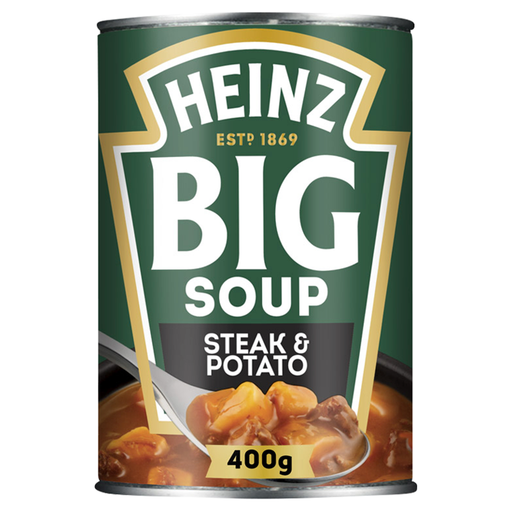
If steak-and-potato soup is the main bowl rather than a starter, check the labelled servings to plan the quantity. Follow the current pack’s heating directions and confirm its allergen statement before serving anyone with an allergy.
Do not assume it is. Check the tin’s labelled servings and decide whether soup is a starter, a light meal with other food or part of a larger dish before working out how many tins to use.
Choose ready-to-heat soup if you intend to heat and serve bowls; consider condensed soup if it will be an ingredient in a shared dish. Campbell’s presents its condensed soups for recipes as well as for serving as soup. Follow the chosen product’s preparation directions and check its allergens.
Compare salt per 100g between products, then check salt per labelled serving for the portion you plan to serve. Action on Salt & Sugar’s February 2026 analysis of 481 ready-to-eat soups reported that 23% exceeded UK salt reduction targets, so check the exact tin rather than judging by its flavour.
Read the current tin’s ingredients, highlighted allergens and any precautionary statement for everyone eating. For example, Campbell’s condensed tomato soup lists milk and celery, while its condensed chicken soup lists wheat and milk and says it may contain egg.
Follow that product’s storage and open-life instructions. The Joybuy instructions for Heinz Cream of Tomato Soup 400g say to transfer unused soup to a suitable container, refrigerate it and eat it within two days; check another soup’s own pack rather than applying the same period to it.