Families planning weekday portions
If soup is lunch, a light dinner or a starter, compare the amount each person will eat with the serving on the label. Include bread, spreads and toppings when considering the whole meal.


For family weight-management meals, compare tinned soups by the kcal and salt in the portion each person will eat, rather than choosing on a low-fat claim alone. Check protein, fibre, ingredients and any accompaniments too: a smaller serving may suit a starter, but it does not automatically make a complete main meal.
If soup is lunch, a light dinner or a starter, compare the amount each person will eat with the serving on the label. Include bread, spreads and toppings when considering the whole meal.
If soup will be the main part of lunch, compare the protein and fibre shown for the actual portion. Vegetable, bean, lentil and chicken recipes can differ considerably, so the recipe name alone is not enough.
Check the current can for ingredients, allergens and dietary suitability before serving. Ingredients such as milk, wheat, egg, celery and meat matter to different members of the household.
Start with comparable per-100g figures, then use the serving information and the amount you intend to serve to assess the meal.
| Priority | What to check | Your needs |
|---|---|---|
| Portions and energy | Compare kcal per 100g, then the kcal in the portion actually served. Check the can size and stated number of servings rather than treating one can as one family portion. | I want to know how much soup each person will have and account for any bread, spreads or toppings alongside it. |
| Salt | Compare salt in g per 100g and in the portion served. An NHS traffic-light label can help screen products, but check the figures and portion size as well. | For a soup we might serve regularly, I want to compare salt without assuming that a vegetable or low-fat label tells me the answer. |
| Meal composition | Read the ingredient list and compare protein and fibre per 100g or serving. Check what vegetables, pulses or other foods will accompany the soup. | If soup is the main part of lunch, I want to see what it contributes and plan the rest of the meal accordingly. |
| Dietary suitability | Read the current ingredients and highlighted allergens. Check any vegetarian or vegan statement on the exact product rather than judging by its flavour name. | Someone at our table needs the soup and its accompaniments to meet their dietary requirements. |
That claim does not describe the whole meal or tell you the protein, fibre and salt in the portion you serve.
Compare the nutrition panel per 100g and for the intended portion, then include any bread, spreads, cheese or toppings in your meal planning.
Action on Salt & Sugar found salt levels ranging from 0.1g to 1.6g per 100g across 481 ready-to-eat soups sold by major UK retailers in its February 2026 snapshot. The range does not tell you the level in a particular can.
Compare the salt figures on the products you are considering, both per 100g and for the amount each person will eat.
Sainsbury's lists two servings for its 400g Tomato & Spicy Lentil Soup, and its listing of Heinz Chicken Noodle Soup also states two servings for a 400g can. Neither can should be assumed to provide a whole family main meal.
Decide whether soup is a starter or part of a main meal, then check the serving count and plan any other food accordingly.
An earlier purchase is not a substitute for the label on the can being served, particularly when someone has an allergy or other dietary restriction.
Read the current ingredients, highlighted allergens and suitability information before serving.
These examples show why it is worth comparing individual cans; a brand or retailer name does not establish the nutrition of every soup in its range.
The Heinz Chicken Noodle Soup 400g listing provides a specific chicken-and-noodle example for label comparison.
Tesco's own-label tinned-soup listings include tomato and lentil-and-vegetable options.
Its Tomato & Spicy Lentil Soup, Be Good To Yourself 400g offers a specific pulse-based example.
M&S lists distinct chicken-and-vegetable and bean-based soups with different nutrition figures.
These options include creamy soups, chicken noodle soup, a bean soup and a vegetable soup. Compare the current labels and the portions you intend to serve rather than treating the selection as a ranking for family weight management.
 No image available
A creamy chicken-and-mushroom option to compare by the portion you plan to serve. Check the current can for milk and wheat allergens.
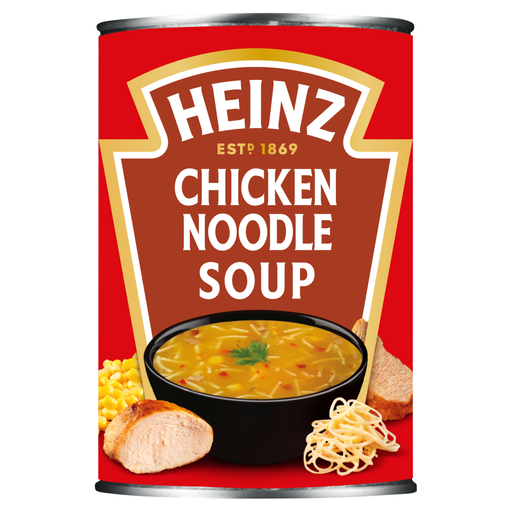 No image available
For a chicken-and-noodle option, Sainsbury's lists 32kcal, 0.6g salt, 1.3g protein and 0.2g fibre per 100g, with two servings per can. Check the current ingredients for wheat, egg and celery or celeriac.
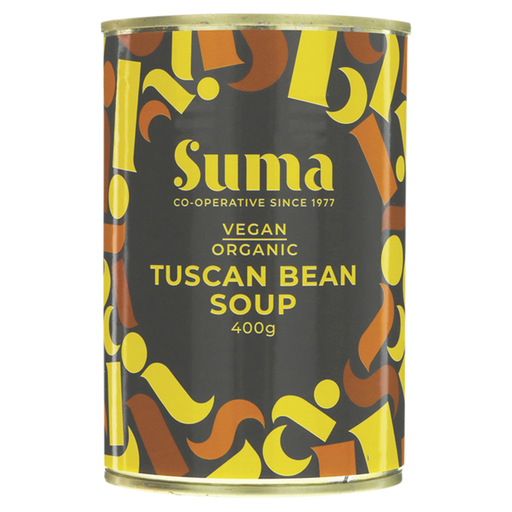 No image available
A bean-soup option for comparing portions and meal accompaniments. Check the serving information on the can when planning how much to serve, and check for celery if it matters to your household.
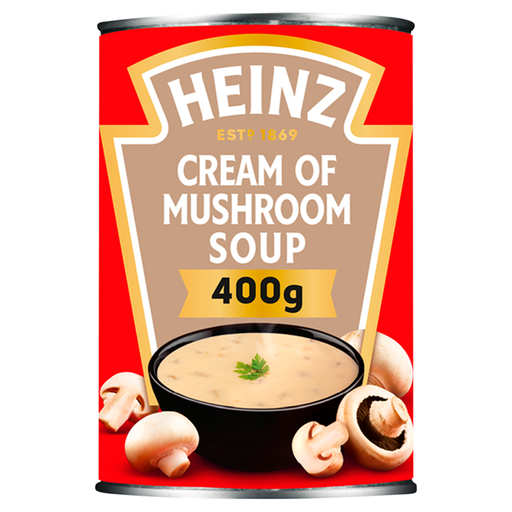 No image available
A creamy mushroom option to assess alongside its portion size and any accompaniments. Check the current can for milk and wheat allergens, and use its serving information when planning the meal.
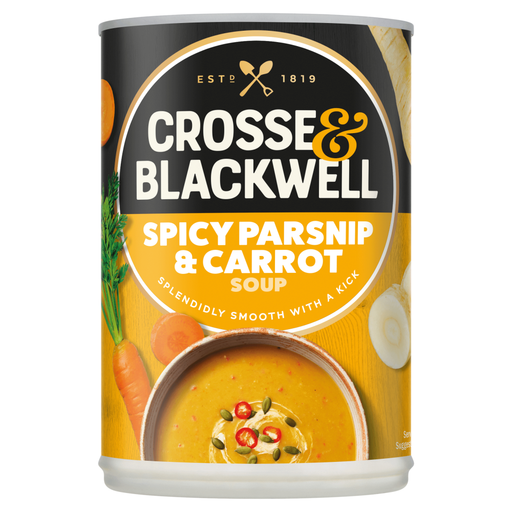 No image available
A parsnip-and-carrot option when comparing vegetable soups for a family meal. Check the serving information and current label, including celery, milk and wheat allergens.
Yes, depending on the portion and the rest of the meal. NHS guidance emphasises an eating pattern that works in everyday life; compare the soup's kcal and salt per 100g and for the amount served, then account for bread, spreads and toppings too.
NHS food-label guidance classifies more than 1.5g salt per 100g as high and 0.3g or less per 100g as low for foods. Compare the per-100g figure between soups, then check how much salt is in the portion each person will eat.
Do not assume it will. Sainsbury's lists two servings per can for both its 400g Tomato & Spicy Lentil Soup and Heinz Chicken Noodle Soup 400g. Check the particular can and decide whether soup is a starter or one part of a larger meal.
Yes, if someone eating it has an allergy: read the current can before serving. NHS food-label guidance says allergens must be highlighted in the ingredients list of pre-packed foods; an earlier purchase is not a substitute for the current label.
Follow the storage instructions on the exact can. For example, Marks & Spencer instructs shoppers to transfer leftover Chunky Chicken and Vegetable Soup to an airtight container, refrigerate it and eat it within two days; check your chosen soup for its own directions.