Families planning portions from a tin
If a 400g tin will be divided between lunches, check the serving information and how any unused soup must be stored. A smaller or condensed tin may need a different preparation and portion plan.


For a secondary-school packed lunch, judge a tin by the portion the pupil will eat, its salt content and whether the soup can be served hot at school. In Tesco’s checked 400g tomato range, Low Fat Tomato Soup lists 0.69g salt per 200g serving, compared with 1.12g for Tesco Cream Of Tomato Soup. Check the current allergen label and the school’s hot-food arrangements before making soup a regular packed-lunch choice.
A suitable tin depends on the pupil’s portion, dietary requirements and access to a hot lunch.
If a 400g tin will be divided between lunches, check the serving information and how any unused soup must be stored. A smaller or condensed tin may need a different preparation and portion plan.
The amount on a nutrition label may refer to 100g, half a tin or another portion. Compare it with the amount the pupil would actually eat. The NHS advises a daily salt maximum of 6g for people aged 11 and older.
Check the exact recipe rather than relying on the soup category or a vegetarian label. The researched Tesco tomato soups list milk ingredients; Campbell’s Condensed Cream of Tomato Soup lists milk and celery.
Start with the portion and the school-day serving plan, then compare the nutrition and allergen information on the exact tin.
| Priority | What to check | Your needs |
|---|---|---|
| Portion size | Read the net weight and labelled serving size. For condensed soup, follow its preparation directions before deciding how much makes one lunch. | I want to know how many school lunches the tin will provide without assuming that one tin equals one serving. |
| Salt | Compare salt for the portion you intend to pack, using the same serving weight where possible. Tesco lists 0.69g per 200g for Low Fat Tomato Soup and 1.12g per 200g for Cream Of Tomato Soup. | If soup is a regular lunch component, I want to see how its salt fits with the rest of the day’s food. |
| Rest of lunch | Plan what will accompany the soup rather than treating the tin as the whole packed lunch. NHS lunchbox guidance includes foods such as bread, rice, pasta and potatoes as main lunchbox items. | Soup may be the hot part of lunch, but I also need to pack food the pupil will eat alongside it. |
| Allergens | Read the current ingredients and allergen declaration for the exact recipe. Vegetarian suitability does not establish suitability for a milk or celery allergy. | A vegetarian label alone does not answer whether this soup meets the pupil’s individual dietary requirements. |
| Serving hot | Check the tin’s heating directions, the school’s arrangements and whether a suitable food flask can hold the intended portion. Do not plan to microwave soup in its metal tin. | I need a workable way to prepare, carry and serve the soup during the school day. |
A 295g condensed soup and a 400g ready-to-heat soup call for different preparation and portion decisions. Tin weight alone does not show what the pupil will eat at lunch.
Read the preparation directions and serving information before deciding whether a tin can be divided between lunches.
In Tesco’s checked tomato range, Low Fat Tomato Soup lists 0.69g salt per 200g serving, while Cream Of Tomato Soup lists 1.12g for the same serving weight. A comparison based on different portion sizes could obscure that difference.
Use the nutrition label to compare the amount the pupil would actually eat, and consider it alongside the rest of the day’s food.
Soup that needs heating and decanting is not automatically practical as a school packed lunch.
Check the school’s arrangements, heat the soup according to its instructions and confirm that the intended portion fits the food flask if one will be used.
A suitable insulated food flask may be needed where there is no permitted way to heat and serve soup at school.
The researched Tesco tomato soups contain milk ingredients, while Campbell’s Condensed Cream of Tomato Soup lists milk and celery.
Check the current label for every purchase and follow the pupil’s individual allergy requirements and any school procedures.
These examples concern particular soup recipes and packs, not every product made by each brand.
The researched 400g tomato tins include Tesco Cream Of Tomato Soup, Tesco Low Fat Tomato Soup and Stockwell & Co Tomato Soup.
Tesco’s researched catalogue includes Heinz Cream Of Tomato Soup in a 4 × 400g pack; the 400g single tin is another identified format.
Campbell’s Condensed Cream of Tomato Soup is a 295g condensed option, so its preparation and serving size need attention when planning a packed lunch.
These 400g tinned soups offer different flavours for a lunch prepared and served hot. Check the current label, intended portion and school arrangements for each one.
 No image available
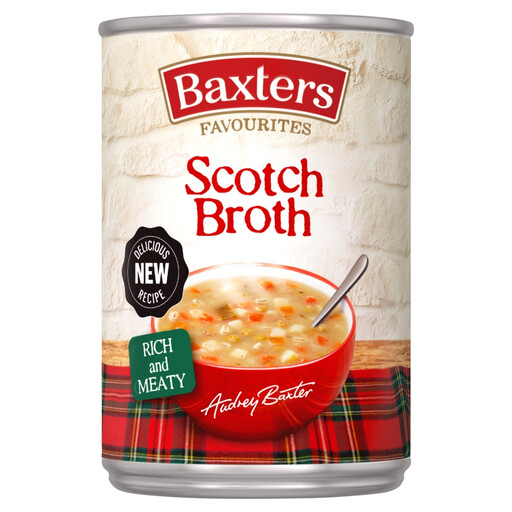
A broth option if soup can be prepared and carried hot for school. Check the current label for barley and compare salt for the portion you intend to pack.
 No image available
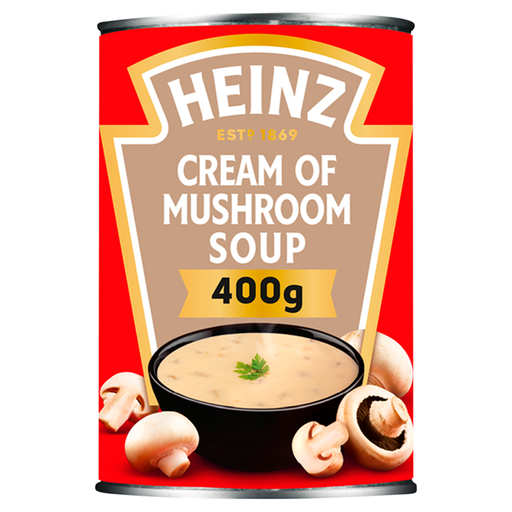
A mushroom-soup option for a planned hot lunch. Check the current label for milk and wheat, and use its serving information to decide how much to pack.
 No image available
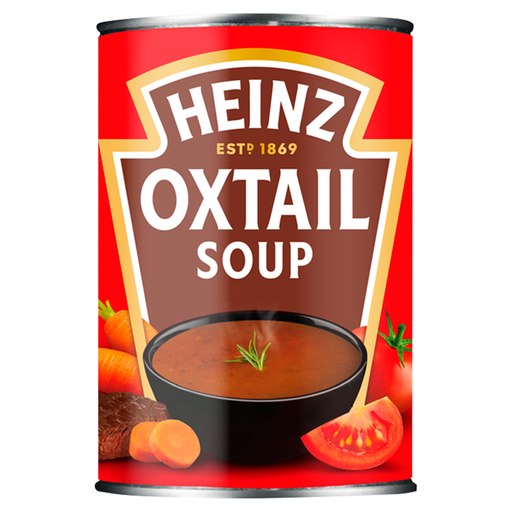
An oxtail-soup option for a pupil who eats meat. Check the current wheat declaration and preparation directions before planning to serve it at school.
Do not rely on that plan without checking the school’s arrangements. Follow the tin’s heating directions and decant soup into a suitable container; do not put a metal tin in a microwave. A food flask may be more practical if hot food can be brought to school.
Tesco Low Fat Tomato Soup lists 0.69g salt per 200g serving, compared with 1.12g for Tesco Cream Of Tomato Soup. Check the current label and the portion being packed before comparing either soup with another tin.
Not necessarily: vegetarian suitability does not mean allergen-free. The researched Tesco tomato soups list milk ingredients, and Campbell’s Condensed Cream of Tomato Soup lists milk and celery. Check the exact tin against the pupil’s requirements.