Families serving soup as a starter
If soup comes before pizza, pasta or salad, count the bowls before buying. Sainsbury's and Asda label their 400g minestrone tins as two servings each, so one tin does not provide four stated servings.


Choose minestrone if you want a tomato-and-pasta soup course for an Italian night; a tomato soup is another option when pasta and beans are not part of the plan. Sainsbury's and Asda each label their 400g minestrone as two servings, so two of those tins provide four stated servings. A larger chilled pack does not necessarily serve more people: Asda labels its 600g chilled minestrone as two servings too.
If soup comes before pizza, pasta or salad, count the bowls before buying. Sainsbury's and Asda label their 400g minestrone tins as two servings each, so one tin does not provide four stated servings.
A minestrone name does not establish its ingredients or suitability for every guest. Heinz and Asda minestrone listings identify egg, wheat and celery; check the label of the exact soup you intend to serve.
A chilled pot may offer a different storage and serving arrangement, but pack weight alone is not a portion count. Asda labels both its 400g tinned minestrone and its 600g chilled minestrone as two servings.
Choose the soup style for the menu, then check stated servings and the label of the particular pack before deciding how many to buy.
| Priority | What to check | Your needs |
|---|---|---|
| Soup style | Read the ingredients for the tomato, pasta, beans or herbs you want. Minestrone recipes differ; tomato soup is an option if you do not want a pasta-and-bean soup. | I want the soup course to fit the rest of an Italian-themed menu, rather than choosing by its name alone. |
| Servings | Use the pack's stated serving count, not weight alone. Sainsbury's and Asda label their 400g minestrone as two servings; Asda also labels its 600g chilled minestrone as two. | For four stated servings, I would buy two of those two-serving 400g tins. If soup is the main course, I would also plan what else to serve. |
| Ingredients | Check the current ingredients list and any dietary statement on the exact pack. The Food Standards Agency says allergens in prepacked food must be emphasised in that list. | When guests have food restrictions, I need to check the soup I will serve; Heinz and Asda minestrone listings identify egg, wheat and celery. |
| Salt per portion | Compare the labelled salt amount on the same serving basis. Asda lists 1.2g per half-can serving for Heinz Minestrone 400g. | If soup is one course among several, I want to know what each served bowl contributes, not just the figure per 100g. |
Sainsbury's and Asda each state two servings for their 400g minestrone. Dividing one of those tins between four people would give smaller portions than the pack's stated servings.
For four stated servings, buy two of those tins; decide separately whether soup is a starter or the main course.
Recipes differ, and the listed Heinz and Asda minestrones contain egg, wheat and celery.
Check the ingredients and dietary wording on the exact pack before serving a shared meal.
A per-100g figure and a per-serving figure describe different quantities. Asda lists 1.2g salt per half-can serving for Heinz Minestrone 400g.
Use the serving size you plan to pour when comparing labels, particularly if the menu includes other salty foods.
The ingredients and directions relevant to your meal are those on the pack you have.
Before heating, read that pack's allergen, storage and preparation information.
These examples help distinguish soup styles and pack information; they do not imply that every product from a brand has the same ingredients or serving count.
Heinz Minestrone 400g is a tinned option for a tomato-and-pasta soup course.
Tesco lists Campbell's 295g condensed cream of chicken and cream of mushroom soups: different styles from tomato-and-pasta minestrone.
Tesco lists its own-label products within its tinned and packet soup category.
Sainsbury's describes its 400g minestrone as a pasta-and-herb soup and labels it as serving two.
Asda lists a 400g tinned minestrone and a 600g chilled minestrone, each labelled as two servings.
M&S describes its minestrone with tomatoes, ditalini pasta and borlotti beans.
These tinned options offer a Tuscan bean soup and a pea, broccoli and basil pesto soup for an Italian-themed course. Neither pack weight alone establishes how many family portions to plan.
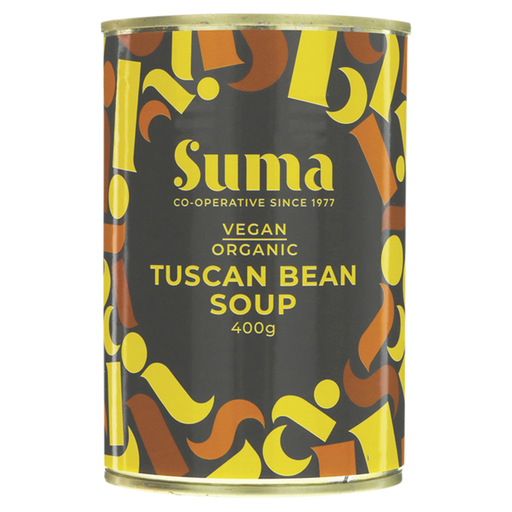 No image available
A bean-based option for an Italian-themed soup course. Use the pack's serving guidance to plan the number of tins; check its current label for celery and compare salt using the portion you intend to serve.
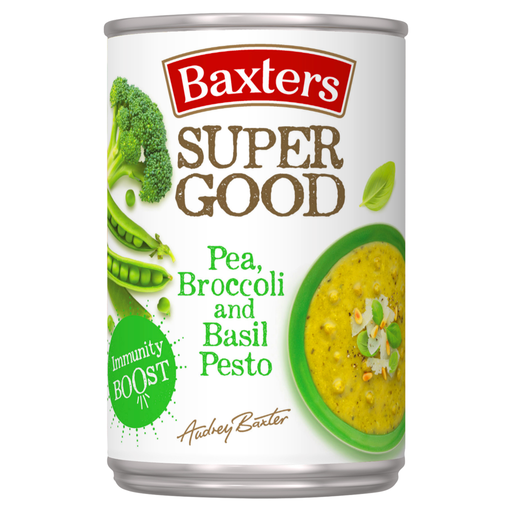 No image available
A pea, broccoli and basil pesto style rather than tomato-and-pasta minestrone. Check the pack's stated servings before buying for a family, and check its current label for milk and other ingredients relevant to your guests.
Buy two if you choose the Sainsbury's or Asda 400g minestrone, since each is labelled as two servings. Four stated servings do not by themselves establish that soup will be a complete main course, so plan the rest of the meal accordingly.
Not on the serving guidance for Asda's 600g chilled minestrone: Asda labels it as two servings. Check the stated portions rather than assuming that its larger weight makes it a four-person meal.
Read the ingredients on the exact can or pot: the listed Heinz and Asda minestrones contain egg, wheat and celery. The Food Standards Agency says allergens in prepacked food must be emphasised in the ingredients list, which makes the pack an important check before serving.
Only if you account for how much soup you serve. Compare labels using the same portion basis; for example, Asda lists 1.2g salt per half-can serving for Heinz Minestrone 400g.
Follow the heating directions on the particular tin, including its hob or microwave instructions and any requirement to transfer the soup to a suitable dish. Check the soup before serving rather than applying one heating time to every product.