Students stocking a first cupboard
A few ready-to-heat tins can cover meals while you settle in. Before choosing a pack, check that you have room for it and can follow the heating instructions with the equipment available.


Choose a ready-to-heat multipack if you know you will use several tins of the same flavour. Individual tins let you try different soups with less cupboard commitment; condensed soup makes more sense if you also plan to cook with it. Whichever format you choose, check allergens, heating instructions and what to do with leftovers.
A few ready-to-heat tins can cover meals while you settle in. Before choosing a pack, check that you have room for it and can follow the heating instructions with the equipment available.
Individual tins make it easier to try different flavours before committing cupboard space to several of the same soup. A multipack is more useful when you already know the flavour will be eaten.
Campbell's UK presents its condensed soups as ingredients for recipes as well as soups to serve. Check the preparation directions and allergens for the exact flavour you intend to use.
Start with how you expect to use the tins, then check the pack and label against your cupboard space, kitchen equipment and dietary needs.
Choose it when: You expect to use several tins of one flavour for straightforward meals.
Bear in mind: A pack commits more cupboard space to that flavour, so an unfamiliar soup may be better tried as a single tin first.
Choose them when: You want to mix flavours or find out which soups you will use regularly.
Bear in mind: You will need to select each tin rather than stocking one flavour in a single pack.
Choose it when: You plan to use soup in a sauce or another recipe as well as serve it in a bowl.
Bear in mind: Its preparation and serving size differ from those of a standard ready-to-heat tin; follow the directions for the exact product.
| Priority | What to check | Your needs |
|---|---|---|
| Pack and flavour | Check the number and size of tins. Consider how much cupboard room the pack needs and whether you will use the same flavour repeatedly. | I would use several tins of a familiar soup, or I would rather try a few flavours separately. |
| Heating method | Read the exact tin's instructions for hob or microwave preparation. Check that you have the required saucepan or microwave-safe bowl. | With a shared kitchen, I need a way to prepare soup using the equipment I can access. |
| Ingredients and allergens | Read the current ingredient and allergen statement for each flavour. The cited cream-style tomato and condensed soups include ingredients such as milk, celery or wheat, depending on the product. | If someone in the flat cannot eat an ingredient, I want to check the exact tin before buying several. |
| Storage | Follow the unopened tin's storage directions and date marking. After opening, follow that product's instructions for transferring, refrigerating and using leftovers. | I may not use a whole tin at once, so I need fridge space and a suitable covered container. |
| Serving plans | Check the stated serving size and nutrition panel on the exact product. Decide whether soup will be served alone or with other food. | For a meal, I want to know what a serving contains and whether I plan to serve anything alongside it. |
A multipack takes up cupboard space even if you discover that the soup is not one you want to eat repeatedly.
Try an individual tin first when the flavour is unfamiliar, then choose a pack if the quantity makes sense for your move-in cupboard.
The cited tomato soups contain milk; Campbell's condensed Cream of Tomato also contains celery. Campbell's condensed Cream of Chicken contains wheat and milk and may contain egg.
Read the current label of each flavour, particularly before buying tins for a shared household.
Soup formats and stated serving sizes vary. A smooth cream soup and a chunky soup should not be treated as interchangeable meals based on their names alone.
Check the serving information on the tins you choose and plan any other food you intend to serve with them.
Post-opening instructions differ by product. Tesco's Cream of Tomato Soup 400g listing says to transfer unused soup to a covered non-metallic container, refrigerate it and consume it within four days.
Follow the instructions on the tin in hand, and make sure you have a suitable container and fridge space before opening it.
Heinz Cream of Tomato is available as a four-pack of 400g ready-to-heat tins in the cited Tesco listing.
Tesco Cream of Tomato Soup 400g is an individual ready-to-heat tin, useful as an example of buying singles rather than a multipack.
Campbell's UK presents its condensed soups as options for cooking as well as serving as soup.
The M&S tinned-soup range includes different styles, such as minestrone, chunky vegetable and chilli bean soups.
These six-tin Heinz packs are options for stocking several tins of one flavour when moving in. Compare their ingredients and preparation directions with the kitchen and cupboard space you will have.
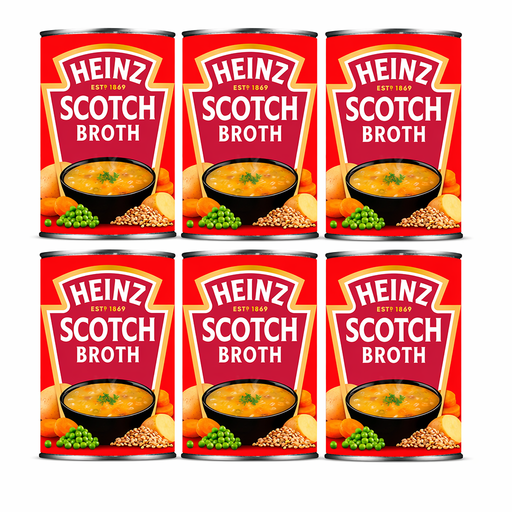 No image available
Six tins let you stock one flavour for several occasions. The product information gives hob and microwave heating directions; check which method suits your kitchen. It lists barley and wheat as gluten-containing ingredients and advises transferring leftovers to a suitable non-metallic container, refrigerating them and consuming them within two days.
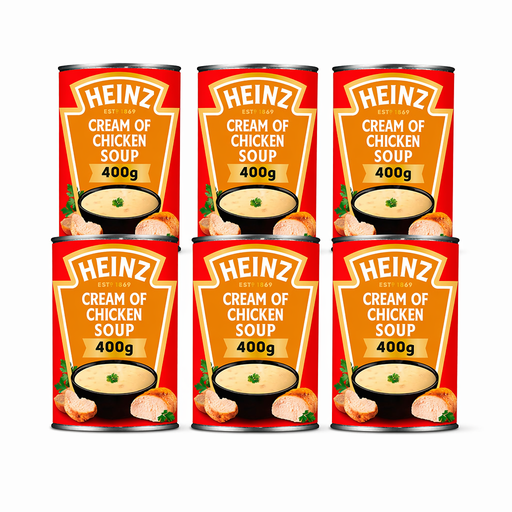 No image available
This pack stocks six tins of the same flavour. Check the current label for milk and wheat, and confirm the heating instructions before choosing it if you have access to only a hob or a microwave.
GOV.UK explains that best-before dates relate to quality, while use-by dates relate to food safety, and names tinned foods among products that may carry a best-before date. Store unopened soup as its label directs; do not treat the two types of date as interchangeable.
Follow the instructions on the exact tin. Tesco's Cream of Tomato Soup 400g listing says to transfer unused contents to a covered non-metallic container, refrigerate them and consume them within four days. Other products can give different instructions, so check before opening.
No. The cited Heinz and Tesco cream-of-tomato soups contain milk, while Campbell's condensed Cream of Tomato contains milk and celery. Read the current ingredients and allergen statement for the exact tin, especially before buying a multipack.
Not for every product. Tesco's Cream of Tomato Soup 400g listing includes microwave as well as hob instructions. Check the tin you choose and use a microwave-safe bowl if its directions allow microwave heating.
Condensed soup is worth considering if you plan to use it in cooking as well as serve it as soup. Campbell's UK provides recipes for its condensed range; check the chosen flavour's preparation directions, ingredients and allergens rather than assuming it works like a ready-to-heat tin.