Shoppers avoiding added sugar
For a warm weekend breakfast without sugar added to the recipe, read the ingredients alongside any no-added-sugar claim. Total sugars can still be present in a soup made with tomatoes or milk.


Choose by what you mean by lower sugar: Sainsbury's lists Heinz No Added Sugar Cream of Tomato Soup at 2.6g total sugars per 100g for shoppers avoiding added sugar, while its Heinz French Onion Soup lists 1.9g per 100g but includes sugar in the ingredients. For a weekend breakfast, compare the amount you will eat as well as salt, ingredients and the flavour you want.
For a warm weekend breakfast without sugar added to the recipe, read the ingredients alongside any no-added-sugar claim. Total sugars can still be present in a soup made with tomatoes or milk.
If the number on the nutrition panel is your main criterion, compare sugars per 100g across tins. Then check what the figures mean for the amount you expect to serve.
A convenient cupboard breakfast still needs to suit your ingredient preferences. Check salt, allergens and any vegetarian declaration on the exact tin, as well as whether you would enjoy its recipe at breakfast.
Start with the per-100g nutrition panel to compare tins on the same basis. Then use the ingredient list and your intended portion to decide whether that comparison fits your breakfast.
| Priority | What to check | Your needs |
|---|---|---|
| Total sugars | Compare total sugars per 100g, then the amount in the portion you plan to serve. The NHS defines low sugars on this basis as 5g or less per 100g. | I want to compare different tins fairly, even if their suggested portions differ from mine. |
| Added sugar | Read the ingredient list as well as any no-added-sugar wording. The NHS notes that naturally occurring sugars are included in the total-sugars figure. | Avoiding sugar added to the recipe matters more to me than choosing the lowest total-sugars figure. |
| Salt | Check salt per 100g and for the amount you expect to eat. Do not assume that a tin with less sugar also contains less salt. | I want to consider salt separately rather than make my decision from the sugar figure alone. |
| Recipe and suitability | Check the exact tin's allergens, ingredients and any vegetarian declaration. Compare tomato-and-cream and onion-based recipes by flavour as well as nutrition. | A savoury breakfast needs to suit what I enjoy and any ingredients I avoid. |
A soup can have relatively little total sugar yet list sugar as an ingredient. A no-added-sugar tomato soup can still contain total sugars from its ingredients.
Choose the check that matches your aim: ingredients for added sugar, or the per-100g nutrition figure for total sugars.
Salt varies across ready-to-eat soups. In Action on Salt & Sugar's February 2026 audit of 481 such soups sold in major UK retailers, 23% exceeded UK salt-reduction targets; that figure describes products, not shoppers.
Compare salt on each shortlisted tin, including the amount in the portion you expect to eat.
Recipes and product information can change, which matters when milk, sweeteners or other ingredients affect your choice.
Before using the soup, check the can's current ingredient list, allergen declaration, nutrition panel and storage instructions.
The listed 400g tomato and French onion tins show why total sugars and added sugar are separate buying questions.
Its Cream of Tomato Soup provides another 400g tomato-soup label to compare, rather than a no-added-sugar alternative.
These 400g savoury soups offer two different flavours for a weekend breakfast. Compare each can's sugars, ingredients and portion information against your own criteria; neither card is a substitute for checking the exact pack.
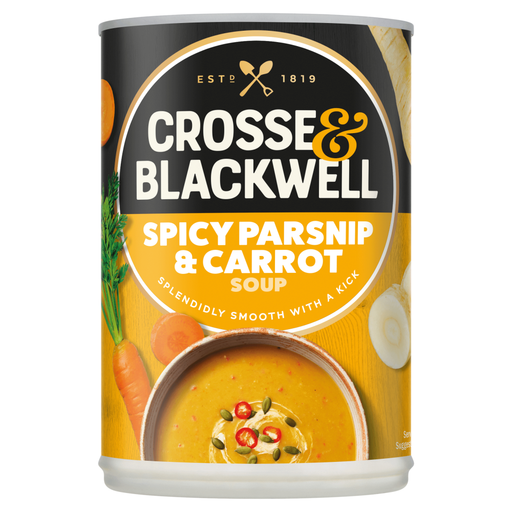 No image available
For a spicy parsnip-and-carrot breakfast soup, compare the can's total sugars per 100g with the portion you plan to eat. Check its current ingredient and allergen declarations if you avoid milk, wheat or celery, and look for an explicit no-added-sugar claim if that is essential to your choice.
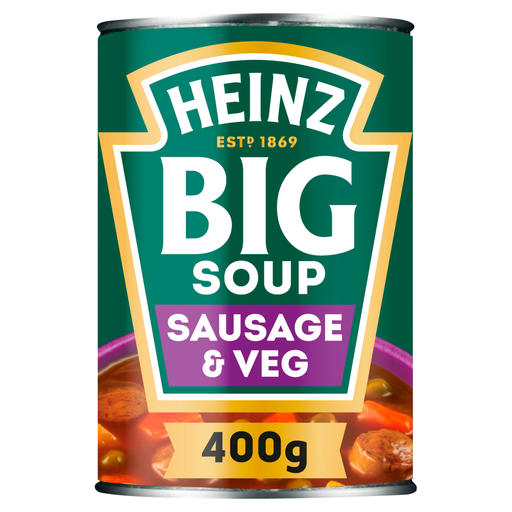 No image available
If a sausage-and-vegetable soup appeals at breakfast, compare total sugars per 100g as well as the ingredients: a lower total-sugars figure does not establish that no sugar was added. Check the exact pack for sugar, pork and wheat if any would affect your choice.
No. The NHS explains that naturally occurring sugars are included in the total-sugars figure. Sainsbury's lists Heinz No Added Sugar Cream of Tomato Soup at 2.6g total sugars per 100g, so check both its ingredients and nutrition panel.
Compare total sugars per 100g first, then work out what the amount you intend to serve means for your breakfast. As NHS food-label guidance notes, a manufacturer's portion may differ from yours.
No. Check salt independently on the exact tin. Action on Salt & Sugar's February 2026 audit of 481 ready-to-eat soups sold in major UK retailers found salt levels ranging from 0.1g to 1.6g per 100g across the products analysed.
Check the exact can's ingredients, allergen information and vegetarian declaration before choosing. The listed Heinz no-added-sugar tomato recipe contains steviol glycosides; the listed French onion recipe contains red wine and sugar, so their ingredient lists answer different preferences.