For a journey without refrigeration, choose an unopened, shelf-stable organic tin rather than a chilled soup pot that must be kept cold. Check the current pack for its organic certification details, storage and preparation instructions, serving guidance, ingredients, allergens and salt; a 400g tin is not automatically a meal for one.
Who this helps
Travellers looking specifically for organic soup
If the organic claim matters to you, check the current label for its organic designation and certification details rather than treating words such as “natural” as equivalent. The Soil Association explains that an organic certification symbol identifies food whose production has been inspected and certified.
Travellers choosing a plant-based, pulse-led soup
Compare the ingredients and nutrition panel if lentils or beans are important to your choice. Waitrose lists lentils at 35% in Mr Organic Tomato & Lentil Soup, while the Free & Easy and RIFCo listings describe different lentil and bean recipes. Check each current pack for dietary suitability.
Travellers without refrigeration or heating
An unopened tin with suitable storage instructions may be easier to carry than a chilled pot. Sainsbury’s says its Tideford Organics Katsu soup must be refrigerated; Food Standards Scotland advises checking labels for storage and ready-to-eat instructions.
What to check before buying
Start with storage and preparation: an organic label alone does not tell you whether the soup will work on your train journey.
| Priority |
What to check |
Your needs |
| Organic label |
Look for the organic designation and certification or control-body details on the current pack. Do not use “natural” or “plant-based” as a substitute. |
I want to know that the soup I pack is sold as certified organic, not merely described in similar-sounding terms. |
| Storage and preparation |
Check whether the unopened product needs refrigeration, whether it is ready to eat and whether its stated preparation method is available. Food Standards Scotland advises following the label for storage and ready-to-eat information. |
If I cannot keep food chilled or heat soup on the journey, I need a pack whose instructions fit the facilities I will actually have. |
| Recipe and portion |
Read the pulse ingredients, protein declaration and serving guidance. Compare nutrition on the same per 100g or per-pack basis. |
For lunch, I want to judge what a tin contains and how many servings it is intended to provide, rather than assume its size makes it a meal for one. |
| Dietary details |
Read the current ingredients and allergen statement, then compare salt using the nutrition panel’s stated basis. Organic status does not establish vegan or allergen-free suitability. |
Where an ingredient or allergen matters to me, I need the current pack information rather than relying on the soup’s organic or vegetable description. |
Common buying mistakes
-
Picking up a chilled pot for an unrefrigerated trip
Organic does not mean shelf-stable. Sainsbury’s lists a refrigeration requirement for Tideford Organics Katsu soup, so its storage needs differ from those of a shelf-stable tin.
If you cannot meet a product’s chilled-storage instructions, choose a suitable unopened tin and check that tin’s own label before leaving.
-
Using “organic” as a dietary shortcut
An organic description does not establish that a soup is vegan, gluten-free or suitable for a particular allergy. Ingredients and allergen information are product-specific.
Read the current pack’s ingredients and allergen statement, especially when a restriction makes those details essential.
-
Assuming a 400g tin is one complete lunch
A shared tin size does not mean shared ingredients, nutrition or serving guidance. The Waitrose, Free & Easy and RIFCo listings describe different pulse-led recipes.
Check servings and nutrition per tin or per serving, then decide what food and drink to pack alongside it.
-
Forgetting how you will open and eat it
A tin can be suitable for unopened storage yet still be impractical to eat if its preparation instructions call for facilities you will not have.
Check whether it is ready to eat or needs heating, and plan for a suitable opener, container and spoon where needed. Do not count on train heating facilities without confirming them for your service.
Relevant brand examples
Mr Organic
Waitrose lists Mr Organic Tomato & Lentil as an organic, plant-based soup with lentils making up 35% of its ingredients.
- The Waitrose listing states 13.2g protein for this 400g tin.
- Those figures describe this variety, not every Mr Organic soup; check the current label for ingredients and allergens.
Free & Easy
The Tesco Marketplace listing for Organic Lentil & Red Pepper Soup describes a 400g recipe with 15% red lentils and 9% red peppers.
- The listed ingredient proportions make it possible to compare this recipe with other pulse-based soups.
- For an allergy or intolerance, check the current pack or contact the manufacturer as directed by the listing.
RIFCo
Tesco Marketplace describes RIFCo Organic Mexican Bean Soup as a 400g tomato, pinto bean, chilli and herb recipe.
- The listing specifies 9% pinto beans, helping distinguish this recipe from lentil soups.
- Check the current pack for allergens and whether its chilli seasoning suits your preference.
Tideford Organics
Sainsbury’s lists Tideford Organics Katsu Butternut & Sweet Potato Soup as a 560g refrigerated pot, not a shelf-stable tin.
- Its listing identifies Soil Association Organic certification.
- The pot must be kept refrigerated, which matters if you cannot keep it cold until eating.
Joybuy soup options for the journey
These two bean-based tins are options to consider when packing soup before a train journey. Check each current pack’s organic certification, serving and preparation instructions before relying on it for your meal.
 No image available
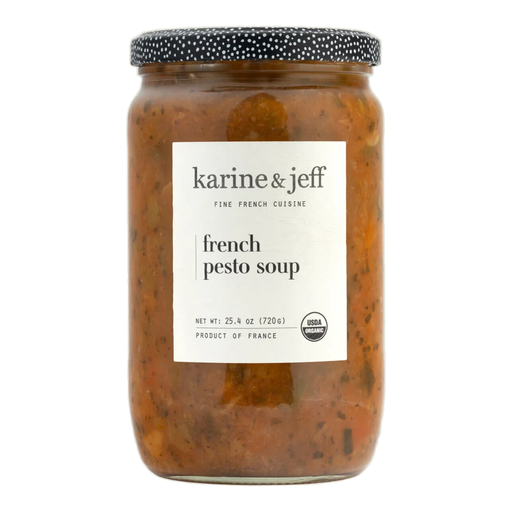
Karine & Jeff Organic French Pesto Soup 680g
This 680g can is described as suitable for cool, dry storage before opening and contains white beans. Check the current pack for organic certification details, servings and how to prepare it for your journey. The listing notes possible wheat, soy and celery traces.
View on Joybuy
 No image available
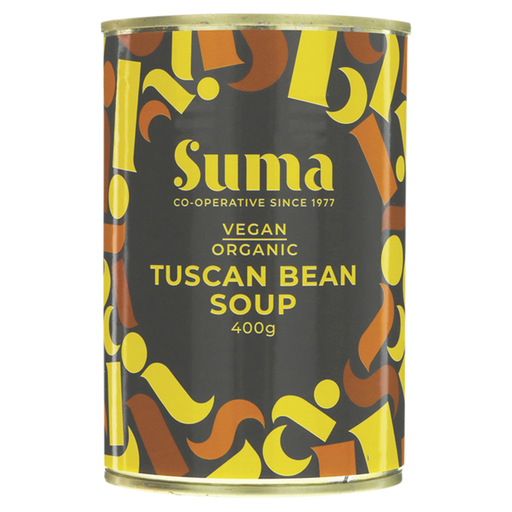
Suma Organic Tuscan Bean Soup 400g
This 400g can is described as suitable for cool, dry storage before opening, with beans listed at 14%. Check the current pack for organic certification details, servings and whether heating is required. The listed allergen information includes celery; do not assume vegan suitability from the bean recipe alone.
View on Joybuy
Questions about travelling with soup
How can I check an organic claim on a soup?
Look for the organic designation and certification or control-body information on the current label. The Soil Association explains that an organic certification symbol identifies food whose production has been inspected and certified; words such as “natural” are not a substitute for that information.
Can I take a chilled organic soup pot instead of a tin?
You can choose a chilled pot if you can follow its storage and preparation instructions throughout the journey. Sainsbury’s says its Tideford Organics Katsu soup must be refrigerated, so it is not a like-for-like substitute for an unopened shelf-stable tin when refrigeration is unavailable.
Is organic soup automatically vegan or free from allergens?
No. Organic status does not establish either dietary suitability or allergen content. Read the current ingredients and allergen statement for the exact soup you intend to take.
What should I do with soup left over after opening?
Follow that soup’s after-opening storage instructions. Food Standards Scotland advises checking the label for refrigeration requirements and any stated period for eating the food after opening; plan around those instructions if you cannot store leftovers appropriately during travel.


