People eating a whole tin
If soup is the main part of your meal, calculate energy for the full tin rather than relying on a half-can serving figure. Count bread, toppings and other additions separately.


For a one- or two-person household, a ready-to-heat vegetable or tomato soup makes the under-500-calorie calculation straightforward when the label gives energy for a half can or per 100g. Check the amount you will actually eat, then compare salt and allergens; condensed soup needs an additional calculation if you prepare it with milk or add other ingredients.
If soup is the main part of your meal, calculate energy for the full tin rather than relying on a half-can serving figure. Count bread, toppings and other additions separately.
A tin labelled as two servings may be convenient to split. If you expect leftovers instead, check the pack’s instructions for storing opened soup before choosing a larger tin.
Calories alone cannot establish dietary suitability. Compare salt for the portion you will eat and read the current ingredients and allergen declaration for the exact soup.
Start with your planned portion, then check what preparation or additions change the meal you are counting.
| Priority | What to check | Your needs |
|---|---|---|
| Whole-meal calories | Check the tin weight, servings and energy per serving or per 100g. For a two-serving tin, double the half-can figure if you will eat it all; count sides separately. | I might finish the tin myself, so the number for half a can does not describe my meal. |
| Salt | Compare salt for the portion you plan to eat, not just per 100g. The NHS advises adults to have no more than 6g of salt a day. | Even when the soup is under my calorie limit, I want to know how much salt the full portion contains. |
| Ingredients | Read the current label for allergens and dietary suitability. The soups covered here include recipes containing milk, wheat or mustard. | Everyone sharing the tin needs to be able to eat the particular recipe, not merely its style of soup. |
| Preparation and leftovers | Check whether the soup is ready to heat or needs dilution. If you will save some, follow that tin’s opened-pack storage instructions. | I want a portion that fits one meal, or clear instructions for keeping what remains. |
Many 400g soups show figures for a half-can serving. Eating both servings doubles the soup’s stated calories and salt for that portion.
Calculate for the amount you expect to eat, then count bread, butter, cheese or other additions separately.
A soup can meet a calorie limit while contributing substantially to daily salt intake. The NHS advises an adult maximum of 6g of salt a day.
Compare salt for your actual portion alongside energy; double a half-can value if you plan to finish the tin.
Campbell’s Condensed Cream of Mushroom is prepared with water or optional milk. Milk contributes to the prepared meal’s calorie total.
Account for what you add, and check the soup’s milk and wheat declarations if either ingredient matters to your household.
A recipe or its allergen information can change, so a previous purchase or online listing may not describe the tin in hand.
Read the current can for ingredients, allergens, nutrition and opened-pack storage instructions.
These examples illustrate label checks for particular soups; a brand name alone does not establish a recipe’s calories or dietary suitability.
Its 400g Vegetable and Cream of Tomato soups provide ready-to-heat examples with half-can nutrition figures.
Condensed Cream of Mushroom is a different preparation choice from ready-to-heat soup.
Tesco Groceries lists own-label 400g soups, including Plant Chef Sweet Potato & Coconut and Chunky Chicken & Vegetable.
Tomato & Basil Soup is a 400g own-label option with two stated servings.
ASDA Groceries lists both JUST ESSENTIALS Tomato and ASDA Cream of Tomato as 400g soups.
Chunky Vegetable Soup is a 400g vegetarian option in M&S’s Eat Well-labelled range.
These Joybuy tins include 400g soups and a smaller 185g corn potage. Compare the energy for the amount you will eat, along with the ingredients and any additions to your meal.
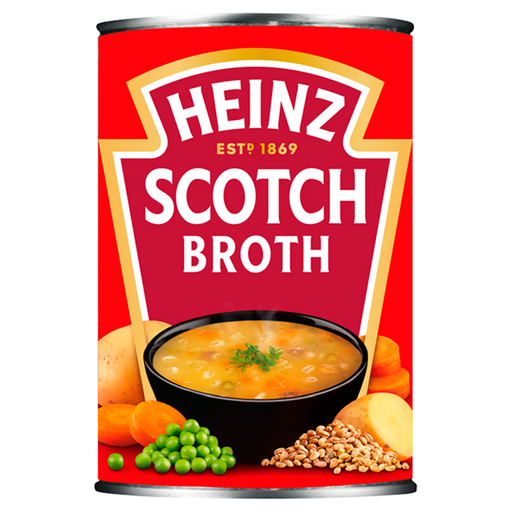 No image available
For a whole-tin meal or a shared tin, calculate your portion from the pack’s nutrition figures. This soup contains barley and wheat, so check the current can if you avoid gluten; compare salt for the amount you plan to eat.
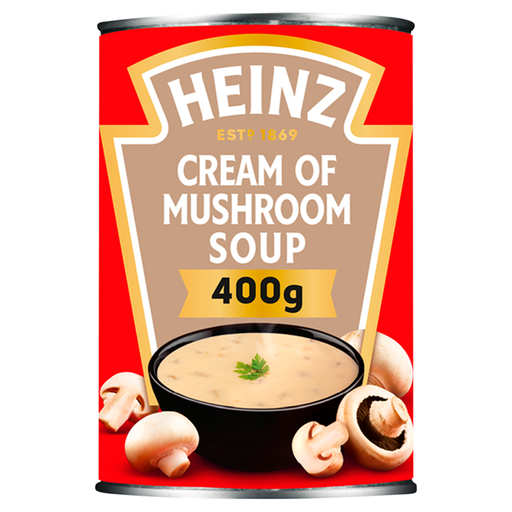 No image available
If you plan to split this tin, check the portion figures and follow its instructions for storing leftovers. It contains milk and wheat; check the current label if either is unsuitable for you.
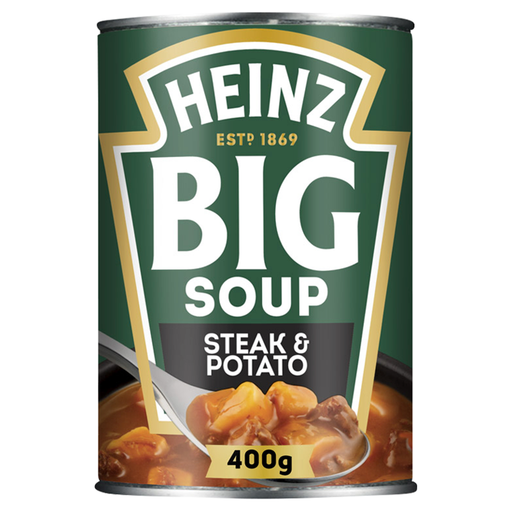 No image available
For a beef-and-potato soup meal, use the 400g pack weight and nutrition per 100g to calculate the amount you will eat. Check the current ingredients for dietary restrictions and the pack instructions if saving any soup.
 No image available
The 185g can offers a smaller pack to consider for one portion. Check its current nutrition label before relying on the sugar and carbohydrate figures, and read the ingredients if milk or animal-derived flavourings matter to you.
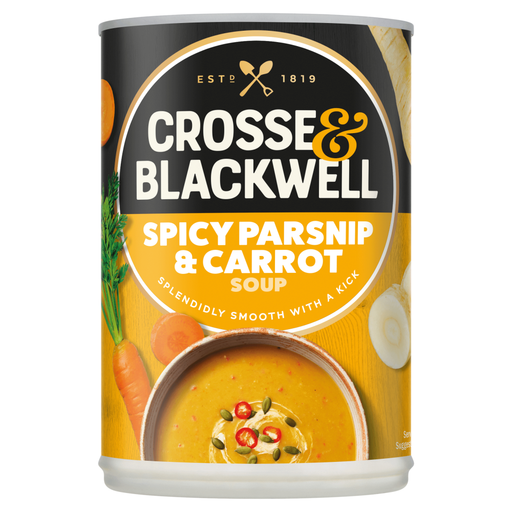 No image available
For a vegetable-based 400g soup, calculate a whole-tin portion from the energy per 100g. The ingredients include celery, milk and wheat; check the current can for allergens and for instructions if you expect leftovers.
It should mean the portion you will actually eat. ASDA Groceries lists Heinz Cream of Tomato at 102 kcal per half can, making the soup 204 kcal for the whole 400g tin; bread and other additions count separately.
Not necessarily: check salt for your full portion as well as calories. ASDA Groceries lists 1.2g salt per half can of Heinz Vegetable Soup, or 2.4g for the whole tin. The NHS advises adults to have no more than 6g of salt a day.
Follow that product’s opened-pack instructions for transferring, refrigerating and using leftovers. Do not assume the storage directions for one soup apply to another.
Count the condensed soup for the amount you use, then include anything you add. Campbell’s Condensed Cream of Mushroom is mixed with a can of water or optional milk before heating; milk changes the finished meal’s calorie total.
Use the current tin’s ingredients and allergen declaration before eating, particularly when an allergen matters to your household. Recipes and labels can change after an online listing is published.