Families who regularly eat the same flavour
A ready-to-heat multipack makes sense when several meals will use the same soup. ASDA Groceries lists Heinz tomato and vegetable packs with four 400g tins each, labelled as two 200g servings per tin.


Choose a ready-to-heat multipack if your household will use the same flavour across several meals, or individual tins if diners want different flavours. Condensed soup suits a Valentine’s Day dish that uses soup as an ingredient, but it needs added liquid and preparation; whichever format you choose, plan the quantity and check the exact flavour’s allergen label.
A ready-to-heat multipack makes sense when several meals will use the same soup. ASDA Groceries lists Heinz tomato and vegetable packs with four 400g tins each, labelled as two 200g servings per tin.
Choose by the label on each flavour, not by the brand alone. ASDA Groceries lists milk in the Heinz Cream of Tomato pack and wheat in the Heinz Vegetable pack; check the current can before serving.
Condensed soup is an option when soup will go into a sauce, casserole or pasta bake rather than straight into bowls. Campbell’s Soup UK says its condensed soup is prepared with equal parts soup and water or cream.
Decide how the soup will be served, then check the quantity, flavour and preparation instructions for that plan.
| Priority | What to check | Your needs |
|---|---|---|
| Pack quantity | Count the tins and check their weight. ASDA Groceries lists four 400g tins and two labelled 200g servings per tin for its Heinz tomato and vegetable packs; that is 1,600g and eight label servings per pack. Decide how much to serve if soup is the main dish. | I need enough soup for the planned meal without buying several tins of a flavour we will not use. |
| Flavour choice | Choose a single-flavour multipack only if the household will use it. Individual tins let you choose different flavours or try one before buying more. | Different people may want different soups, so I would rather choose tins separately. |
| Allergen labels | Read the current label for the exact flavour. ASDA Groceries lists milk in Heinz Cream of Tomato and wheat in Heinz Vegetable; Campbell’s Soup UK lists wheat and milk in its Cream of Chicken condensed soup, which may also contain egg. | Everyone eating the soup needs a flavour that fits their dietary requirements. |
| Preparation | Check whether the tin is ready to heat or requires dilution. Campbell’s Soup UK instructs cooks to add equal parts soup and water or cream to its condensed soup. | For bowls of soup, I want little preparation; for a bake or sauce, I can use a condensed base. |
| Storage | Check the unopened-tin instructions and best-before date. For leftovers, follow the particular product’s refrigeration, container and use-by instructions; M&S Food specifies an airtight container and use within two days for its Cream of Tomato Soup. | I may open fewer tins than the pack contains, and I need a plan for any soup left after serving. |
ASDA Groceries lists two 200g servings per tin for its Heinz four-packs. That label quantity does not decide how many tins your household needs when soup is the main dish.
Plan from the total weight and how you will serve it, rather than assuming the eight labelled servings in a four-pack equal eight complete meals.
ASDA Groceries lists milk in the Heinz tomato pack and wheat in the vegetable pack. Campbell’s Soup UK lists wheat and milk in its condensed Cream of Chicken soup, which may also contain egg.
Check the current label on the exact flavour and pack before serving it to someone with an allergy or intolerance.
Condensed soup needs dilution before it is served as soup, so it changes the preparation plan for a shared meal.
Use ready-to-heat tins for straightforward bowls, or follow the condensed soup’s dilution and heating instructions when making a recipe.
Campbell’s Soup UK instructs cooks to add water or cream, so include that liquid in the ingredients for the dish.
Opening a tin changes how its contents need to be stored. M&S Food instructs shoppers to transfer leftover Cream of Tomato Soup to an airtight container, refrigerate it and use it within two days.
Open only the tins needed for the meal and follow each product’s instructions for any leftovers.
Its four-tin tomato and vegetable packs are examples of the same-flavour, ready-to-heat multipack route.
Its condensed soup is a different format for cooks using soup in a dish or preparing it with added liquid.
Its tinned-soup range offers a way to choose individual flavours instead of committing to one multipack flavour.
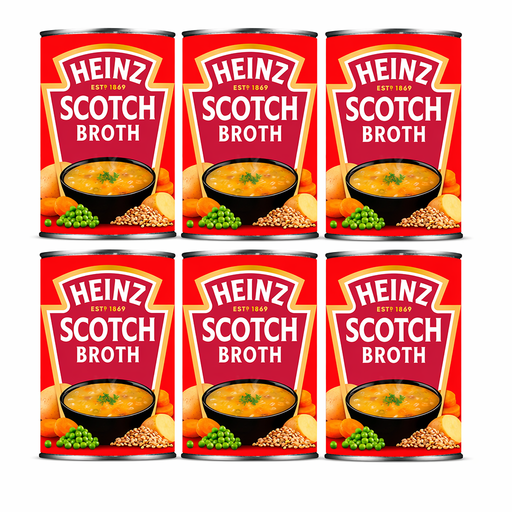
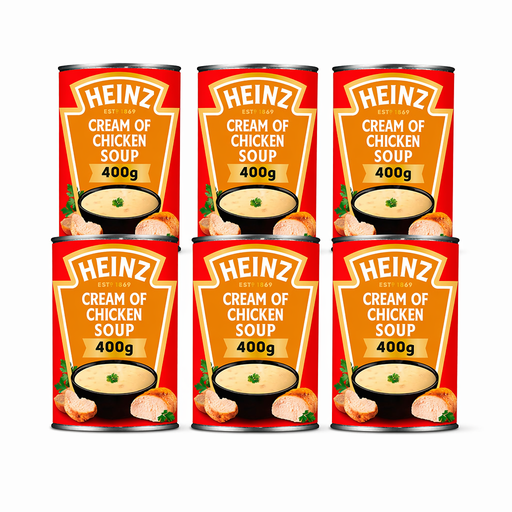
These six-can, single-flavour Heinz packs are options for households planning to use the same soup across several meals.
 No image available
Six tins of one flavour suit meals where the household will use Scotch Broth more than once. The product instructions describe hob and microwave preparation; it contains barley and wheat, so check the current can label for dietary suitability.
 No image available
Six tins of Cream of Chicken suit a household that plans to serve the same flavour over several meals. Heat thoroughly as directed; the product contains milk and wheat, and its instructions say to refrigerate unused soup and consume it within two days.
The Heinz tomato and vegetable four-packs listed by ASDA Groceries each contain 1,600g, with two labelled 200g servings per tin—eight label servings in total. How many people the pack feeds depends on how much soup you serve and whether it is a course or the main dish.
Choose ready-to-heat tins for bowls with less preparation, or condensed soup when it will become part of a sauce, casserole or bake. Campbell’s Soup UK instructs cooks to add equal parts soup and water or cream to prepare its condensed soup.
Not necessarily: check the current label on every flavour. ASDA Groceries lists milk in the Heinz Cream of Tomato four-pack and wheat in the Heinz Vegetable four-pack; Campbell’s Soup UK says its condensed Cream of Chicken contains wheat and milk and may contain egg.
Follow that product’s storage instructions. M&S Food says to transfer leftover Cream of Tomato Soup to an airtight container, refrigerate it and use it within two days; check the tin you actually open for its instructions.