Office workers looking beyond a basic can
If you have a microwave or hob at work, an ambient soup with distinctive ingredients may appeal. Check its heating method and the amount you would eat before deciding whether it works as lunch on its own.


Choose a premium soup if its ingredients and flavour appeal to you, but do not assume a richer recipe makes a complete desk lunch. A chunky can may suit a straightforward lunch better, while condensed soup makes more sense if you also want an ingredient for cooking. For any option, check the portion you will eat, its salt and allergen information, and whether you can follow its heating instructions at work.
If you have a microwave or hob at work, an ambient soup with distinctive ingredients may appeal. Check its heating method and the amount you would eat before deciding whether it works as lunch on its own.
Compare the salt for your intended portion and read the current ingredients and allergen statements for the exact flavour. A vegetarian or vegan recipe description does not replace an allergy check.
A ready-to-heat chunky soup, a smoother soup served with something else, and a condensed soup used in a recipe serve different purposes. Choose the format that fits how you will prepare lunch.
Start with the heating facilities at work and your intended portion; then compare the recipe and label information for that amount.
| Priority | What to check | Your needs |
|---|---|---|
| Heating | Check whether the exact soup gives microwave or hob directions, which container to use, and any instruction not to reheat. | I have a microwave at work, so I need a soup I can prepare using its pack instructions and a suitable bowl. |
| Lunch portion | Compare pack weight, stated servings and protein for the amount you plan to eat. A range name such as “Big Soup” does not establish how substantial a portion will feel. | If soup is my whole lunch, I want to decide whether to eat the full pack or serve it with something else. |
| Salt | Read the nutrition basis—per 100 g, serving or prepared portion—and calculate for your portion where the pack gives enough information. The Ocado/M&S listing puts the 560 g Collection mushroom-and-truffle soup at 0.70 g salt per 100 g. | I want to know the salt in the amount I will actually eat, especially if I regularly choose packaged lunches. |
| Ingredients and allergens | Read the exact flavour’s ingredients, emphasised allergens and precautionary statements. The Ocado/M&S listing says its vegan-recipe Tomato & Basil Soup may contain milk and egg. | A vegetarian or vegan recipe may fit my food preferences, but I still need to check any allergy requirements separately. |
| Soup format | Compare the stated ingredients and whether the product is ready soup or condensed soup. Campbell’s describes its Cream of Chicken condensed soup as suitable for cooking. | Distinctive ingredients might be worth choosing for flavour; on another day, a chunky can or a soup I can use in a recipe may fit my plans better. |
The Ocado/M&S listing gives Collection Calabrian Mushroom & Truffle Soup 1.2 g protein per 100 g. Its richer ingredients alone do not tell you whether your portion will meet your lunch needs.
Compare the nutrition for the amount you intend to eat, and consider a suitable side if soup alone does not suit your plans.
A can should not be assumed to be a microwave container. The Ocado/M&S Tomato & Basil Soup instructions say to transfer the contents to a microwaveable container, cover loosely and stir halfway through heating.
Check the exact pack’s method before taking it to work, including its container and reheating directions.
Ocado/M&S describes its Tomato & Basil Soup as suitable for vegans but also says it may contain egg and milk and is not suitable for people with those allergies.
Read the ingredients and allergen statement on the precise pack, even when you know the brand or range.
Per-100 g figures, stated servings and whole-pack amounts answer different questions. A 560 g jar does not have the same total salt as a 100 g portion of that soup.
Use the label basis that matches how much you will eat. For the Ocado/M&S Collection mushroom-and-truffle soup, 0.70 g salt per 100 g amounts to 3.92 g across its 560 g jar.
These examples show different soup formats and recipes; a brand name alone does not settle the choice for a desk lunch.
Its ambient soups include the Collection Calabrian Mushroom & Truffle 560 g jar and a 400 g Tomato & Basil soup, as described in their Ocado/M&S listings.
Tesco Groceries lists several Heinz Big Soup 400 g flavours alongside standard Heinz soups in its UK tinned-soup category.
Campbell’s UK presents condensed soups as cupboard ingredients as well as soups to prepare.
Tesco Groceries lists branded and own-label soups across chunky, vegetable and condensed formats.
These options include hearty-style cans, a bean soup and a lobster bisque for a more distinctive recipe. Choose between them by checking the exact pack’s portion, allergens and preparation method for your desk-lunch setup.
 No image available
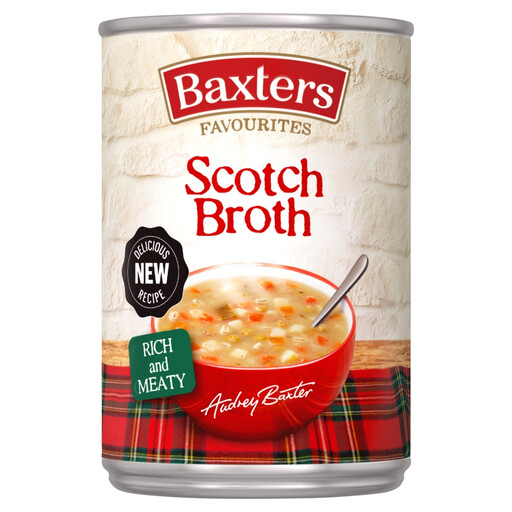
Consider this 400 g Scotch broth if you prefer that soup style for lunch. Check the current pack for barley if you need to avoid it, and compare its salt information with the amount you intend to eat.
 No image available
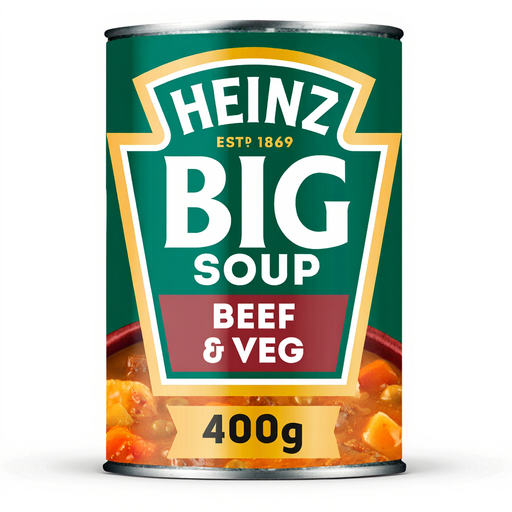
This beef-and-vegetable can suits a lunch plan centred on a chunky-style soup. Check the stated servings against your own portion; for microwave preparation, follow the pack’s directions to transfer the soup to a covered microwaveable dish.
 No image available
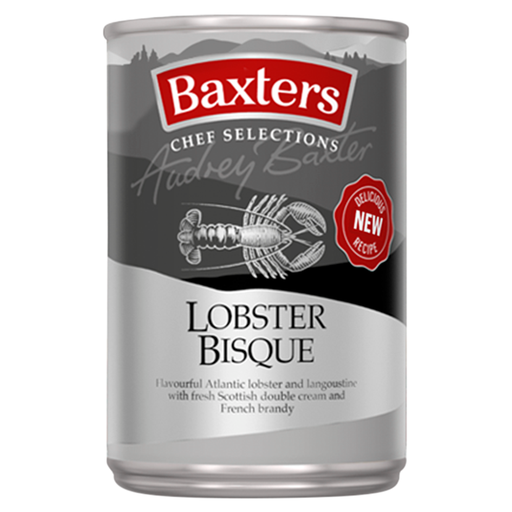
Consider this bisque for its lobster recipe if you can use the pack’s hob method. If you only have a microwave at work, check the current preparation instructions before choosing it; also check its shellfish and other allergen information.
 No image available
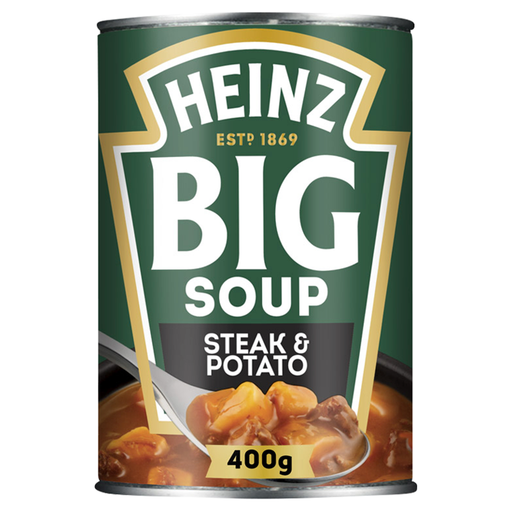
For a steak-and-potato soup at work, check the current pack’s heating method, timing and container directions against the appliances you have. Compare its per-100 g nutrition with the portion you intend to eat.
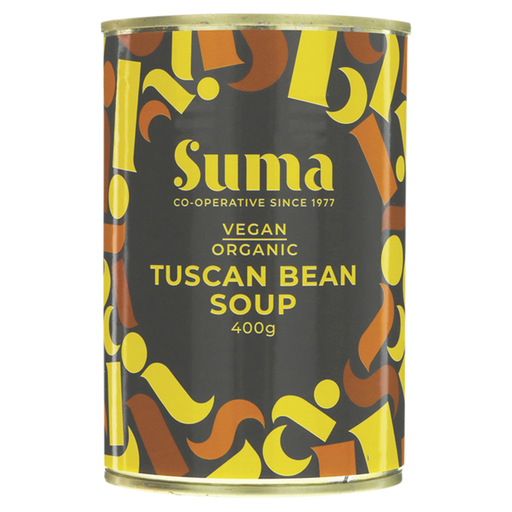 No image available
This 400 g bean soup offers a different recipe from the meat-based cans. Check its heating directions before planning a microwave lunch, and read the current allergen statement if celery is a concern.
Do not assume the can is suitable for microwave use. The Ocado/M&S Tomato & Basil Soup instructions say to transfer the contents to a microwaveable container, cover loosely and stir halfway through heating. Follow the directions on the soup you choose.
A premium recipe does not establish that its portion suits your whole lunch. The Ocado/M&S listing gives Collection Calabrian Mushroom & Truffle Soup 1.2 g protein per 100 g and 0.70 g salt per 100 g. Check the nutrition for the amount you will eat and decide whether you want a side.
Compare salt for the portion you will actually eat, taking care with labels that give figures per 100 g, per serving or as prepared. The NHS advises adults to have no more than 6 g of salt a day and to check food labels; that daily guidance is not a claim about any individual soup.
Not on that wording alone. Ocado/M&S describes its Tomato & Basil Soup as suitable for vegans but says it may contain egg and milk and is not suitable for people with those allergies. Read the exact pack’s allergen and precautionary statements.
Follow the storage and use instructions on the specific pack, and check its directions before heating only part of it. The Ocado/M&S listings for the Tomato & Basil Soup and Collection mushroom-and-truffle soup both say not to reheat.