For a workplace canteen seeking a more distinctive lunch from ambient tins, choose by recipe and dietary fit rather than the word ‘premium’: Marks & Spencer’s Collection French Onion Soup uses beef stock and wine, while its Golden Butternut Squash and Sage Soup offers a vegetarian recipe with cream. Before serving either, check the delivered tin’s ingredients and allergens, plan the portion, and use suitable reheating and hot-holding arrangements.
Who is this for?
Canteen managers changing the soup menu
Recipe-led ambient tins offer choices beyond a plain everyday soup without changing the basic heat-and-serve format. Marks & Spencer describes its Collection French Onion Soup as made with onions, beef stock and wine, and its butternut squash and sage soup as containing squash and cream.
Teams serving varied dietary needs
Different recipes call for different allergen and dietary checks. The Food Standards Agency’s guidance for retail and catering businesses requires allergen information for prepacked and non-prepacked food; staff need information that matches the soup actually being served.
Busy lunch services using hot holding
When soup will be served over a lunch period, the heating method and holding equipment matter alongside the recipe. Food Standards Agency guidance says hot food must generally be held at 63°C or above, subject to exceptions, and that reheating is more than simply warming food.
What should a canteen check?
Start with the recipe diners will see on the menu, then check whether its label, portion plan and preparation instructions work for the service.
| Priority |
What to check |
Your needs |
| Recipe style |
Compare the named ingredients and flavour profile. Marks & Spencer describes a French onion soup with beef stock, white wine and Marsala wine, and a squash-and-sage soup containing cream. |
I want a soup with a clear identity on the lunch menu, not a recipe chosen solely because it carries a premium label. |
| Dietary fit |
Read the delivered tin’s current ingredients, allergen declaration and suitability statements. Check that the information given to diners matches the recipe served. |
Staff and diners need to identify relevant ingredients and allergens before choosing a portion, particularly when the menu includes creamy or wine-containing recipes. |
| Service method |
Follow the pack’s reheating instructions and use equipment suited to reheating before hot holding. Food Standards Agency guidance generally requires hot food to be held at 63°C or above, subject to exceptions. |
At a busy lunch service, I need a preparation and holding plan that works throughout the period soup is served. |
| Portions |
Check the can size, declared number of servings and planned accompaniments; do not treat the whole tin as one portion without checking its label. |
Will each serving work as the intended lunch, or is the soup being offered with bread or another dish? The portion plan matters as much as the recipe name. |
Mistakes to avoid
-
Choosing by the ‘premium’ label alone
A distinctive recipe is not automatically suitable for every diner. Beef stock, wine, cream and recipe-specific allergens can change who can choose a soup.
Compare the actual recipes before setting the menu, and make current ingredient and allergen information available at the point of choice.
-
Using a soup kettle to reheat cold soup
Food Standards Agency catering guidance distinguishes reheating food from keeping it hot; hot-holding equipment should not be used to cook or reheat it.
Reheat soup thoroughly using suitable equipment, then transfer it to preheated hot-holding equipment for service.
-
Repeatedly reheating leftovers
Holding and reheating plans affect what can be done with soup left after service. Food Standards Agency guidance says food should only be reheated once.
Prepare batches around expected demand, monitor the holding temperature and follow the relevant cooling, reheating and disposal guidance.
-
Treating a product webpage as the final label
Ingredients and allergen information can change when a product is reformulated, so an earlier menu description may no longer match a delivered tin.
Check the delivered can, current supplier information and pack instructions before finalising the menu and staff allergen information.
Relevant brand ranges
These brands illustrate different soup formats and recipes; a brand’s inclusion here does not mean every soup it sells is tinned or suited to the same menu.
M&S Collection
Marks & Spencer lists Collection tinned soups including French Onion Soup 550 g and Golden Butternut Squash and Sage Soup 570 g. The Collection quality description is Marks & Spencer’s own positioning, not an independent comparison.
- Named recipes make it possible to choose between a beef-stock-and-wine soup and a squash-and-cream soup.
- Dietary suitability differs by recipe: the squash-and-sage ingredient information lists celery and milk. Check each delivered tin rather than applying one recipe’s information to the range.
Sainsbury’s Taste the Difference
Sainsbury’s describes its 600 g Chicken Mulligatawny Soup as containing British chicken, red lentils and basmati rice, with two servings per pack.
- The named ingredients provide a useful recipe comparison when planning a varied soup menu.
- This example is chilled, not an ambient tin. Its storage and handling requirements must not be treated as those of tinned soup.
Heinz
A Joybuy listing describes Heinz Big Soup Chicken & Vegetable 400 g as a tinned chicken-and-vegetable option for a quick lunch or dinner.
- It provides a familiar, hearty recipe to consider alongside more recipe-led soup choices.
- That description does not establish premium quality or the ingredients and allergens of another Heinz recipe. Check the product selected for the menu.
Joybuy soup options
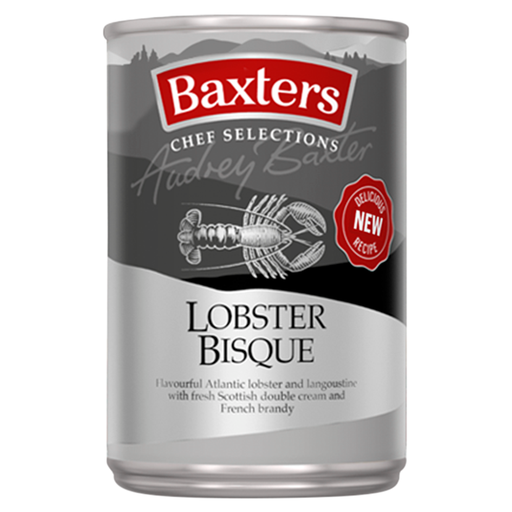
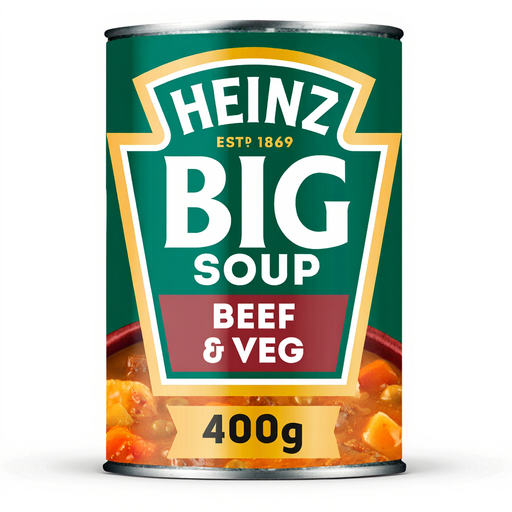
These tins cover two different lunch-menu directions: a lobster bisque for a distinctive savoury recipe, and a Heinz beef-and-vegetable soup as a hearty standard-brand alternative. They are not interchangeable choices for diners with different dietary needs.
 No image available
Baxters Chef's Selection Lobster Bisque Soup 400g
The named lobster bisque recipe offers a distinct savoury option for a canteen menu. Check the delivered tin for crustaceans, milk, celery and sulphites, as well as its heating directions, before service.
View on Joybuy
 No image available
Heinz Big Soup Beef & Vegetable 400g
This beef-and-vegetable tin is a standard-brand alternative when the menu calls for a familiar recipe rather than a premium-style bisque. Check the delivered tin’s serving guidance, ingredients, allergens and heating instructions before adding it to the service plan.
View on Joybuy
Common questions
Does a workplace canteen need to provide allergen information for soup?
Yes. Food Standards Agency guidance for retail and catering businesses requires allergen information for prepacked and non-prepacked food. Check the current supplied tin and ensure diners can obtain the appropriate information when soup is served from a pan or kettle; confirm the applicable arrangements for a Scottish site separately.
Can a soup kettle hold reheated tinned soup during lunch?
Yes, when soup has first been thoroughly reheated using suitable equipment and the kettle maintains the required hot-holding temperature. Food Standards Agency guidance says hot food must generally be kept at 63°C or above, subject to exceptions; a hot-holding kettle should not be used to reheat cold soup.
How often can a canteen reheat soup?
Food Standards Agency catering guidance says food should only be reheated once. Reheat it thoroughly rather than merely warming it, then serve it promptly or move it into suitable hot holding.
Is a vegetarian premium soup automatically suitable for diners with allergies?
No. Marks & Spencer’s Golden Butternut Squash and Sage Soup lists celery and milk, and the product information states that it is unsuitable for people with a nut or peanut allergy. Check the current delivered tin’s full declaration and suitability wording before presenting it as an option.
Can the menu use ingredients copied from a retailer webpage?
Use the delivered product’s current label and supplier information for menu and allergen controls. A retailer page can help identify a recipe, but product information may change, so its earlier wording should not replace the details on the tin being served.


