Choose tinned soups for different jobs: a smooth recipe for a quick lunch or starter, a chunky or bean-led one when you want a more substantial bowl, and a clearly labelled plant-based option if avoiding animal ingredients matters. A condensed soup serves a different purpose when you want a cooking base; whichever format you choose, check the exact can’s ingredients, allergens, salt information, serving size and storage instructions rather than relying on premium wording.
Who is this for?
Start with the occasions you want the cupboard to cover, then check each recipe against the needs of the people eating it.
Shoppers planning a varied cupboard
If you want soup for both a quick lunch and a starter, consider whether the cans offer genuinely different textures and flavours. Marks & Spencer describes smooth, creamy and chunky recipes in its tinned-soup range.
Shoppers comparing labels
If soup is a regular cupboard choice, compare salt per 100g and for the portion you expect to eat. The NHS advises checking food labels when choosing between foods with different salt contents.
Households with dietary requirements
A vegetarian or vegetable-led name is not enough to settle vegan or allergen suitability. Check the declaration, ingredients and highlighted allergens on each particular can; Marks & Spencer’s Cream of Tomato recipe, for example, contains double cream.
What should you check?
Decide whether each can is for a starter, a meal or cooking, then compare the labels of recipes that serve the same purpose. Condensed and ready-to-heat soups also need different preparation checks.
| Priority |
What to check |
Your needs |
| Meal role and texture |
Look at whether the recipe is smooth or chunky, its named ingredients and the serving information. Check whether the can suits the course you have in mind. |
For a starter, I might choose a smooth soup; for lunch, I may prefer visible beans, vegetables, pasta or meat. Tesco Groceries and Marks & Spencer list examples of these different formats. |
| Salt and serving size |
Compare salt per 100g on equivalent products, then check the stated serving size and the amount you will eat. Use any front-of-pack traffic-light label alongside the nutrition table. |
I want to know what the portion in my bowl contains, not just what a smaller stated serving contains. In the Food Standards Agency’s 2024 Northern Ireland tracker, 49% of 611 people interviewed said they actively used traffic-light labels when shopping for food; that figure is not specific to soup. |
| Ingredients and allergens |
Read the current ingredient list, highlighted allergens and any vegetarian or vegan declaration on the exact recipe. Do not infer suitability from a flavour or range name. |
If someone at home avoids animal ingredients or a particular allergen, I need to screen the individual can. Marks & Spencer’s Cream of Tomato, for instance, contains double cream despite its tomato-led name. |
| Condensed format |
Read the preparation directions and note any liquid or other ingredient to add. Check the final serving size before comparing its nutrition with ready-to-heat soup. |
I want a cooking base or control over dilution, rather than assuming a concentrated can makes the same amount of soup as a ready-to-heat one. Tesco Groceries lists Campbell’s condensed cream of mushroom and cream of chicken in 295g cans. |
| Cupboard and opened-can storage |
Check the date and unopened storage directions, then read the separate refrigeration and use-within instructions for leftovers. |
I may not finish a can at once, so its opened-can directions matter. Marks & Spencer says to refrigerate its opened Cream of Tomato Soup in an airtight container and eat it within two days; follow the instructions on other soups individually. |
Common buying mistakes
-
Treating premium wording as a nutrition comparison
A recipe’s positioning does not tell you its salt content, portion size or allergen suitability. Creamy recipes can also contain milk ingredients, as Marks & Spencer’s Cream of Tomato does.
Use flavour and occasion to narrow the choice, then compare the nutrition and ingredient panels of the cans you are considering.
-
Comparing condensed and ready-to-heat cans by weight alone
A concentrated soup may require added liquid or other ingredients, so the can weight does not describe the final prepared serving.
Follow the preparation directions and compare nutrition using the amount you would actually serve.
-
Assuming a vegetable name settles dietary suitability
A vegetable-led recipe can still include animal ingredients or allergens, and its name does not establish its salt content.
Check the current vegetarian or vegan declaration, ingredient list, highlighted allergens and nutrition table for that exact product.
-
Treating opened soup as a cupboard item
Unopened-can storage directions do not apply to leftovers. Marks & Spencer instructs shoppers to refrigerate its opened Cream of Tomato Soup in an airtight container and eat it within two days.
Read the directions on your can, transfer leftovers where instructed and note when you opened it.
Brand and range references
These ranges illustrate different soup formats; a brand name alone does not establish the ingredients or nutrition of a particular recipe.
M&S
Marks & Spencer describes smooth and chunky choices in its tinned-soup range, including tomato, mushroom, vegetable and meat recipes.
- Useful when choosing different textures for starters and quick meals.
- Check each recipe’s ingredients and nutrition: its Cream of Tomato contains double cream.
Heinz
Tesco Groceries lists Heinz classic soups alongside Big Soup varieties.
- Offers a choice between classic and chunkier recipes in the listed range.
- Compare the particular variants rather than assuming they have the same ingredients or serving information.
Campbell's
Tesco Groceries lists Campbell's condensed cream of mushroom and cream of chicken soups in 295g cans.
- A concentrated format to consider when choosing soup for cooking or preparation to the pack’s directions.
- Check the required preparation and final serving size before comparing it with ready-to-heat soup.
Tesco
Tesco Groceries lists own-label soups including Plant Chef Sweet Potato & Coconut and Chunky Chicken & Vegetable.
- The listed recipes cover distinct plant-led and chunky meal roles.
- Dietary suitability and nutrition must be checked on the individual product label.
Tinned soups on Joybuy
These cans offer smooth, meat-and-potato, bean-led and vegetable-and-rice choices for different places in a storecupboard. Compare each pack’s current ingredients and serving information before deciding which roles to cover.
 No image available
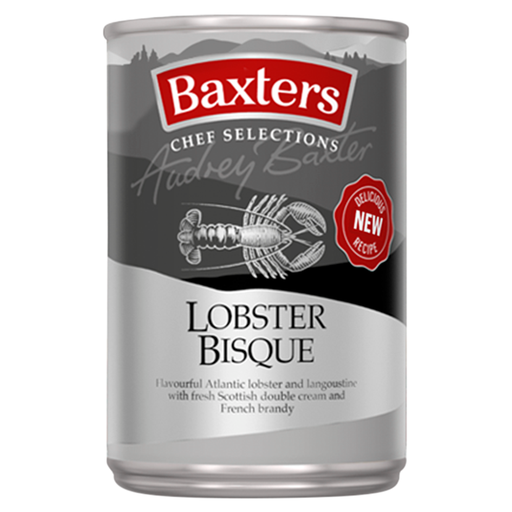
Baxters Lobster Bisque Chef's Selection Soup 400g
A smooth bisque to consider for a starter or quick lunch. Check the current pack for crustaceans, milk, sulphites and celery, and use its serving information when comparing salt by portion.
View on Joybuy
 No image available
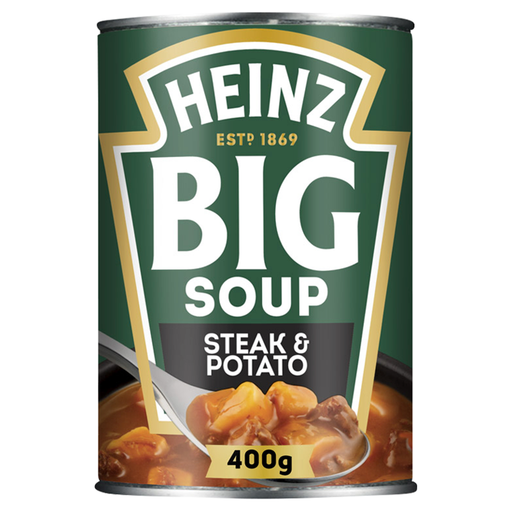
Heinz Big Soup Steak & Potato 400g
A steak-and-potato recipe for shoppers looking for a chunky soup at lunchtime. Check the current allergen panel and the stated serving size before using the nutrition information for your portion.
View on Joybuy
 No image available
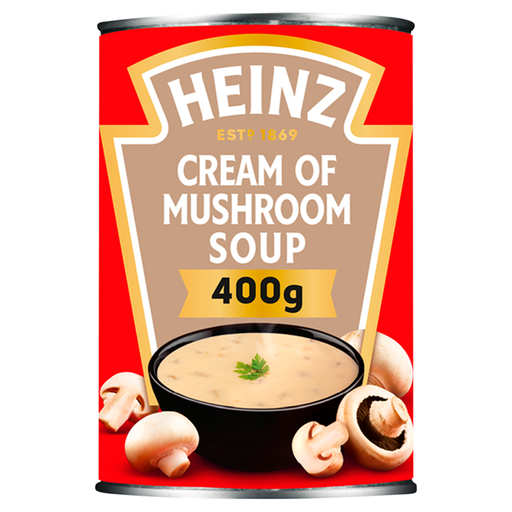
Heinz Cream of Mushroom Soup 400g
A creamy mushroom option for a smooth soup course. The product details identify milk and wheat as allergens; check the current pack and its serving information before choosing it for dietary requirements or comparing salt by portion.
View on Joybuy
 No image available
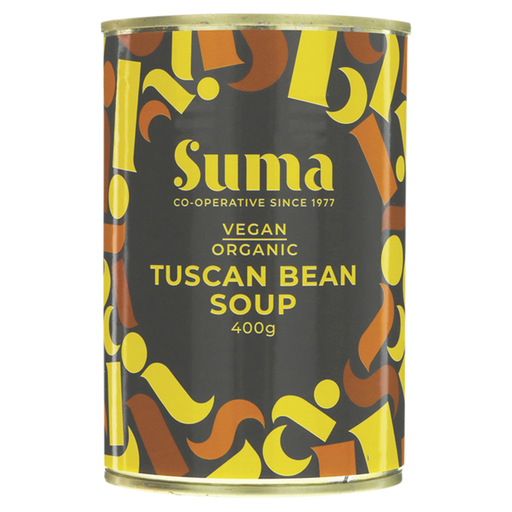
Suma Organic Tuscan Bean Soup 400g
A bean-led alternative when you want a different texture from a creamy soup. Celery is identified as an allergen; check the current pack for dietary declarations and serving information rather than assuming bean soup is vegan.
View on Joybuy
 No image available
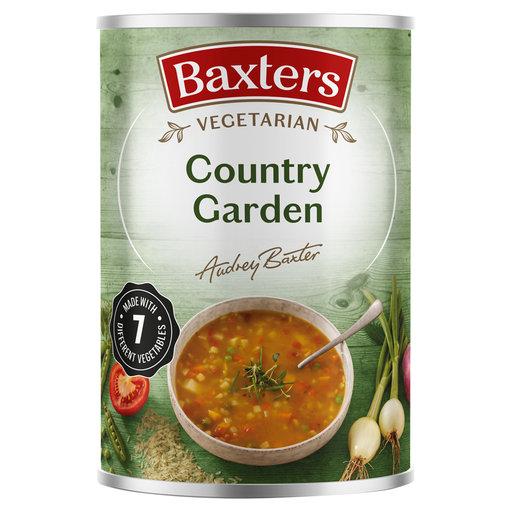
Baxters Vegetarian Country Garden Soup 400g
A vegetarian-labelled vegetable-and-rice choice for a varied cupboard. Its product details list milk, so check the current pack if avoiding milk, and consult the serving information when comparing salt by portion.
View on Joybuy
Questions about tinned soup
Which soups should cover the main jobs in a storecupboard?
Choose by intended use rather than filling the cupboard with similar cans: a smooth soup can serve as a quick lunch or starter, while a chunky or bean-led recipe offers a different kind of bowl. Add a clearly labelled dietary-specific option if someone eating the soup needs one, and check every can’s ingredients and allergens.
How do I compare the salt in two tinned soups?
Compare salt per 100g for a like-for-like starting point, then use each pack’s serving size to work out which stated portion matches what you intend to eat. The NHS advises adults to have no more than 6g of salt a day and recommends checking food labels when choosing between products.
Does a tomato or vegetable soup name tell me whether it is vegan?
No. Check the declaration and ingredients of the exact recipe: Marks & Spencer’s Cream of Tomato Soup contains double cream. Also read the highlighted allergens separately, because a dietary declaration does not settle every household requirement.
When does condensed soup make sense?
Consider condensed soup when you want a concentrated product for cooking or intend to prepare it according to the can’s directions. Check what must be added and how much soup it makes before comparing a prepared portion with ready-to-heat soup.
How should I store soup left over from an opened can?
Follow that can’s opened-product directions rather than its unopened storage information. Marks & Spencer instructs shoppers to put leftover Cream of Tomato Soup in an airtight container, refrigerate it and eat it within two days; another recipe may give different instructions.


