Retirement-household pantry planners
A 4 x 400g pack keeps four separate tins in the cupboard for meals on different days. Check that the quantity fits your storage space and how often you cook with tomatoes.


A 4 x 400g pack gives a retirement-household or shared pantry four separate tins for repeat cooking without opening a larger container at once. Choose standard chopped tomatoes for everyday recipes, Napolina’s chunkier chopped tomatoes if that texture suits your sauces, or finely chopped Mutti tomatoes when smaller pieces matter; check the pack’s opened-storage instructions before buying.
The right pack depends on whether the tins are for household meals, a shared kitchen or a shop that sells food.
A 4 x 400g pack keeps four separate tins in the cupboard for meals on different days. Check that the quantity fits your storage space and how often you cook with tomatoes.
For sauces, soups and stews made across several meals, consider whether chopped pieces or finer pulp suit the recipe. Plan how you will refrigerate and use anything left after opening a tin.
For pantry stock or customer-facing sales, check pack labels and tin condition as well as quantity. If the operation sells food, consult Food Standards Agency guidance for the responsibilities that apply to it.
Start with the number of tins you can use and store, then choose a tomato texture and check the handling instructions on the actual pack.
| Priority | What to check | Your needs |
|---|---|---|
| Pack quantity | Confirm the tin count and weight: 4 x 400g totals 1.6kg. A six-tin pack takes more cupboard space than a four-tin pack. | I want separate tins for meals on different days, without keeping one large container open. |
| Tomato texture | Check whether the label says chopped, finely chopped or peeled plum. Napolina describes its 4 x 400g chopped tomatoes as chunky; Mutti describes Polpa as finely chopped. | Visible pieces suit some of my sauces or stews; for another recipe, I may prefer smaller pieces or whole peeled tomatoes. |
| Opened-tin storage | Read the pack-specific use-within period. Sainsbury’s says to transfer and refrigerate leftovers from its 4 x 400g pack and use them within 2 days; Asda gives 4 days for its 4 x 400g pack. | When a recipe uses less than a tin, I need a way to store the remainder and use it within that pack’s stated period. |
| Date and tin condition | Read the date label rather than treating best before as use by. Inspect tins for deep dents or other signs of seal damage before storing or opening them. | I keep tins in the cupboard for later meals, so I need to check both the label and the container before use. |
Opened-storage instructions differ between products. Sainsbury’s specifies 2 days for its 4 x 400g chopped tomatoes after transfer and refrigeration, while Asda specifies 4 days for its pack.
Transfer unused tomatoes to a suitable non-metallic container, refrigerate them and follow the use-within instruction on the tin you opened.
GOV.UK distinguishes best-before dates, which concern quality, from use-by dates, which concern safety, and lists canned tomatoes among foods with best-before dates.
Read the actual label and storage instructions. A best-before date does not replace checks for spoilage or damage to the tin.
Food-safety guidance distinguishes a shallow dent from a deep dent, which may affect the container’s integrity.
Inspect each tin before purchase and again before opening. Do not use a tin with a deep dent or signs that its seal has failed.
These references describe particular tomato products and pack formats, not every product sold under each name.
Sainsbury’s lists Italian chopped tomatoes in a 4 x 400g pack.
Tesco lists Italian chopped tomatoes in a 4 x 400g, 1.6kg multipack.
Asda lists chopped tomatoes in tomato juice as a 4 x 400g multipack.
Napolina offers chopped Italian tomatoes in a 4 x 400g pack.
Mutti’s finely chopped tomatoes are listed in a 4 x 400g pack.
M&S lists Chopped Italian Tomatoes as a single 400g tin.
These options include four-tin chopped and finely chopped packs, a larger six-tin chopped pack, and a four-tin peeled plum pack. Check the format against the meals you plan to make.
 No image available
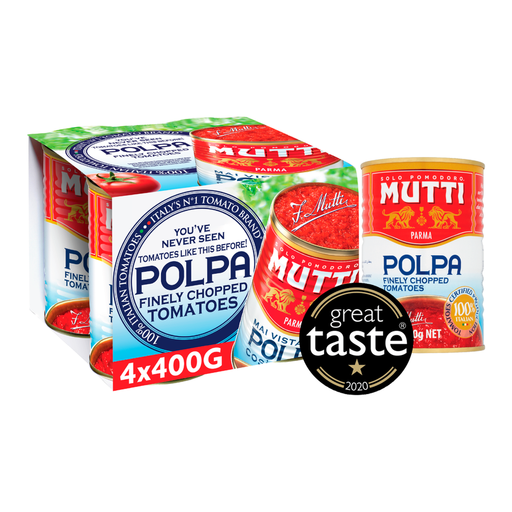
For recipes where smaller tomato pieces matter, this pack contains four separate 400g tins of finely chopped tomatoes. Check the tin’s instructions for storing any opened contents.
 No image available
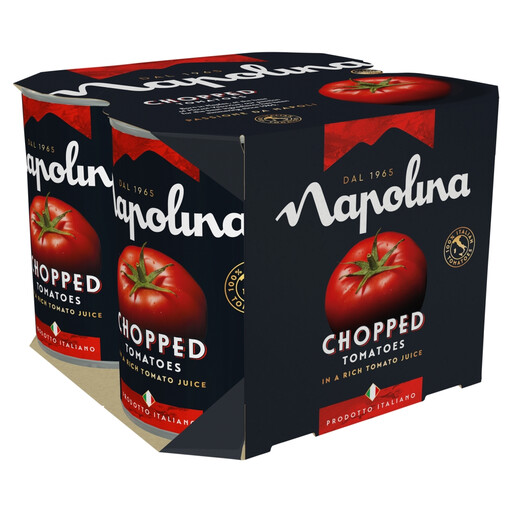
This four-tin chopped-tomato pack suits cooking across several meals. Napolina describes its chopped tomatoes as chunky; check whether that texture suits the sauce or stew you are making.
 No image available
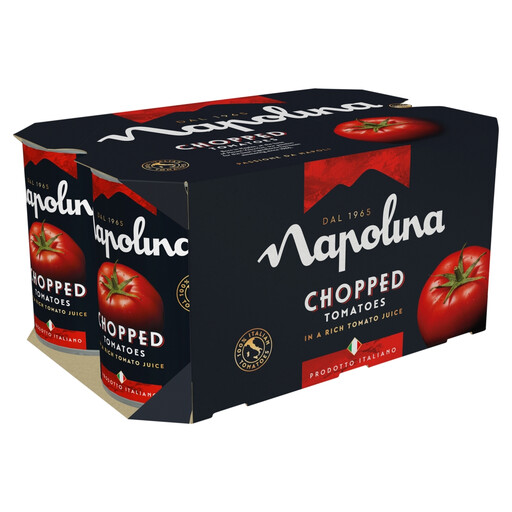
Six separate 400g tins provide more cupboard stock than the four-tin format. Choose this quantity if you have room to store the tins and expect to use them across future meals.
 No image available
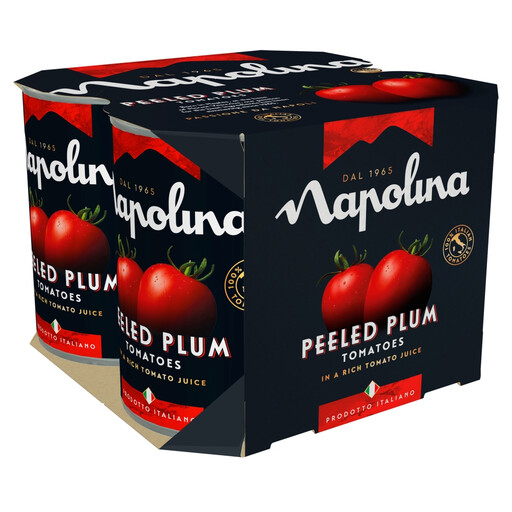
This pack has four separate 400g tins for recipes calling for peeled plum tomatoes. They are a different format from chopped tomatoes, so check the recipe before substituting them.
It contains four separate 400g tins, totalling 1.6kg. That lets you open one tin for a meal while leaving the others unopened in the cupboard; it is not a wholesale catering case.
Choose by the texture your recipe needs. Napolina describes its chopped tomatoes as chunky and suited to thick sauces, while Mutti describes its Polpa as finely chopped and suited to longer cooking; these are manufacturer descriptions, not evidence that either suits every dish.
Transfer unused tomatoes to a suitable non-metallic container and refrigerate them rather than storing them in the opened tin. Follow the particular pack’s use-within instruction: Sainsbury’s specifies 2 days for its 4 x 400g pack, while Asda specifies 4 days for its pack.
GOV.UK says a best-before date concerns quality, whereas a use-by date concerns safety; it lists canned tomatoes among foods with best-before dates. Check the tin’s label, storage history and condition rather than treating the date alone as a check for spoilage.
If it is a customer-facing food business rather than a household pantry, consult the Food Standards Agency’s food-business guidance on registration, food safety, hygiene and allergens. The steps that apply depend on how the operation runs.