Winter sauce and stew cooks avoiding added sugar
If you make tomato-based soups, chilli, casseroles or pasta sauces, check for sugar in the ingredients rather than treating the sugars figure on the nutrition panel as proof that sugar was added.


For winter soups, stews and sauces, a plain tin with no sugar listed in its ingredients is a sensible starting point; the sugars on its nutrition panel can still come from the tomatoes. Compare sugars per 100g across similar tins, then choose chopped or finely chopped tomatoes for the texture you want and check salt alongside sugar. A lower figure on one label does not, by itself, make the product a reduced-sugar product.
If you make tomato-based soups, chilli, casseroles or pasta sauces, check for sugar in the ingredients rather than treating the sugars figure on the nutrition panel as proof that sugar was added.
If both figures matter to your choice, compare sugars and salt per 100g. Similar-looking tomato bases can have different declared salt values.
If you cook with tinned tomatoes regularly, weigh the number of tins against cupboard space and planned meals. Check each pack’s instructions for storing any contents left after opening.
Start with the ingredients and sugars per 100g, then choose a texture for the dish and check salt and storage instructions.
| Priority | What to check | Your needs |
|---|---|---|
| Ingredients and sugars | Read the ingredient list for added sweetening ingredients. Compare total sugars per 100g between similar tomato products; this figure includes naturally occurring tomato sugars. Do not treat a lower figure alone as a reduced-sugar claim. | I want a plain tomato base for soup or sauce without mistaking the sugars on the nutrition panel for added sugar. |
| Texture | Choose chopped tomatoes for visible pieces or finely chopped pulp for smaller pieces in a smoother sauce base. Check the product description if the finished texture matters to your recipe. | For a rustic casserole, I want tomato pieces; for a smoother sauce, I would rather start with a finer cut. |
| Salt | Compare salt per 100g as well as sugars per 100g. The directly checked ASDA chopped tomatoes list 0.01g salt per 100g, while the Joybuy listing for Mutti Finely Chopped Tomatoes 400g lists 0.3g per 100g; these are different product styles. | When I use several tins in a batch, I want to know how much salt each tomato base declares. |
| Pack and leftovers | Choose a single tin or multipack according to planned use and storage space. Follow the chosen product’s instructions for refrigerating and using contents left after opening. | A larger pack works for my regular cooking only if I have room for it and a plan for opened-tin leftovers. |
The nutrition panel reports total sugars, including those naturally present in tomatoes. In Great Britain, the reduced-nutrient claim condition set out on legislation.gov.uk requires at least a 30% reduction compared with a similar product; a lower figure on one tin is not the same claim.
Read the ingredients for added sweetening ingredients and compare sugars per 100g across similar products. Keep ingredient wording separate from a comparative claim on the pack.
Salt figures differ between directly checked tins, including chopped and finely chopped products. Choosing by the sugars figure alone may miss a difference that matters when several tins go into one dish.
Put the per-100g salt figures beside the per-100g sugars figures before choosing a tomato base.
An opened tin needs different handling from unopened tins in the cupboard, and use-within instructions vary by product.
Choose a pack size you can use, transfer leftover contents to a non-metallic container, refrigerate them and follow that pack’s use-within instruction.
An opened portion may go unused if it cannot be included in another meal within the pack’s stated period.
The flavour of a tomato sauce can change as it cooks, so the first taste need not determine what goes into the finished dish.
If the recipe allows, try cooking onion or carrot and simmering the tomatoes before deciding whether the sauce needs adjusting. Napolina suggests these approaches in its cooking guidance.
Chopped tomatoes in tomato juice, offered in single tins and multipacks for dishes such as sauces and casseroles.
Finely chopped tomato pulp for a sauce base with smaller pieces than standard chopped tomatoes.
Own-label Italian chopped tomatoes in tomato juice for everyday meal bases.
Own-label Italian chopped tomatoes in tomato juice, including a 4 x 400g pack.
Own-label chopped tomatoes in concentrated tomato juice, including a 4 x 400g multipack.
Italian chopped tomatoes in tomato juice for a plain tomato base.
These options include chopped tomatoes for soups and stews, finely chopped tomatoes for a smoother sauce base, and peeled whole tomatoes that can be prepared for a sauce. Compare the current label when sugar or salt is a deciding factor.
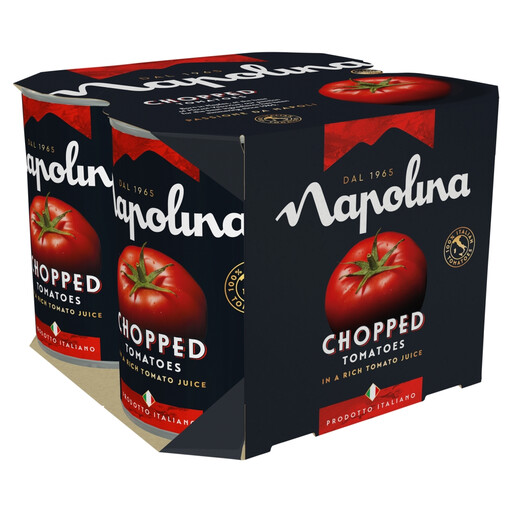 Image unavailable
A multipack of chopped tomatoes for cooks planning several sauces, soups or stews. The checked listing names tomatoes and citric acid as ingredients and declares 3.6g sugars and 0.10g salt per 100g. Check the current pack for instructions on storing contents left after opening.
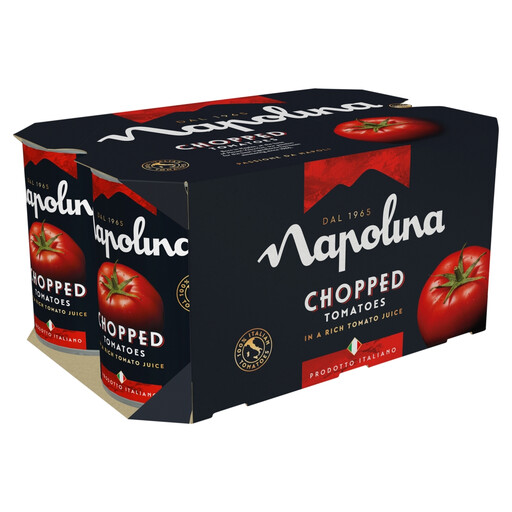 Image unavailable
The six-tin format is worth considering if chopped tomatoes feature regularly in your winter cooking and you have room to store the pack. Compare the current ingredients, sugars and salt per 100g with other tins before choosing.
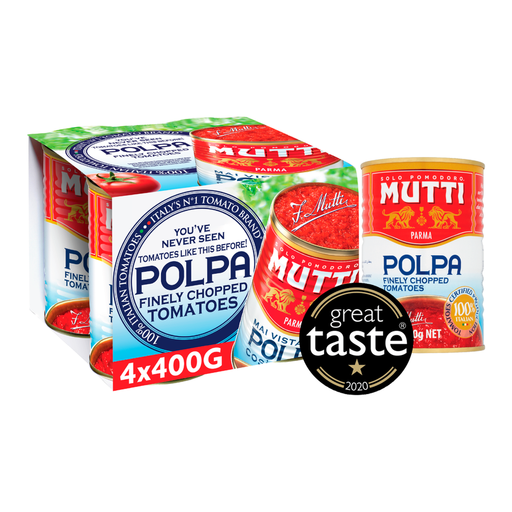 Image unavailable
Consider this finely chopped format when you want smaller tomato pieces in a sauce. It is a four-tin pack; check the current label’s salt and sugars per 100g rather than assuming that a finer cut changes either figure.
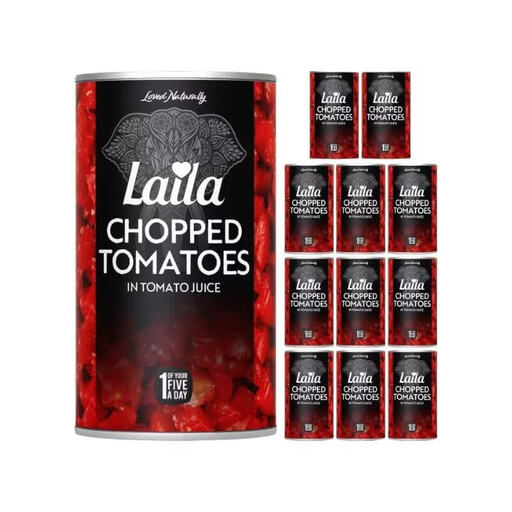 Image unavailable
This 12-tin pack calls for enough storage space and a plan to use the tins in future meals. For a sugar-and-salt comparison, read the current ingredients and per-100g nutrition panel rather than relying on pack size.
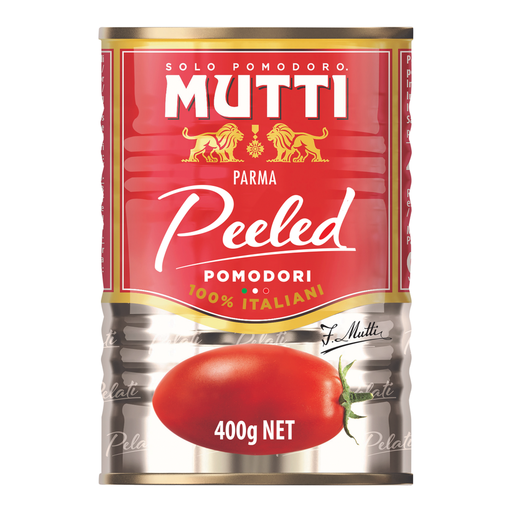 Image unavailable
These are peeled tomatoes rather than chopped tomatoes, so choose them if whole tomatoes suit how you plan to prepare the sauce. Check the current ingredients and per-100g nutrition panel if you are comparing them with chopped tins.
No. A lower per-100g figure on one tin does not establish a reduced-sugar claim. For Great Britain, the reduced-nutrient claim condition published on legislation.gov.uk requires at least a 30% reduction compared with a similar product. Use the figures to compare similar tins, and assess any comparative claim separately.
No. Tomatoes can contribute naturally occurring sugars to the nutrition panel. The Advertising Standards Authority explains that, in Great Britain, a no added sugars claim does not permit added sugars or other foods used for their sweetening properties. Read the current ingredient list and the claim wording together.
Choose standard chopped tomatoes if you want visible pieces in a stew or rustic sauce; choose finely chopped tomatoes for smaller pieces and a smoother base. Texture does not establish which tin has less sugar or salt, so compare those figures on the labels.
If the recipe and your time allow, cook onion or carrot and let the tomatoes simmer before deciding whether to adjust the sauce. Napolina suggests these cooking approaches as alternatives to adding sugar for flavour balance.
Follow the instructions on that product: transfer leftover tomatoes to a non-metallic container, refrigerate them and use them within the pack’s stated period. An unopened tin’s best-before date is not an instruction for storing its contents after opening.