Regular batch cooks
If sauces, chilli, soups or casseroles are on your cooking plan, four 400g tins may be a useful quantity. Check that you have room to store them and will use them within their best-before dates.


For regular batch cooking, a 4 x 400g own-label pack is a practical starting point if you can use and store all four tins; individual tins give occasional cooks more flexibility. Choose a branded multipack when its stated chunky or finely chopped texture suits your recipes, and plan how you will use any opened tin.
If sauces, chilli, soups or casseroles are on your cooking plan, four 400g tins may be a useful quantity. Check that you have room to store them and will use them within their best-before dates.
Standard chopped tomatoes, Napolina’s stated chunky style and Mutti’s finely chopped Polpa offer different textures. Choose the format your recipes call for rather than treating the brands as interchangeable.
If you cook with tomatoes infrequently or use only part of a tin, individual tins may be easier to plan around. Check the exact product’s instructions for refrigerating and using the remainder.
Choose a quantity you can use, then compare tomato formats and the storage instructions on the exact pack.
| Priority | What to check | Your needs |
|---|---|---|
| Pack quantity | Check the number of tins and weight of each tin. A 4 x 400g pack contains 1.6kg; six, twelve and twenty-four-tin packs require a different storage and cooking plan. | I cook with chopped tomatoes often enough to use the whole pack before its best-before dates. |
| Tomato texture | Check whether the product is standard chopped, chunky or finely chopped. Napolina describes its chopped tomatoes as chunky; Mutti describes Polpa as finely cut pulp combined with juice. | For this sauce, I want either noticeable tomato pieces or a finer, pulpy base. |
| Ingredients | Read the label of the exact variant. ASDA lists 65% tomatoes in its 4 x 400g chopped-tomato pack, while Mutti describes Polpa as 99.8% tomato with salt; those figures describe different products, not a quality ranking. | Ingredients matter to my recipe, so I want to know what is in the tin I am choosing. |
| Opened-tin storage | Follow the exact label for transferring, covering and refrigerating leftovers. The products described by ASDA, Tesco, Sainsbury’s and M&S give different periods for using opened contents. | When a recipe uses only part of a tin, I need a plan for the remainder that follows its label. |
A pack of many individual tins takes more storage space and may outlast the meals you intend to make.
Count the tins you expect to use and check their best-before dates before choosing a larger pack.
Napolina describes a chunky product, while Mutti describes finely cut Polpa. Either texture may change the result you want from a particular recipe.
Check the product description and choose the texture that fits the dish.
The stated period for using opened contents differs between the products described by ASDA, Tesco, Sainsbury’s and M&S.
Transfer leftovers as directed, refrigerate them and follow the period printed on the exact pack.
GOV.UK explains that best-before dates concern quality, whereas use-by dates concern safety; tinned foods are among its examples of products carrying best-before dates.
Read the date type on the tin and follow its storage instructions. Check the product carefully if its best-before date has passed.
Tesco lists an Italian chopped-tomato 4 x 400g pack for routine cooking.
ASDA lists both a chopped-tomato 4 x 400g pack and a Just Essentials 400g single tin.
Sainsbury’s lists a 400g own-label chopped-tomato tin containing tomatoes in concentrated tomato juice.
Napolina describes its 4 x 400g chopped tomatoes as chunky and packed in tomato juice.
Mutti describes Polpa as finely cut tomato pulp combined with juice.
M&S lists a 400g Italian chopped-tomato tin containing tomato juice and citric acid.
These chopped-tomato packs range from four to twenty-four 400g tins. Choose a quantity that fits your storage space and planned cooking; the four-tin format is the closest match to the routine batch-cooking scenario discussed above.
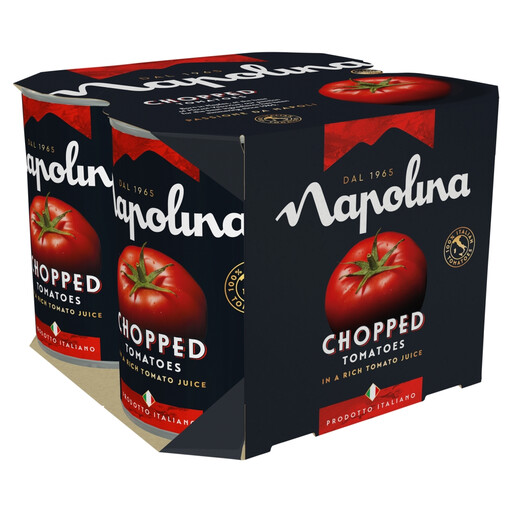 No image available
Four 400g tins suit a cooking plan that uses chopped tomatoes across several meals. Follow the pack’s instructions for refrigerating opened contents and using them within two days.
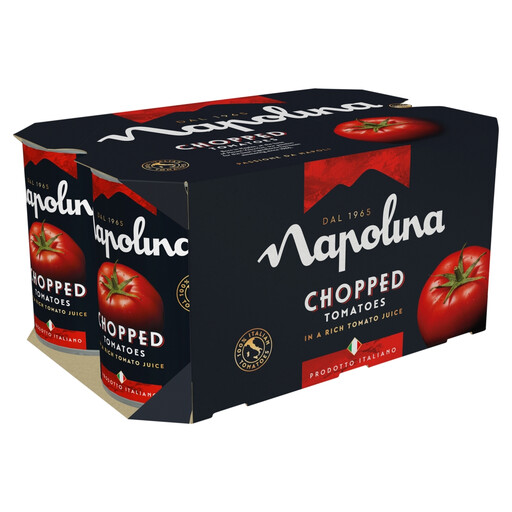 No image available
Six 400g tins suit repeated cooking when you have room for a larger pack. Follow the pack’s instructions to refrigerate opened contents and use them within two days.
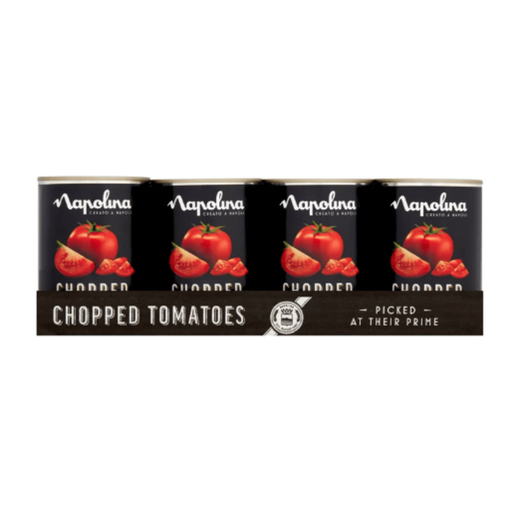 No image available
Twenty-four 400g tins call for substantial storage space and a plan for frequent use. Napolina describes this pack’s tomatoes as chunky and packed in tomato juice; check the label for opened-tin instructions.
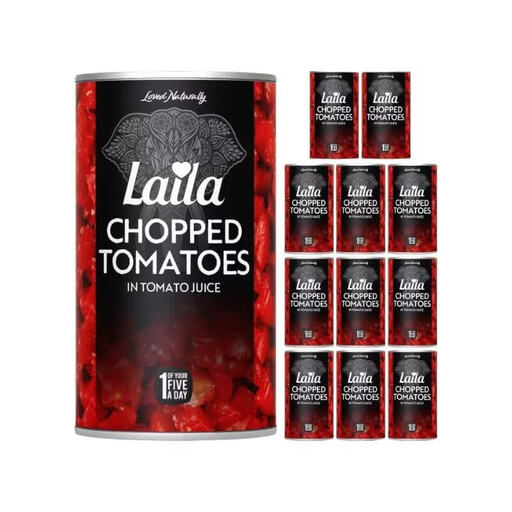 No image available
Twelve 400g tins suit a plan to cook with chopped tomatoes regularly, provided you can store the pack. Follow its instructions to transfer and refrigerate opened contents and use them within two days.
Choose a four-pack if you regularly cook meals that use chopped tomatoes and can store all four tins. If you cook with them infrequently or want to try a product before keeping several tins, individual tins may be easier to use.
Look for a stated chunky texture if you want tomato pieces in the sauce. Napolina describes its chopped tomatoes as chunky, while Mutti describes Polpa as finely cut pulp combined with juice.
Follow the exact product label: the products described by ASDA, Tesco, Sainsbury’s and M&S direct shoppers to transfer leftovers to a suitable non-metallic container and refrigerate them. Their stated periods for using opened contents differ, so do not apply one pack’s instruction to another.
GOV.UK explains that best-before dates concern quality, unlike safety-focused use-by dates. Food is usually safe to eat after a best-before date but may not be at its best quality; follow the tin’s storage directions and check the product carefully.
Consider a twenty-four-tin pack when you have space for it and a realistic plan to use that many tins within their best-before dates. Otherwise, a smaller pack or individual tins may fit your cooking routine more closely.