
24/7 Customer Support

Free returns

Same-day & Next-day Delivery

Quality Guaranteed

Unlock Your Welcome Offers: FREE Delivery | Up to 80% OFF | Free 30-day JoyPlus trial
Download the APP
Tinned tomatoes are a practical pantry staple for pasta sauces, soups, stews, curries and homemade pizza. However, comparing tins is not simply a matter of choosing the cheapest multipack. Differences in format, tomato content, country of origin, pack size and storage instructions can affect both the result in your pan and the value of your shop.
This guide explains what to check before buying tinned tomatoes and matches several options to different UK household needs.
Chopped tomatoes are convenient for quick pasta sauces, chilli and casseroles because they require little preparation. Plum tomatoes, meanwhile, are whole or largely whole and can be crushed, blended or left intact. They are useful when you want more control over texture.
Peeled tomatoes can work well in sauces where skins would be unwelcome, while finely chopped tomatoes may suit pizza sauce and recipes cooked at higher temperatures. Buying the wrong format may leave you blending or chopping before you can start cooking.
Some products list tomatoes and tomato juice as the main ingredients, with citric acid used as an acidity regulator. However, the stated tomato percentage can vary between products. Check the ingredient list rather than relying on front-of-pack descriptions such as “rich” or “premium”.
For example, the listed ingredients for Napolina Chopped Tomatoes 4 x 400g are tomatoes at 99.9% with citric acid, while some other products list tomatoes at 60–70% alongside tomato juice. This does not automatically determine taste, but it is a useful comparison point when calculating value.
A 12- or 24-can case can reduce the need for frequent supermarket trips and may suit catering customers or large families. Yet an unopened case needs a cool, dry cupboard with space away from direct sunlight. Once opened, transfer unused tomatoes to a non-metallic container, refrigerate and follow the product’s stated consumption period.
Do not buy bulk quantities purely because the unit price appears lower. Check your household’s normal usage, best-before dates and cupboard capacity first.
Match the format to the dish:
For a smooth pasta sauce, consider peeled or finely chopped tomatoes and blend if necessary. For a chunky cooking sauce, standard chopped tomatoes can save preparation time.
Look for a short, clearly stated ingredient list. Many tinned tomatoes contain tomatoes, tomato juice and citric acid. Some include salt, so compare the salt per 100g if this matters to your cooking.
Nutrition values differ between products. The listings supplied for the products in this guide show energy values ranging from 16 to 27 kcal per 100g, with variations in carbohydrate, fibre and salt. Always check the current packaging because formulations and nutritional information can change.
A standard 400g tin is convenient for many household recipes and may provide roughly two to four portions, depending on the dish. Multipacks of 4 x 400g are suitable for regular home cooking, while 6-, 12- or 24-can cases are more appropriate for meal planners, larger families and catering use.
Compare the cost per 400g, not just the total case price. A larger pack is only economical if you will use it before quality or storage becomes an issue.
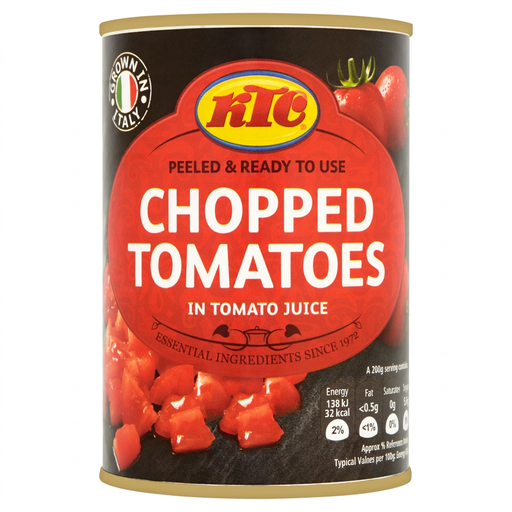
Why This Fits Their Persona: A single 400g tin is a manageable choice for students, smaller households and cooks trying different recipes without committing to a bulk case.
The 400g format avoids paying for an oversized case before you know how quickly you use tinned tomatoes.
The listed ingredients include tomatoes, tomato juice and citric acid; it is also described as peeled and ready to use.
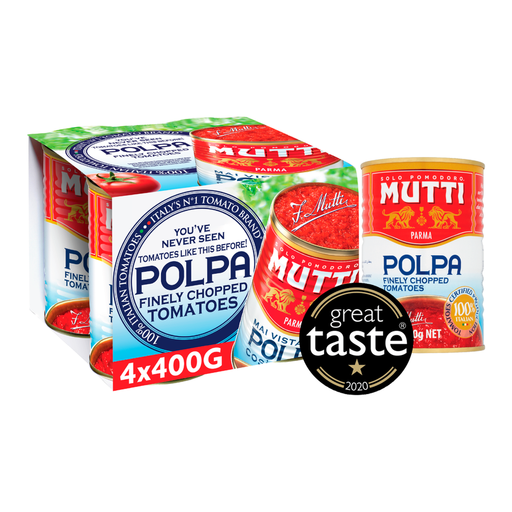
Why This Fits Their Persona: This multipack suits cooks who regularly prepare Italian-style sauces, pizza, fish dishes or recipes where a fine, even texture is useful.
The finely chopped format is clearly specified, so buyers are not relying on vague descriptions of texture or versatility.
The product is listed as made in Italy and contains tomato at 99.8% with salt; the pack provides four 400g tins.
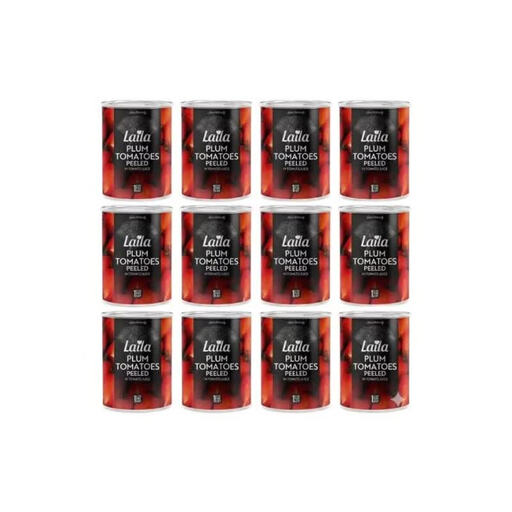
Why This Fits Their Persona: A 12-can bulk pack is suited to families, meal planners, frequent home cooks and small catering operations using cooking tomatoes throughout the week.
The quantity is clearly stated as 12 x 400g, making it easier to calculate cupboard requirements and cost per tin before ordering.
The product contains whole peeled plum tomatoes and tomato juice, and is listed as suitable for vegetarian and vegan diets.
Tinned tomatoes are ready to use, but the final dish often benefits from simmering. For a thicker pasta sauce or pizza sauce base, cook uncovered for around 10 to 15 minutes, or longer if your recipe requires further reduction. Add garlic, herbs, onions or vegetables according to the dish rather than assuming the tin already contains seasoning.
Check that cans are intact before opening. Avoid using tins that are swollen, leaking or badly damaged. Store unopened products in a cool, dry cupboard. After opening, move leftovers to a non-metallic, covered container and refrigerate. Follow the specific label guidance: several products listed here advise consumption within two days, while some Mutti listings state up to five days.
We have compiled a complete, real-time list of products that fully satisfy these strict selection criteria and UK safety regulations.
Yes. Chopped tomatoes provide a ready-made base, while plum or peeled tomatoes can be crushed for a more rustic texture. Simmering helps reduce excess liquid and concentrate the sauce.
This depends on the product label. Several products advise transferring leftovers to a non-metallic container, refrigerating them and using them within two days. Some products specify a longer period, so check the individual packaging rather than assuming all tins are identical.
They can offer a lower cost per 400g, but this depends on the listed price and pack size. Compare the unit cost, then consider cupboard space, best-before dates and how frequently your household uses tomatoes before choosing a bulk pack.