
24/7 Customer Support

Free returns

Same-day & Next-day Delivery

Quality Guaranteed

Unlock Your Welcome Offers: FREE Delivery | Up to 80% OFF | Free 30-day JoyPlus trial
Download the APP
Tinned tomatoes are a practical cupboard staple for UK households, but choosing the right format is not always straightforward. A tin labelled “Italian” may still differ considerably in texture, tomato content, salt level and pack size. Buying the wrong type can leave a pizza topping too watery, a pasta sauce lacking body or a family meal with more leftovers than you can use.
This guide explains what to check before buying tinned tomatoes, from peeled plum tomatoes and chopped tomatoes to tomato passata, tomato purée and concentrated products.
Whole peeled tomatoes, chopped tomatoes and passata are not interchangeable in every recipe.
Choosing based only on the label “tinned tomatoes” can therefore result in the wrong consistency for your recipe.
Italian tinned tomatoes can be grown, processed or packed in different locations, so read the product description and packaging carefully. Check the country of origin, ingredient list and whether the tomatoes are packed in tomato juice or another liquid.
For example, several products in this range specify tomatoes grown or packed in Italy, while Laila Tinned Plum Tomatoes 400g states that its country of origin is India. Neither automatically determines suitability; the important point is matching the product information to your preferences and recipe.
Bulk tinned tomatoes can reduce the number of shopping trips and suit families, meal planners and caterers. However, a 12- or 24-tin case needs dry, cool cupboard space and a realistic usage plan. Once opened, do not leave tomatoes in the opened tin. Transfer them to a non-metallic covered container, refrigerate and follow the stated use-by guidance on the label.
Compare the ingredient list rather than relying on front-of-pack wording. Products may contain tomatoes, tomato juice and citric acid, an acidity regulator commonly used to maintain freshness. Some prepared passata products also contain onion, garlic, sugar or seasoning.
If you want a neutral cooking base for vegetarian, vegan or allergy-conscious meals, choose a product with a short ingredient list and check the allergen statement every time. Recipes may then be adjusted with your own herbs, spices, stock or vegetables.
The texture should reflect how you cook:
A watery tin is not necessarily defective, but it may require longer simmering. For a thicker sauce, allow excess liquid to reduce gently rather than adding flour or other thickeners.
Double concentrate tomato purée is suitable for everyday use in smaller amounts. The Napolina 142g tube describes approximately nine 15g portions, which can be practical for bolognese, casseroles and stews.
Triple concentrate tomato purée is denser and intended for recipes where a small quantity must deliver a strong tomato base. Mutti Triple Concentrate Puree 200g lists a 36% minimum dry matter content. Concentrated purée should not be measured like chopped tomatoes: start with a small spoonful and adjust.
For regular cooking, compare the price per 100g, not only the total pack price. A six-pack or case may offer convenience, but a single 400g tin can be more appropriate for occasional cooks or smaller households.
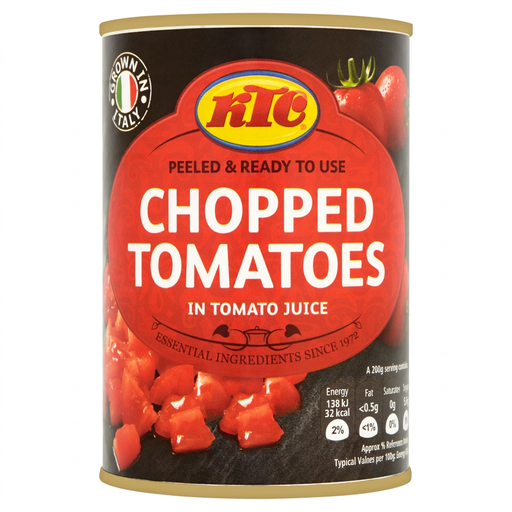
Why This Fits Their Persona: A single 400g pack is a manageable starting point for students, smaller households and cooks trying new pasta, soup or casserole recipes.
The chopped format avoids the preparation step required with whole tomatoes, while the compact pack helps reduce unnecessary leftovers.
Ingredients include tomatoes, tomato juice and citric acid; the product is listed as grown in Italy and suitable for vegetarians.
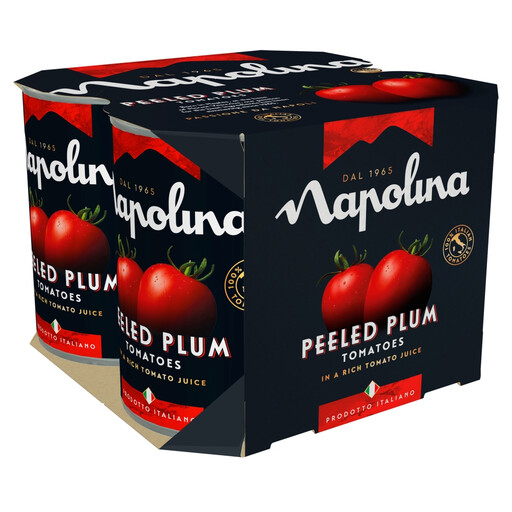
Why This Fits Their Persona: This four-pack suits cooks who prepare Italian-style sauces, lasagne and slow-cooked meals and prefer whole peeled tomatoes in tomato juice.
The peeled plum format is clearly defined, so buyers are less likely to mistake a smooth passata or small dice for a whole-tomato product.
The pack contains four 400g tins, with tomatoes, tomato juice and citric acid listed in the ingredients.
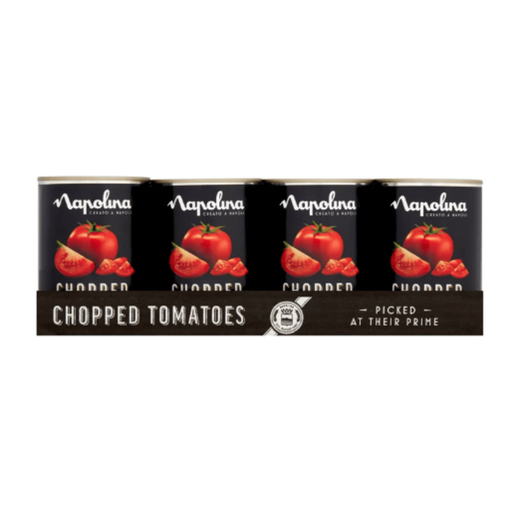
Why This Fits Their Persona: The case format is suited to large families, caterers, professional kitchens and meal planners who regularly cook sauces, soups, stews or casseroles.
The 24-tin quantity makes the cost per tin easier to assess and reduces the need for frequent individual purchases, provided you have suitable storage.
Each 400g tin contains chopped tomatoes in tomato juice; the product information states that the tomatoes are grown in Italy.
We have compiled a complete, real-time list of products that fully satisfy these strict selection criteria and UK safety regulations.
Yes. Tinned tomatoes are ambient products that can be stored in a cool, dry cupboard before opening. They are suitable for pasta sauces, pizza, soups, stews, curries and casseroles. Always check the label for ingredients, allergen information and storage instructions.
This varies by product, but many products advise transferring the contents to a non-metallic covered container, refrigerating and using within two days. Some concentrated purées specify a longer period after opening. Follow the individual packaging rather than assuming all products have the same storage life.
It depends on the texture you want. Passata creates a smooth sauce with no obvious pieces, while chopped tomatoes provide a chunkier result. You can also combine passata with a small amount of double concentrate tomato purée when you want a smoother sauce with a more concentrated tomato base.