Home bakers adapting a tomato cake
The University of Warwick’s cake method uses fresh cherry tomatoes. If you want to use a pantry tin instead, treat it as a recipe change rather than a same-weight swap.


Use fresh cherry tomatoes if you want to follow the University of Warwick’s tomato-cake method: it blends fresh tomatoes for the sponge and prepares them separately for the icing. If you want to develop a version using tinned tomatoes, compare plain tins by their stated salt per 100g and try a small batch; a lower salt figure does not show that a tin will give the same batter, flavour or icing as fresh tomatoes.
The decision changes depending on whether you are following an existing recipe or developing a new version with a tin.
The University of Warwick’s cake method uses fresh cherry tomatoes. If you want to use a pantry tin instead, treat it as a recipe change rather than a same-weight swap.
Check salt per 100g on each exact product. The plain chopped tins described by Marks & Spencer, Tesco, Sainsbury’s and Napolina carry different stated figures; that comparison says nothing about their results in cake.
A plain tomato ingredient list gives you a different starting point from a garlic-, herb- or chilli-flavoured tin. Check the variant as well as the brand before using it in a sweet bake.
Choose this when: You want to follow the University of Warwick’s cake method, which blends fresh cherry tomatoes for the sponge and prepares fresh tomatoes separately for the icing.
Trade-off: This route calls for fresh tomatoes rather than a pantry tin.
Choose this when: You are developing your own tinned-tomato version and can make a small trial batch.
Trade-off: You will need to assess the tin’s liquid and texture in the recipe rather than assume the fresh-tomato quantities will work unchanged.
| Priority | What to check | Your needs |
|---|---|---|
| Salt figure | Compare salt per 100g on the exact tins, using the same basis. A “reduced salt” description alone does not identify the lowest stated figure. | If I am trying to limit the salt contributed by the tomato ingredient, the number on each tin matters more than its name or a comparative claim. |
| Ingredients | Look for a plain tomato ingredient list and check the variant for garlic, herbs or chilli. Check whether salt is listed as an added ingredient. | For a sweet cake experiment, I want to know what else will go into the batter with the tomatoes. |
| Tomato format | Distinguish chopped from whole peeled tomatoes. Note the packing juice and record how much tomato and liquid you use in a trial. | I need a way to judge the batter’s consistency before making a larger cake, rather than assuming a tin weighs out like fresh tomatoes. |
| Icing preparation | Check whether your method calls for strained tomato juice. The University of Warwick’s fresh-tomato recipe prepares the icing tomatoes separately. | If I am making that icing, I cannot assume a tinned tomato and its packing juice will behave the same way. |
The University of Warwick’s tomato-cake method uses fresh cherry tomatoes, including a separate preparation step for the icing. A tin’s salt figure cannot establish how its liquid or texture will work in that method.
Use fresh tomatoes to follow the published method. For a tinned version, make a small batch and record the amount of tomato, any liquid used and the batter’s consistency.
A separate trial takes ingredients and preparation time without guaranteeing the intended result.
That wording does not tell you which of two tins has less stated salt per 100g.
Compare the figures on the products themselves. For example, Marks & Spencer lists 0.02g salt per 100g for its Chopped Italian Tomatoes, while Napolina lists 0.10g per 100g for its plain chopped tomatoes.
Garlic, herbs and chilli change what you add to the cake, regardless of the salt figure. Napolina lists flavoured chopped-tomato variants alongside its plain product.
Check the full variant name and ingredient list; start with a plain tin unless your recipe calls for those savoury flavours.
Ingredients and nutrition information can change, so a figure read before shopping may not describe the tin in hand.
Before buying, check the current pack for salt per 100g, ingredients, pack size and storage instructions.
These figures describe particular tomato products, not how any brand’s tomatoes perform in cake.
A reference for comparing the stated salt in plain chopped tins.
A plain own-label chopped-tomato reference for a trial bake.
Another plain chopped-tomato product to compare by its exact label.
A chopped-tomato option where choosing the plain variant matters.
A reminder to compare the precise tomato product, not just the brand.
These Joybuy options include chopped and whole peeled tinned tomatoes for someone considering a small cake-baking trial. None is established as a like-for-like substitute for the fresh cherry tomatoes in the University of Warwick’s recipe.
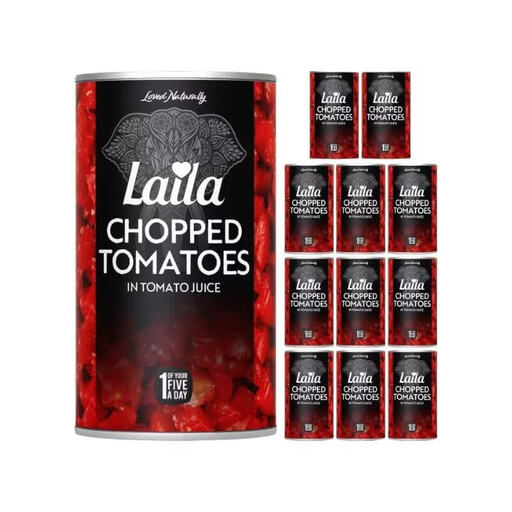 No image available
The chopped format is an option for a small tinned-tomato cake trial, rather than a direct swap in a fresh-tomato recipe. This is a 12 x 400g pack; check the salt per 100g and ingredients on the tins before choosing it for a low-salt experiment.
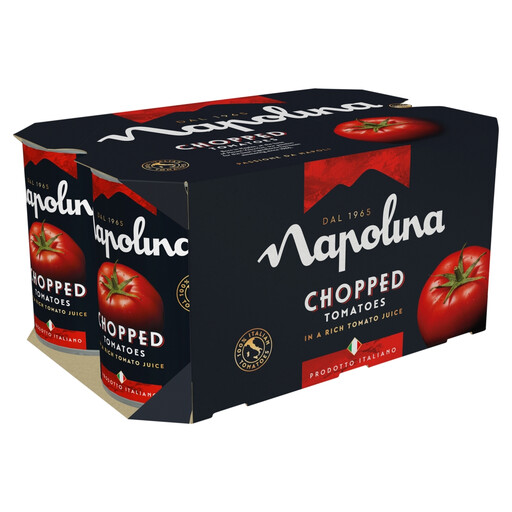 No image available
This chopped-tomato pack offers a plain-tin format to consider for a trial bake. Napolina lists 0.10g salt per 100g for its plain chopped tomatoes; check the exact tins’ ingredients and salt figure, and do not assume they will reproduce a fresh-tomato cake.
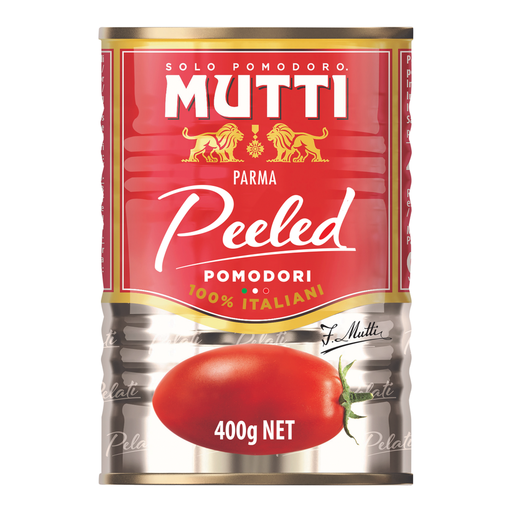 No image available
This 400g tin contains whole peeled tomatoes rather than chopped tomatoes, so it calls for a different preparation step in a trial bake. Check its own salt figure and ingredients: the figure for Mutti Polpa, a different product, does not describe this tin.
No. Compare the stated salt per 100g on the exact products instead. Marks & Spencer lists 0.02g per 100g for its Chopped Italian Tomatoes, while Mutti lists 0.30g per 100g for Polpa; those are product-specific figures, not a measure of how either will work in cake.
Start with a plain product if you are testing a sweet tinned-tomato cake. Napolina sells garlic-, herb- and chilli-flavoured variants separately from its plain chopped tomatoes; check the variant and ingredients rather than choosing on salt alone.
Follow the storage instructions on the tin you opened. Check its directions for the container, refrigeration and how soon to use the remainder rather than applying instructions from a different product.