Care-home catering managers
Match tin size to the number of portions in planned menus. A large tin makes sense when a batch uses the contents; separately sealed tins give more control when recipes call for smaller quantities.


Choose a large single tin when a planned batch will use its contents and the kitchen can follow the product’s instructions after opening. For smaller or changing batches, separately sealed 400g tins let staff open only what the recipe requires. Choose plum, chopped or finely chopped tomatoes for the finished dish, but do not treat any retail cut description as proof that a meal meets a resident’s assessed texture requirements.
Match tin size to the number of portions in planned menus. A large tin makes sense when a batch uses the contents; separately sealed tins give more control when recipes call for smaller quantities.
Choose whole plum tomatoes when the recipe calls for crushing or blending, chopped tomatoes when pieces are wanted, or a finer cut for a more even diced base. Judge the finished dish, not just the description on the tin.
Follow each resident’s assessed plan rather than assuming that chopped or finely chopped tomatoes are suitable. The International Dysphagia Diet Standardisation Initiative (IDDSI) says food should be tested under its intended serving conditions.
Start with the recipe yield and finished texture, then check how the exact product will be handled once a tin is opened.
| Priority | What to check | Your needs |
|---|---|---|
| Batch size | Compare the quantity in one tin with the recipe yield and service numbers. A 2.5kg single tin and a 4 x 400g multipack create different amounts to handle after each opening. | If today’s cook uses only part of a large tin, I would rather open the 400g tins needed for that recipe and leave the others sealed. |
| Tomato cut | Check whether the recipe needs whole peeled plum, chopped or finely chopped tomatoes. Allow for crushing or blending whole tomatoes when the finished dish needs a more uniform base. | For a sauce with visible tomato pieces, I may choose chopped tomatoes; for a more even diced base, I may choose a finer cut. |
| Assessed texture | Prepare the finished recipe to the resident’s assessed requirements and test it under intended serving conditions, as IDDSI advises. The cut named on a retail tin does not establish the finished meal’s texture. | When preparing a texture-modified meal, I need to check the food as it will be served, rather than rely on a label saying 'finely chopped'. |
| Opened-tin handling | Read the exact product’s transfer, covering, refrigeration and use-after-opening instructions. Plan the work and refrigerator space around the amount opened. | A tin size works for my kitchen only if staff can handle and use its contents in line with that product’s instructions. |
| Product records | Keep the current ingredient, allergen, storage and shelf-life information for the supplied variant. The Food Standards Agency’s MyHACCP guidance identifies product and handling information as part of describing food for hazard control. | If the brand, pack size or seller changes, I need the specification for the product that will actually enter the kitchen. |
A 2.5kg tin concentrates the opened contents in one container. If the batch needs less, staff must handle the remainder according to that product’s instructions.
Set the tin size from recipe yield and service numbers, then check how the exact product must be stored and used after opening.
An unfinished tin also takes refrigerator space and staff time to transfer and manage.
A tin’s cut description cannot establish the texture of a finished meal for a resident with swallowing needs. Preparation and serving conditions can change the food being assessed.
Follow the resident’s individual plan and test the prepared recipe under intended serving conditions, in line with IDDSI guidance.
The Mutti 4 x 400g Joybuy listing was marked out of stock when checked, while a separate 5kg listing was marked no longer available. A recurring menu needs a supply plan for its exact variant.
Confirm the product, seller and fulfilment arrangements before making it a routine order, and plan a suitable alternative format for the recipe.
'Chopped' or 'plum' does not record the supplied product’s full ingredients, allergen information or storage instructions.
Keep the current specification for each approved line and review it when the brand, pack size or seller changes.
These examples illustrate tomato formats and supply routes; a brand’s inclusion does not establish that a particular product is available for an order.
Napolina offers chopped tomatoes in single tins and a 4 x 400g pack, a format for kitchens that want to open tins separately.
Mutti’s finely chopped 4 x 400g format is a reference point for recipes calling for a more even diced tomato base.
Tesco’s grocery listings provide examples of own-label chopped tomato multipacks and single-tin formats alongside branded products.
A Cirio 2.5kg peeled-plum-tomato listing illustrates the large single-tin route for a planned batch.
These chopped and peeled-plum multipacks offer separately sealed 400g tins for planned care-home recipes. They are not a substitute for assessing the finished texture of a resident’s meal.
 No image available
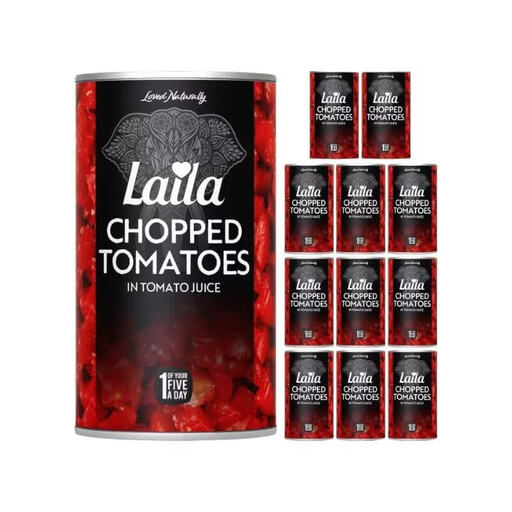
A 12-tin chopped-tomato pack for a kitchen planning repeated sauce, soup or stew batches. Match the number of 400g tins opened to each recipe, and check the supplied label for ingredients, allergens and opened-tin handling.
 No image available
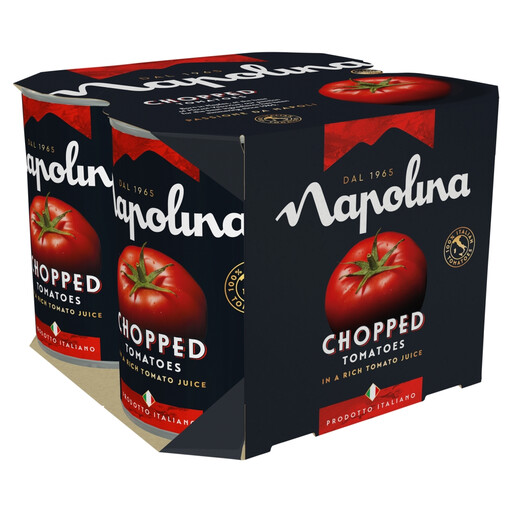
Four separately sealed tins suit recipes needing chopped tomatoes without opening a large single container. Napolina describes its chopped tomatoes as chunky. The Joybuy product instructions say to transfer opened contents to a non-metallic covered container, refrigerate and use within two days; further preparation may be needed for the finished dish.
 No image available
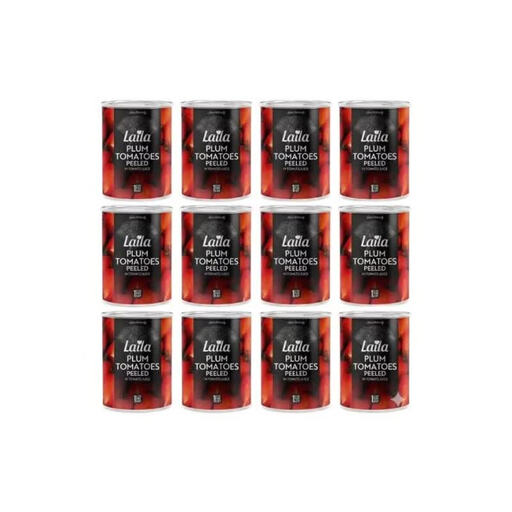
This 12-tin plum-tomato pack suits a menu that repeatedly calls for whole tomatoes to be crushed or blended during preparation. Each tin contains 400g; plan how many to open for the batch and check the supplied label’s handling instructions.
 No image available
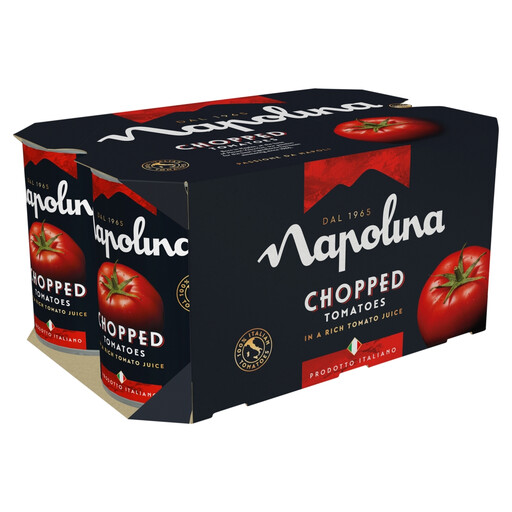
Six 400g tins provide chopped tomatoes for several planned cooks while allowing tins to be opened separately. Check the finished texture against the recipe and any resident-specific requirements, and follow the supplied label after opening.
 No image available
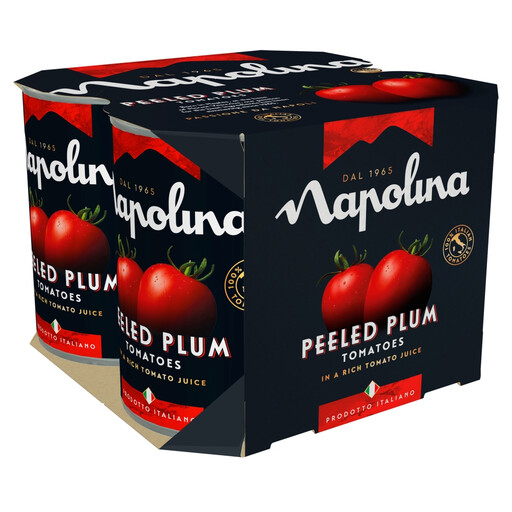
Four 400g tins offer peeled plum tomatoes in separately opened amounts for recipes that call for whole tomatoes. Crush or blend them if the recipe needs a more uniform base; check the supplied label for ingredients and storage instructions.
No. Choose a large single tin when a planned batch will use its contents and staff can follow the product’s instructions after opening. For smaller cooks, separately sealed tins let the kitchen open the amount the recipe needs.
No retail cut description establishes that a finished meal meets an individual’s assessed texture requirements. Follow the resident’s plan and test the prepared food under intended serving conditions, as IDDSI advises.
Whole peeled plum tomatoes can be crushed or blended, while chopped tomatoes retain more visible pieces and finely chopped tomatoes provide a more even diced starting base. Choose according to the finished recipe, allowing for any further preparation it needs.
Keep the current specification, ingredients, allergen information and storage and post-opening instructions for the exact product supplied. The Food Standards Agency’s MyHACCP guidance includes product, storage and handling information in food-hazard planning.