Salt-conscious Easter cooks
If you are making sauces, stews or pasta bakes, the tin’s salt declaration helps you account for one ingredient before seasoning the finished dish.


For Easter sauces, casseroles and pasta dishes, compare the salt declaration per 100g on the exact tin rather than relying on a “reduced salt” search term. Choose chopped, finely chopped or whole tomatoes to suit the dish, and taste the cooked sauce before adding salt: the NHS notes that salt comes from food as well as seasoning added during cooking.
The useful choice depends on both the salt figure and what the tomatoes need to do in the recipe.
If you are making sauces, stews or pasta bakes, the tin’s salt declaration helps you account for one ingredient before seasoning the finished dish.
When buying tins for more than one meal, compare salt per 100g alongside pack quantity, tomato texture and the storage instructions for opened tins.
Chopped tomatoes, finely chopped tomatoes and whole cherry tomatoes bring different-sized pieces to a sauce. Decide which format the dish calls for before comparing salt figures.
Start with the nutrition declaration on the tin, then check whether its texture and quantity fit the meals you are planning.
| Priority | What to check | Your needs |
|---|---|---|
| Declared salt | Compare salt in grams per 100g on the exact tins. Check how much tomato the recipe uses, then account for salt added through other ingredients or seasoning. | I want to compare tins before seasoning an Easter sauce. In the Food Standards Agency Northern Ireland and Ipsos 2022 tracker, 42% of respondents said they would be more likely to buy food reduced in salt than the regular version; the question covered food generally, not tinned tomatoes. |
| Nutrition labels | Read the numeric salt declaration even if a front-of-pack traffic-light label is present. Compare per-100g figures rather than treating different stated servings as equal. | A quick front-of-pack indication is useful to me, but I also want the number behind it. The Food Standards Agency and Ipsos Northern Ireland 2024 tracker, based on 611 interviews, reported that 49% actively used traffic-light labelling when shopping for food; this was not specific to tomatoes. |
| Tomato texture | Check whether the tin contains chopped pieces, finely chopped tomatoes or whole cherry tomatoes. Match the format to the texture wanted in the finished dish. | For a sauce with visible pieces, I would consider chopped tomatoes; for smaller pieces, finely chopped tomatoes. Whole cherry tomatoes make sense when their shape suits the recipe. |
| Pack and storage | Check the number and size of tins against the dishes planned. Read the exact pack’s instructions for storing any opened contents. | If I am cooking several meals, a multipack may suit the plan; for one dish, I want to avoid buying more tins than I intend to use. |
Product declarations differ. ASDA Groceries lists 0.01g salt per 100g for its Just Essentials chopped tomatoes, while its Mutti finely chopped tomato listing states 0.30g per 100g; the products also differ in format.
Read the salt figure on each tin you are considering, and compare similar tomato formats where the recipe allows.
A half-can figure describes a different quantity from a per-100g figure. Comparing those numbers directly can obscure which tin has the lower declared salt concentration.
Use the per-100g declarations for the initial comparison, then consider the amount going into your dish.
The NHS notes that daily salt includes what is already in food and what is added during or after cooking. A tomato tin is only one part of a sauce that may also contain seasoned ingredients.
Check the other ingredients and taste the cooked dish before deciding whether to add salt.
Whole cherry tomatoes will not give the same pieces as finely chopped tomatoes. That difference can matter in a pasta sauce or casserole even when both tins have suitable salt declarations.
Choose the tomato format for the dish first, then compare the salt figures of suitable tins.
These examples show how particular product declarations and tomato formats differ; check the current tin before buying.
A standard chopped-tomato option for sauces and casseroles.
Its Organic Italian Chopped Tomatoes offer an organic chopped format.
An own-label chopped-tomato option with a stated nutrition declaration.
Chopped tomatoes described by Napolina as chunky and suited to thick sauces.
A finely chopped format for dishes where smaller tomato pieces are wanted.
A retailer reference for the Napolina Chopped Tomatoes 400g listing.
These Joybuy options are chopped and finely chopped tinned tomatoes for Easter cooking. Compare the pack quantity and the declaration on the product you choose; this selection does not cover every tomato format discussed above.
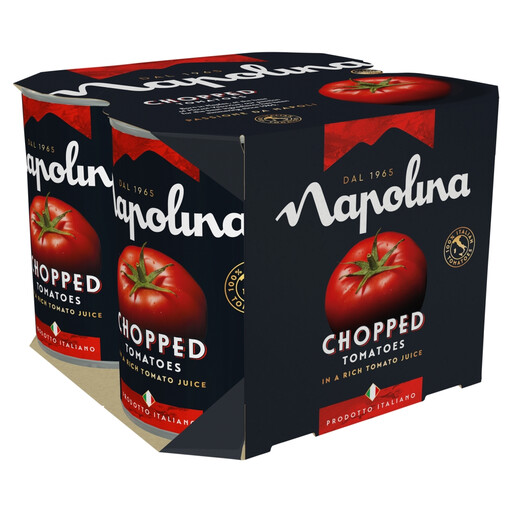 No image available
Chopped tomatoes for a sauce where visible tomato pieces are wanted. The four-tin pack contains 400g tins; Napolina states 0.10g salt per 100g for its chopped tomatoes. Check the pack’s instructions if you will have opened contents left over.
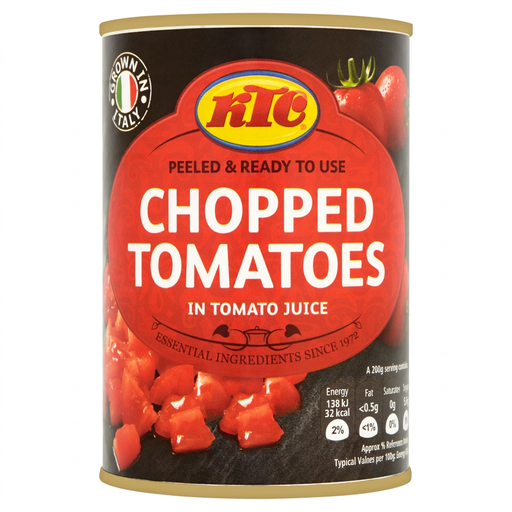 No image available
A single tin of chopped tomatoes for a sauce, stew or casserole. Joybuy lists tomatoes, tomato juice and citric acid as ingredients, with 0.09g salt per 100g. Check the tin for instructions on storing opened contents.
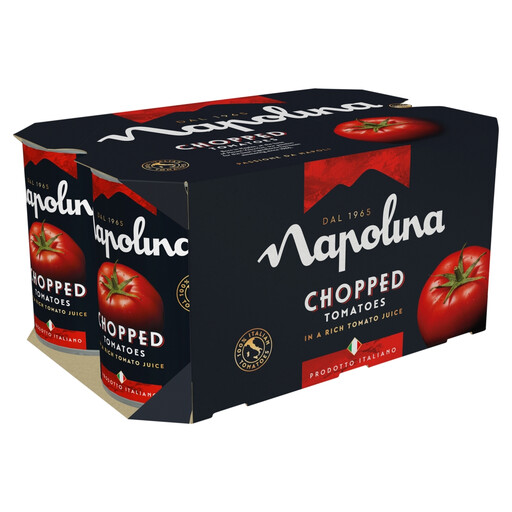 No image available
Six 400g tins provide chopped tomatoes for several planned dishes. If salt is the deciding factor, compare the declaration on this pack with other chopped-tomato options; also check its opened-tin storage instructions.
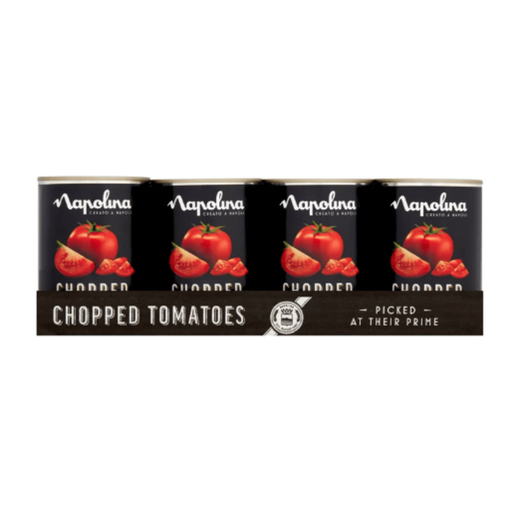 No image available
This 24-pack of 400g chopped-tomato tins suits a plan that calls for that quantity across multiple meals. Check the pack’s salt declaration and whether you have a use and storage space for all the tins.
 No image available
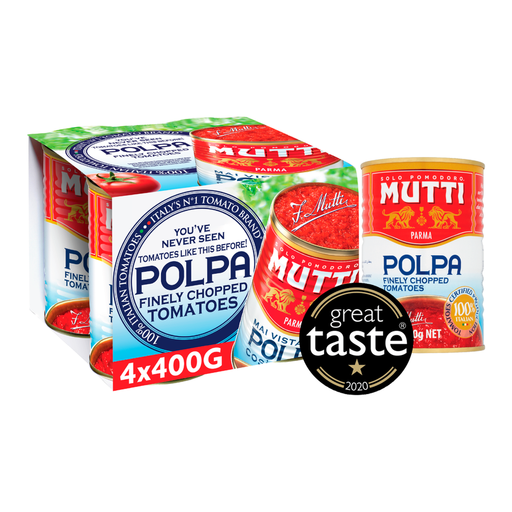
The finely chopped format is for dishes where smaller tomato pieces are wanted. This pack contains four 400g tins; if selecting principally by salt, compare its on-pack declaration with the chopped-tomato alternatives.
Compare the salt declaration per 100g on tins in a format that suits your recipe. For example, ASDA Groceries lists 0.01g per 100g for Just Essentials Chopped Tomatoes using hob-heated values, while the Sainsbury’s Chopped Tomatoes listing states 0.07g per 100g. Check the current tin rather than assuming its name tells you the salt figure.
MyHealth London NHS gives 0–0.3g salt per 100g as its low range. Use the numeric declaration to compare products, and consider how much tomato you will use; a per-100g figure is not the salt amount for an entire recipe.
Taste the cooked sauce before deciding. The NHS notes that salt already present in ingredients and salt added during cooking both contribute to the finished dish, so consider the other ingredients as well as the tomatoes.
They offer different piece sizes. Napolina describes its chopped tomatoes as chunky and suited to thick sauces, while Mutti’s finely chopped format is an option when smaller pieces are wanted. Choose the texture for the dish, then compare suitable tins by salt per 100g.
Follow the storage instructions on the exact product you buy and plan how you will use any leftovers. The appropriate instructions can differ between products, so check the pack rather than applying one opened-tin period to every brand.