Home bakers making pasta bakes and casseroles
Standard chopped tomatoes suit a sauce where pieces can remain visible. For a more even tomato base, consider a finely chopped format or blend the sauce.


Choose the tomato cut to suit the bake: finely chopped tomatoes make a more even layer, while standard chopped tomatoes leave more noticeable pieces in pasta bakes and casseroles. If the sauce must be completely smooth, blend chopped tomatoes or use passata; for a storecupboard supply, choose a pack size you can store and use.
Standard chopped tomatoes suit a sauce where pieces can remain visible. For a more even tomato base, consider a finely chopped format or blend the sauce.
Finely chopped tomatoes are easier to spread without large pieces. Mutti describes its Polpa as finely cut tomato pulp in juice; blend it or choose passata if the recipe calls for a completely smooth sauce.
Choose between single tins and multipacks according to how often you cook with tomatoes, the space available and the dates on the tins. A larger pack is useful only if you expect to use it.
Start with the sauce texture your recipe calls for, then check the ingredients, pack format and storage directions.
| Priority | What to check | Your needs |
|---|---|---|
| Tomato texture | Check whether the tin contains finely chopped pulp, standard chopped tomatoes or whole peeled tomatoes. Blend chopped tomatoes or use passata when a completely smooth finish is required. | For a pizza-style layer, I want the sauce to spread evenly. In a casserole, I may prefer noticeable tomato pieces. |
| Pack format | Check the number of tins and the weight of each one against your recipes and cupboard space. Look at the dates if buying a multipack. | A single tin suits an occasional bake; several tins make sense if I regularly use tomatoes and have room to keep them. |
| Ingredients | Read the current label for tomato content, juice, salt, acidity regulators or added flavourings. Check the label for any household dietary requirements. | If my bake already contains seasoned ingredients, I want to know what is in the tomato base before adding more seasoning. |
| Organic option | Check that the particular product is labelled organic, then check its tomato cut separately. Organic chopped tomatoes are still a chopped format. | Organic sourcing may matter to me, but I also need a texture that works in the finished bake. |
| Opened-tin storage | Check the individual tin’s directions for transferring, refrigerating and using leftovers. Instructions differ between products. | If a recipe uses only part of a tin, I need a way to store the remainder for another dish. |
Chopped tomatoes can leave visible pieces in a pizza-style topping; a fine cut may not give a casserole the texture you want.
Decide on the finished sauce first. Choose a fine cut for a more even layer, or blend the tomatoes if the recipe requires a smooth finish.
Four or more tins take cupboard space, and the pack may outlast your planned recipes.
Check the number and size of tins against how often you bake and the dates printed on the pack.
Storage directions vary. Sainsbury’s specifies two days after opening for its Italian Chopped Tomatoes multipack, while ASDA specifies four days for its Chopped Tomatoes 400g.
Transfer unused tomatoes to a suitable container, refrigerate them and follow the directions on the tin in hand. Zero Waste Scotland also advises moving opened-tin leftovers to a container in the fridge.
M&S Organic Italian Chopped Tomatoes are a chopped product; the organic label does not mean the contents will form a smooth sauce.
Choose organic sourcing if it matters to you, but check the cut separately against your recipe.
These examples illustrate different tomato formats and labels, rather than the texture of every product from each brand.
Napolina describes its chopped tomatoes as chunky and packed in tomato juice.
Mutti describes Polpa as finely cut tomato pulp in its own juice.
Tesco Italian Chopped Tomatoes 400g is a standard chopped-tomato option.
Sainsbury’s Italian Chopped Tomatoes are represented here by a 4 × 400g multipack.
ASDA Chopped Tomatoes 400g is a standard chopped-tomato single tin.
M&S Organic Italian Chopped Tomatoes offer an organic-labelled chopped format.
These options include chopped-tomato multipacks for textured sauces, a finely chopped multipack for a more even base, and peeled plum tomatoes for sauces where whole tomatoes suit the recipe.
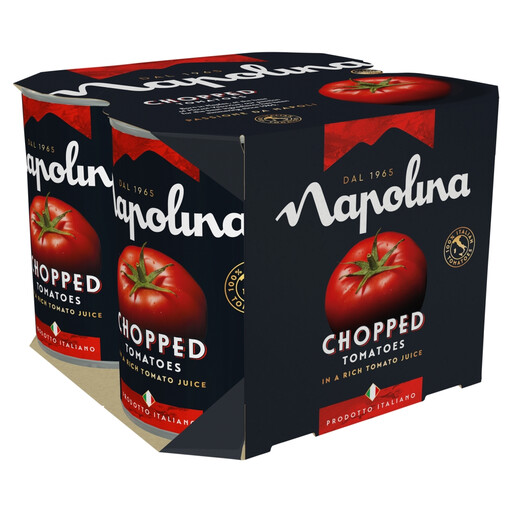 No image available
A chopped-tomato option for bakes where tomato pieces are welcome. The pack contains four 400g tins; check the directions on each tin when storing opened contents.
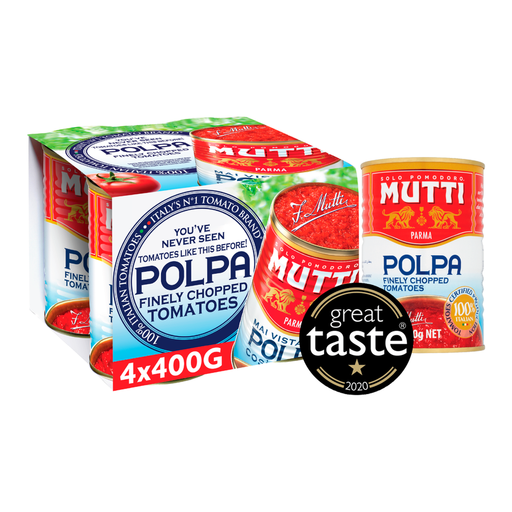 No image available
The finely chopped format suits a bake or pizza-style topping where a more even tomato base is wanted. This pack contains four 400g tins; blend the tomatoes if the recipe requires a completely smooth sauce.
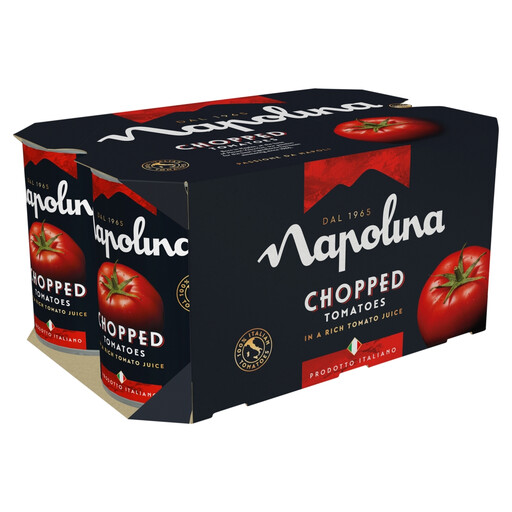 No image available
Chopped tomatoes suit lasagne and other baked sauces where pieces can remain visible. The six 400g tins call for more cupboard space than a four-pack, so consider how often you will use them.
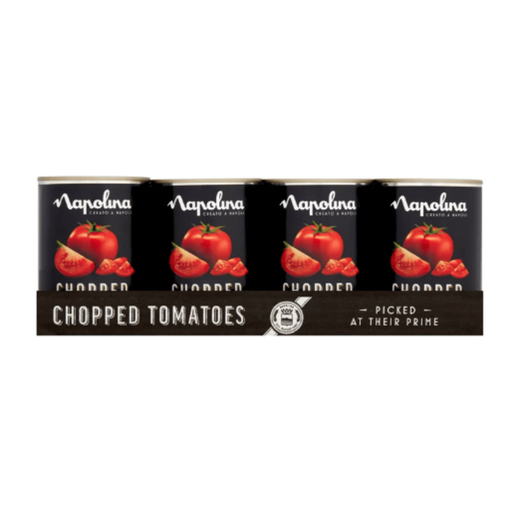 No image available
A chopped-tomato pack for regular cooking of textured sauces and bakes. With 24 tins of 400g, check that you have enough storage space and expect to use the tins before their dates.
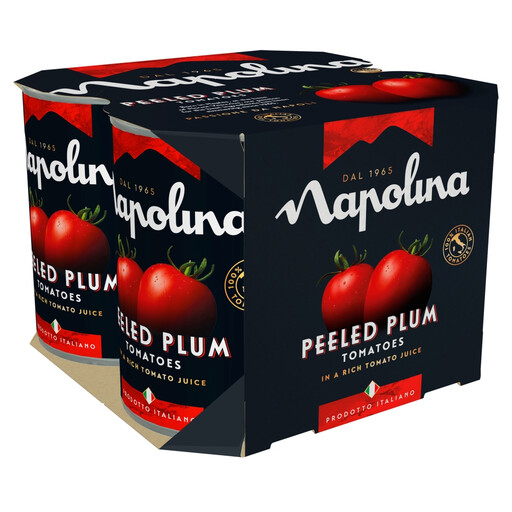 No image available
Peeled plum tomatoes are an alternative for a sauce in which you plan to break up or blend the tomatoes. This is a four-pack of 400g tins, not a pre-chopped format.
Choose finely chopped tomatoes for a more even tomato layer, or standard chopped tomatoes when visible pieces suit the dish. If the recipe calls for a completely smooth sauce, blend the tomatoes or use passata.
Yes, if its cut and ingredients suit your recipe. Tesco, ASDA and Sainsbury’s list standard chopped-tomato products that can form a base for a sauce you will season or reduce; check the current label for the particular tin you buy.
Transfer them to a suitable container, refrigerate them and follow the directions on the tin. Instructions differ: Sainsbury’s specifies use within two days for its Italian Chopped Tomatoes multipack, while ASDA specifies four days for its Chopped Tomatoes 400g. Zero Waste Scotland advises moving opened-tin leftovers to a container in the fridge.
A best-before date concerns quality. GOV.UK and Food Standards Agency guidance says food with a best-before date can be eaten after that date, although it may not taste as good; follow the product’s storage directions and check the condition of the packaging.
Yes. Check the current ingredients and storage directions, particularly if salt, added flavourings or dietary suitability matter to your household. Do not assume a different variant has the same contents or instructions.