Budget shoppers comparing salt
If chopped tomatoes regularly go into your sauces, soups, stews or chilli, compare salt per 100g on the tins you can buy. A larger pack is useful only if you have room for it and expect to use the tins.


For a budget shop, compare the salt figure per 100g rather than assuming that an Italian label, familiar brand or reduced-salt wording tells you which tin contains less salt. The NHS describes 0.3g salt or less per 100g as low; several plain chopped-tomato examples fall below that level, but the right pack also depends on how many tins you will use, the texture your recipe needs and current availability.
If chopped tomatoes regularly go into your sauces, soups, stews or chilli, compare salt per 100g on the tins you can buy. A larger pack is useful only if you have room for it and expect to use the tins.
Standard chopped tomatoes provide visible pieces, while a finely chopped pulp gives you a finer sauce base. Check the cut as well as the salt figure when choosing for a recipe.
The tomato tin is one part of the dish. NHS guidance counts both salt already in food and salt added during cooking, so check other ingredients and seasoning too.
Start with a like-for-like salt comparison, then choose the tin quantity and tomato texture that suit the meals you plan to make.
| Priority | What to check | Your needs and survey context |
|---|---|---|
| Salt | Read salt per 100g on the exact tin. The NHS low-salt guide is 0.3g or less per 100g; also check whether the tin contains plain tomatoes or a flavoured recipe. | I want to compare tins by their stated salt content, not their front-of-pack wording. In the Food Standards Agency and Ipsos Northern Ireland’s 2024 tracker, 48% of 611 people interviewed in Northern Ireland between 16 September and 23 November were more likely to purchase reduced-salt products; the question was not specific to tinned tomatoes. |
| Pack quantity | Check the tin size and number of tins. For a multipack, consider storage space and whether you will use its contents. | A single tin may fit one planned dish; if I cook with chopped tomatoes regularly, I can consider a multipack that fits my storage space. |
| Texture | Check whether the tomatoes are standard chopped pieces or fine pulp. Read the ingredients separately for flavoured variants. | For visible tomato pieces, I would choose a chunky chopped version; for a finer sauce base, finely chopped pulp is worth considering. |
| Availability | Check the selected shop’s current stock before planning around a particular tin. Recheck its current nutrition label if the product changes. | I need a tin I can add to this shop, rather than relying on a listing that was previously marked out of stock. |
| Whole dish | Consider the amount of tomato used and the salt listed for other ingredients. NHS guidance includes salt added during cooking in its daily total. | When I make a sauce or stew, I want to account for ingredients and seasoning alongside the tomatoes. |
Brand and texture do not tell you the salt figure. Napolina lists 0.10g salt per 100g for its standard chopped tomatoes, while Mutti lists 0.30g per 100g for Polpa; the NHS low-salt cutoff is 0.3g per 100g.
Compare the per-100g value on the exact pack, then decide whether its texture or recipe style suits your cooking.
Napolina describes its standard chopped tomatoes as chunky and suited to thick sauces. Mutti describes Polpa as fine tomato pulp, so the two formats serve different texture preferences.
Choose by the texture your recipe calls for, and check ingredients and salt again if you switch to a flavoured variant.
These label examples help distinguish salt figures and tomato formats; check the current pack and your selected shop before choosing.
Tesco’s Everyday Value listing is an example of plain own-label chopped tomatoes.
Sainsbury's Chopped Tomatoes are a plain tomato-and-juice option.
Napolina describes its standard chopped tomatoes as chunky and suited to thick sauces.
Mutti describes Polpa as fine tomato pulp for a finer sauce base.
M&S lists Italian chopped tomatoes in tomato juice.
These chopped-tomato listings include one 400g tin and several multipacks. Compare the salt panel on the exact product and choose a quantity you expect to use.
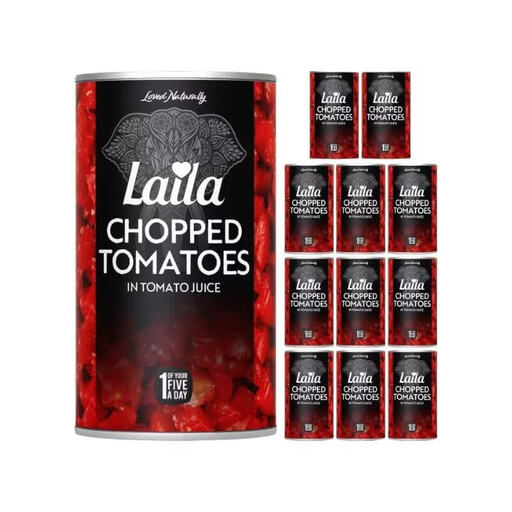 Image unavailable
The 12-tin pack suits a plan to cook with chopped tomatoes regularly, provided you have space to store it. Check the salt per 100g on the current tins.
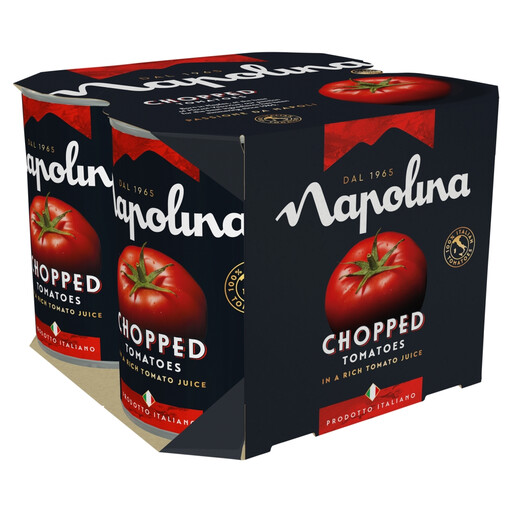 Image unavailable
Four 400g tins offer chopped tomatoes for several planned dishes. Check the current pack’s salt figure and whether four tins fit your cooking plans.
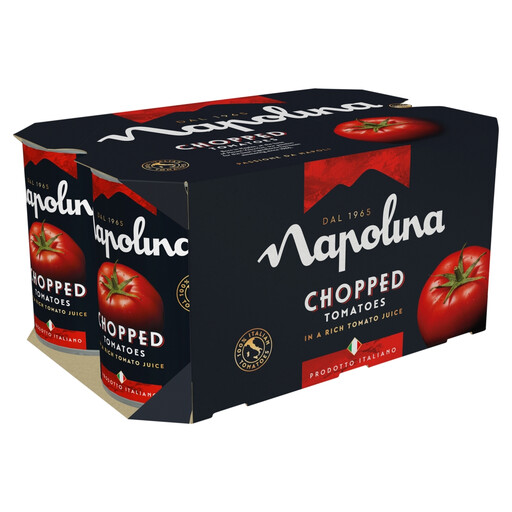 Image unavailable
Consider this six-tin format if chopped tomatoes feature in several upcoming meals and you can store the pack. Read the salt value per 100g on the current tins.
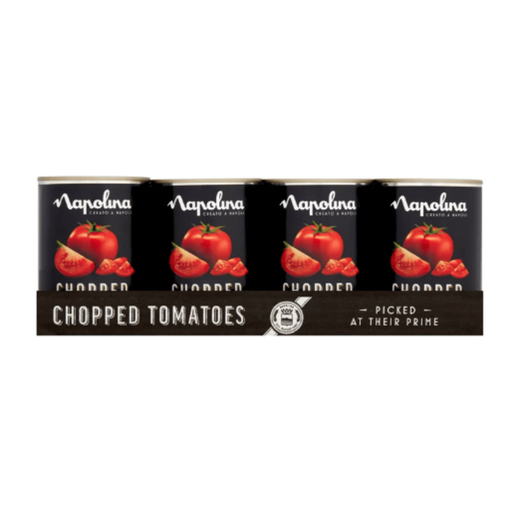 Image unavailable
This 24-tin format calls for substantial storage space and a plan to use the tins. Check the exact pack’s salt panel before choosing it for a lower-salt shop.
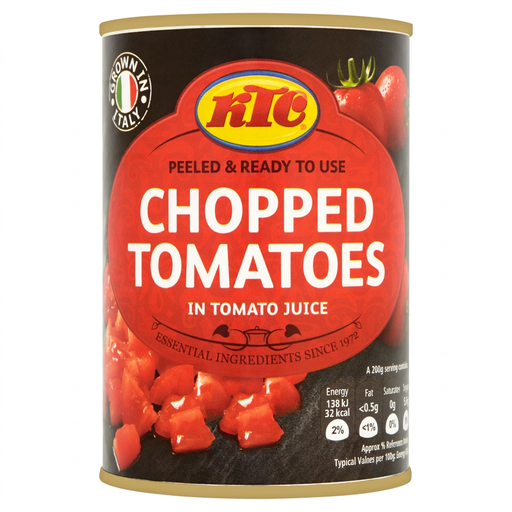 Image unavailable
A single 400g tin lets you buy for a planned dish without storing a multipack. Check its current salt panel and follow the pack’s instructions for any leftovers.
Compare the salt values per 100g on the exact products, rather than comparing differently sized portions or relying on front-of-pack wording. The NHS describes 0.3g salt or less per 100g as low for foods; check the current label if you change product or variant.
No. The tomato figure covers the tomatoes, not the finished recipe. NHS guidance counts salt already in other foods and salt added during cooking, so check the other ingredients and seasoning as well.
Tesco listed less than 0.01g salt per 100g for Everyday Value Chopped Tomatoes, M&S listed 0.02g for Chopped Italian Tomatoes, Sainsbury's listed 0.07g for its Chopped Tomatoes, and Napolina listed 0.10g for standard Chopped Tomatoes. All are below the NHS cutoff of 0.3g per 100g. Mutti’s Polpa page lists 0.30g per 100g, at that cutoff; check the current UK pack before choosing it.