Cyclists who batch-cook after rides
A tin can become the base of a pasta sauce, chilli, curry or soup. British Cycling advises including carbohydrate and protein after longer rides, so plan the other ingredients as well as the tomatoes.


Plain tinned tomatoes can form the base of a meal prepared before or after a ride, but they are not a substitute for the carbohydrate and protein needed in the wider meal. Choose the tomato format for the sauce you want, compare salt per 100 g when seasoning matters, and match the pack size to how you will use opened cans.
Tinned tomatoes suit planned cooking around rides when you treat them as an ingredient in a meal, rather than the meal’s main fuel.
A tin can become the base of a pasta sauce, chilli, curry or soup. British Cycling advises including carbohydrate and protein after longer rides, so plan the other ingredients as well as the tomatoes.
Tomatoes can go into a prepared meal, but their carbohydrate content is small compared with the amounts in British Cycling’s guidance for eating before a big ride and fuelling during one. Choose the meal’s carbohydrate foods separately.
Chunkier chopped tomatoes leave visible pieces in a sauce; a fine chop gives a more uniform base. Comparing the exact product’s salt per 100 g also helps when you want control over the seasoning of the whole dish.
Start with the meal you intend to cook, then choose the tomato texture, label details and pack size that fit it.
| Priority | What to check | Your needs |
|---|---|---|
| Role in the meal | Compare carbohydrate and protein per 100 g with the other foods in your planned meal. Tesco, Napolina and Mutti product information lists roughly 3.6–4.0 g carbohydrate and 1.2–1.4 g protein per 100 g for the specified chopped tomatoes. British Cycling’s guidance distinguishes eating before a big ride, fuelling on the bike and eating afterwards. | I’m using tomatoes to make a meal, not relying on a tin as my main ride fuel. After a ride longer than 90 minutes, I’ll account for the carbohydrate and protein in the other ingredients too. |
| Texture | Check whether the tin contains standard chopped, finely chopped or whole tomatoes. Napolina describes its chopped tomatoes as chunky; Mutti describes Polpa as finely chopped. Whole peeled tomatoes may need crushing for a more uniform sauce. | For a sauce with visible pieces, I’d choose a chunkier chop. If I want an even texture without breaking down larger pieces myself, a fine chop makes more sense. |
| Salt and ingredients | Read salt per 100 g and the ingredients list on the exact tin. The specified M&S Chopped Italian Tomatoes lists 0.02 g salt per 100 g, Tesco Italian Chopped Tomatoes 0.09 g, Napolina Chopped Tomatoes 0.10 g and Mutti Polpa 0.30 g, according to their product information. | I want to decide how to season the complete recipe, rather than assume similarly named tins contain the same amount of salt. |
| Pack and leftovers | Count the cans and check the instructions for opened contents. Tesco Groceries says to use its Napolina chopped tomatoes within 2 days of opening; Marks & Spencer specifies 3 days for its standard Chopped Italian Tomatoes. Instructions differ by product. | A multipack works for me if I cook tomato-based meals regularly. Otherwise, I’d plan when to use each opened can before choosing a larger pack. |
The specified plain chopped tomatoes contain relatively small amounts of carbohydrate and protein per 100 g. British Cycling advises carbohydrate for a big ride and both carbohydrate and protein after longer rides.
Use the tomatoes as a cooking base and plan the other foods according to when you will eat the meal.
The specified products differ in chop, ingredients and salt per 100 g; those differences affect how they fit a recipe.
Compare the format and the exact tin’s label, especially if you intend to add other seasoned ingredients.
Unopened multipacks can be convenient for regular cooking, but instructions for storing opened contents vary between products.
Choose a pack that fits your cooking frequency, and follow each tin’s instructions for transferring, refrigerating and using leftovers.
These examples illustrate differences between specified tomato products, not qualities shared by every product from each brand.
Napolina’s standard chopped tomatoes are described as chunky tomatoes in juice, available in single cans and multipacks.
Mutti describes Polpa as finely chopped tomatoes for a consistent sauce texture.
Tesco Italian Chopped Tomatoes is an own-label 400 g tin of chopped tomatoes for storecupboard cooking.
The M&S range includes standard and organic Italian chopped tomatoes; compare the particular tin you intend to use.
These tins cover chopped tomatoes for planned cooking, a finer chop for a more uniform sauce, and whole peeled tomatoes that can be crushed into a sauce.
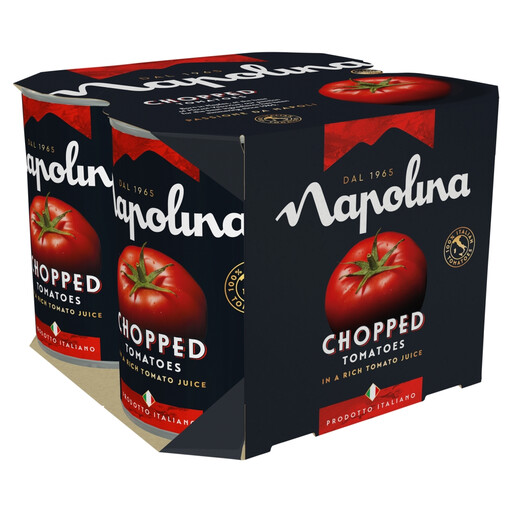 Image unavailable
A four-can pack to consider for regularly cooked tomato sauces. Joybuy lists 3.6 g carbohydrate, 1.3 g protein and 0.10 g salt per 100 g; plan the rest of a cycling meal separately. Its instructions say to transfer opened contents to a non-metallic container, refrigerate and use within 2 days.
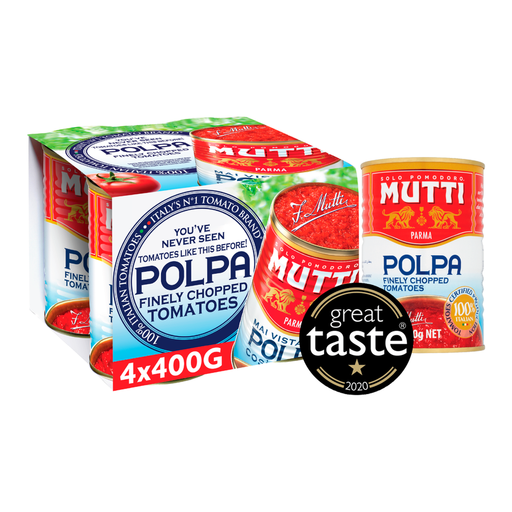 Image unavailable
The fine chop suits a meal-prep sauce when you want fewer large tomato pieces. Joybuy lists 3.9 g carbohydrate, 1.2 g protein and 0.30 g salt per 100 g for this four-can pack. Check how the salt fits the whole recipe; its opened-storage instruction says to refrigerate and consume within 5 days.
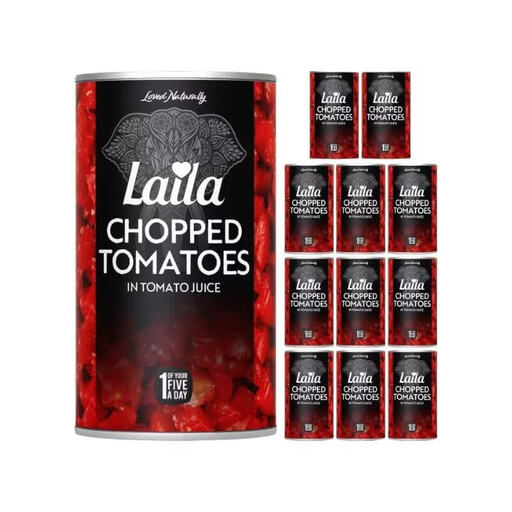 Image unavailable
The 12-can pack is worth considering if chopped tomatoes feature regularly in your planned meals. Make sure the pack fits your cooking frequency. The product instructions say to refrigerate opened contents in a non-metallic container and use them within 2 days.
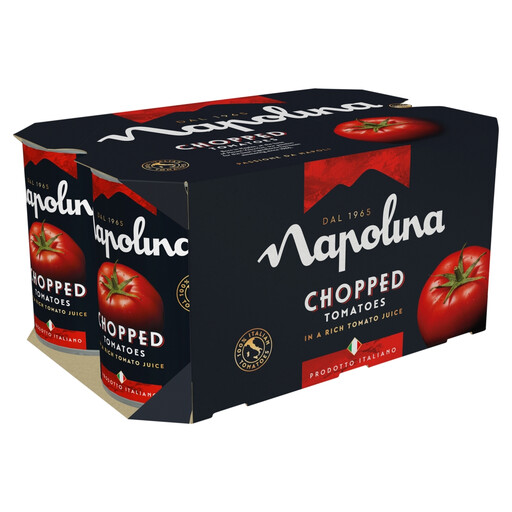 Image unavailable
This six-can pack suits a plan for repeated tomato-based meals or batch cooking. The chopped format provides a sauce base, not the carbohydrate and protein of a complete cycling meal. Refrigerate opened contents and use them within the product’s stated 2-day period.
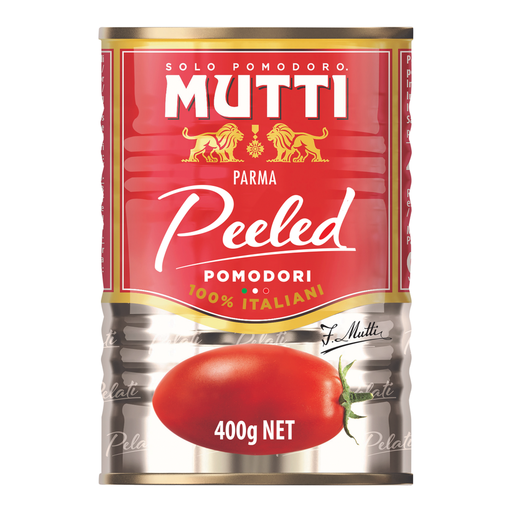 Image unavailable
Choose this whole peeled format if you are willing to crush or blend the tomatoes for a more uniform cooked sauce. It is a 400 g tin; plan other ingredients for the wider meal. The product instructions say to transfer unused contents to a non-metallic container, refrigerate and use within 5 days.
No: the specified chopped-tomato products contain about 3.6–4.0 g carbohydrate per 100 g, while British Cycling’s on-bike guidance for a big ride is 0.5–1 g carbohydrate per kilogram of bodyweight per hour, depending on intensity. Use tomatoes in a prepared meal and plan ride fuel separately.
They can form the sauce base, with other ingredients providing the meal’s carbohydrate and protein. British Cycling identifies protein as a priority after rides longer than 90 minutes and also advises carbohydrate; the specified chopped tomatoes contain only about 1.2–1.4 g protein per 100 g.
Choose a standard chunky chop if you want visible tomato pieces in the finished dish, or a fine chop if you want a more uniform sauce without breaking down larger pieces yourself. Napolina describes its standard chopped tomatoes as chunky, while Mutti describes Polpa as finely chopped.
Follow the instruction for the exact product. Tesco Groceries specifies refrigeration and use within 2 days for its Napolina chopped tomatoes; Marks & Spencer specifies transferring its standard Chopped Italian Tomatoes to a non-metallic container, refrigerating and eating within 3 days; Joybuy’s Mutti finely chopped four-pack listing says to refrigerate and consume within 5 days.