People planning meals for diabetes
Diabetes UK includes tins of tomatoes among useful cupboard basics and says there is no special 'diabetic' diet. A plain tomato base leaves you to choose the other ingredients and portion for the meal.


Plain tinned tomatoes are a useful store-cupboard ingredient when planning meals for someone with diabetes: Diabetes UK lists them among cupboard basics and says there is no special 'diabetic' diet. Choose the texture your recipe needs, compare carbohydrate and salt on the per-100g label, and consider the portion and other ingredients in the finished meal.
Diabetes UK includes tins of tomatoes among useful cupboard basics and says there is no special 'diabetic' diet. A plain tomato base leaves you to choose the other ingredients and portion for the meal.
Declared salt varies even among plain tomato products. Comparing the per-100g figure and ingredients list is more useful than assuming every chopped tin is alike.
Chopped tomatoes leave visible pieces; finely chopped tomatoes give a more uniform base. Choosing the format for the dish can save a separate crushing or blending step.
Start with the dish you plan to make, then compare labels on the same per-100g basis. A tin's figures describe the tomatoes, not the entire finished meal.
| Priority | What to check | Your needs |
|---|---|---|
| Meal planning | Look for the tomato format and ingredients your recipe calls for. Consider the quantities of the other ingredients when planning the meal. | I want a cupboard ingredient I can use in different meals, rather than a product sold as a special 'diabetic' food. Diabetes UK identifies tins of tomatoes as useful basics. |
| Carbohydrate and sugars | Read both carbohydrate and 'of which sugars' per 100g. Account for the amount of tomatoes used and any pasta, rice or other ingredients served with them. | The sugar figure on a tin should not be my only test. Diabetes UK explains that the type and amount of carbohydrate consumed matter in diabetes management. |
| Salt and ingredients | Compare salt per 100g and check whether salt appears in the ingredients. Check seasoned or flavoured variants separately from plain ones. | If I am choosing a tin with less declared salt, I need a like-for-like label comparison, particularly when the recipe also uses salty ingredients. |
| Tomato texture | Choose chopped, finely chopped or whole tomatoes for the texture required. Whole tomatoes may need crushing; chopped pieces may need blending for a smooth sauce. | For a sauce with visible pieces, chopped tomatoes work for my recipe. For a more uniform base, I would check a finely chopped format. |
| Cupboard and opened-can use | Check the pack size and best-before date before stocking up. Follow that product's instructions for transferring, refrigerating and using leftovers after opening. | A multipack is useful to me only if I can store the tins and use them in time; I also need a plan for any tomatoes left after cooking. |
Diabetes UK says there is no special 'diabetic' diet. The amount and type of carbohydrate in the finished meal depend on more than its tomato base.
Choose tomatoes for the recipe, then consider the portion and accompanying ingredients rather than relying on a front-of-pack phrase.
Marks & Spencer declares 0.02g salt per 100g for its standard chopped Italian tomatoes, while Mutti declares 0.30g per 100g for Polpa. Those figures describe the named products, not every tin from either brand.
Compare the current salt figure per 100g and read the ingredients list for the exact variant you are buying.
Standard chopped tomatoes leave pieces in a sauce. Whole tomatoes require crushing or blending if the recipe calls for a finer texture.
Decide whether the dish needs pieces, a finely chopped base or whole tomatoes you can break down yourself.
Instructions for opened tomatoes can differ by product. The Joybuy listing for Napolina Chopped Tomatoes 400g, for example, says to transfer the contents to a covered non-metallic container, refrigerate and use within two days.
Read the instructions on the tin you open and plan how to use any leftovers within its stated period.
These figures refer to the named products and their published labels; check the pack when choosing a different variant.
Napolina offers standard chopped tomatoes as single tins and multipacks, alongside seasoned tomato variants.
Mutti describes Polpa as a finely chopped tomato product for a more consistent texture in cooking.
Marks & Spencer lists both standard and organic chopped Italian tomatoes.
These options cover chopped, finely chopped and whole tinned tomatoes. Choose the format for your recipe, then check the current label for the nutrition and storage details that matter to you.
 No image available
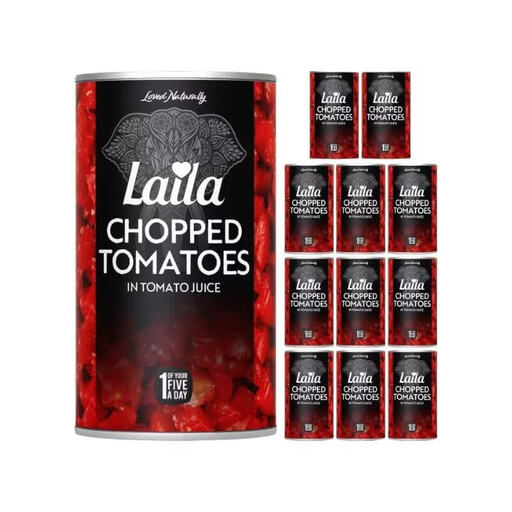
Chopped tomatoes for recipes that call for pieces of tomato, supplied as twelve 400g tins. If stocking up, check that the pack size suits your cupboard space and how often you cook with tomatoes.
 No image available
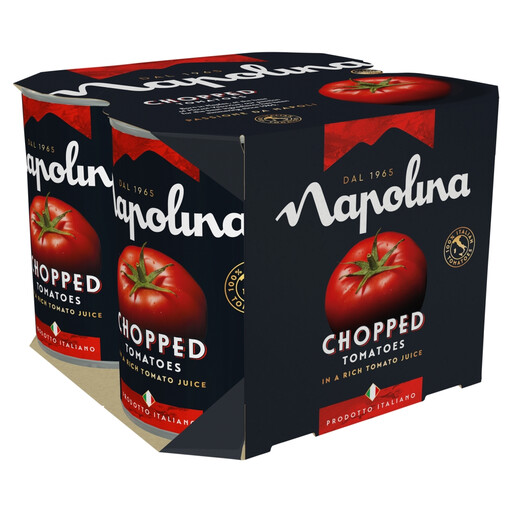
A four-tin chopped format for sauces, soups or stews where visible tomato pieces suit the dish. Napolina declares 3.6g carbohydrate and 0.10g salt per 100g for its standard chopped tomatoes; check the current pack when comparing labels.
 No image available
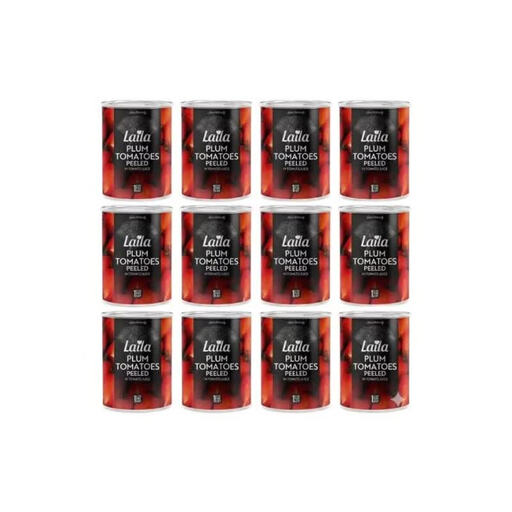
Whole plum tomatoes let you break down the tomatoes to suit a sauce or stew. This pack contains twelve 400g tins; allow for crushing or blending if the recipe needs a chopped or uniform texture.
 No image available
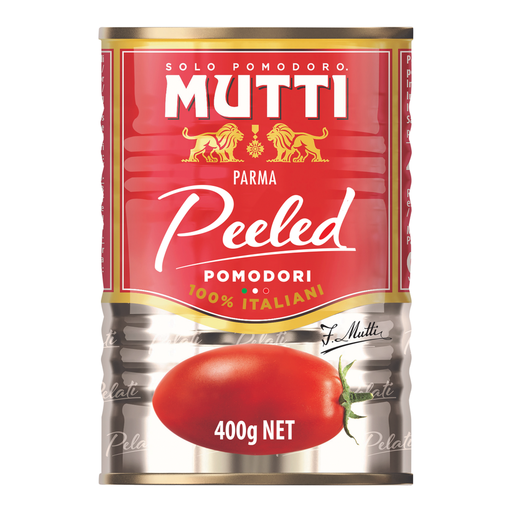
A 400g tin of whole peeled tomatoes for a dish where you want to crush or blend the tomatoes yourself. Check this product's own label rather than applying the nutrition figures for Mutti Polpa, which is a different format.
 No image available
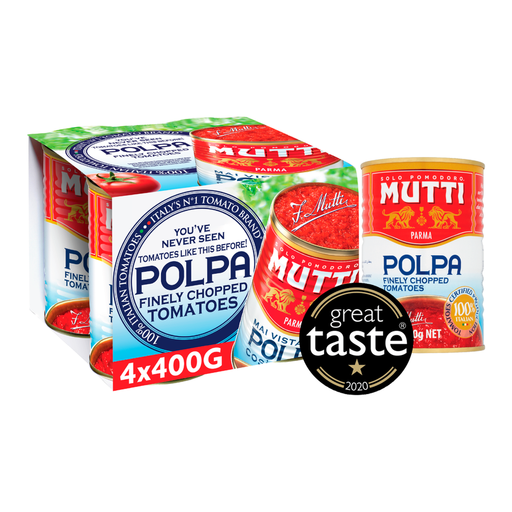
A four-tin finely chopped format for recipes needing a more uniform tomato base. Mutti lists added salt in Polpa and declares 0.30g salt per 100g, so compare the current label if salt is important to your choice.
No special 'diabetic' product is required: Diabetes UK says there is no specific diabetic diet and includes tins of tomatoes among useful cupboard basics. Choose a tin for the recipe and consider the portion and other ingredients in the meal.
Not on that figure alone. Diabetes UK advises against generally cutting back on fruit and vegetables simply because they contain sugar, while noting that the type and amount of carbohydrate consumed matter in diabetes management. Read carbohydrate as well as sugars per 100g and consider how much of the finished dish you will serve.
Compare the salt figure per 100g on the current labels, and check the ingredients for added salt. The figures for specific products can differ: Marks & Spencer declares 0.02g salt per 100g for its standard chopped Italian tomatoes, while Mutti declares 0.30g per 100g for Polpa.
Follow the instructions for that exact product rather than assuming all tins have the same opened-life period. For example, the Joybuy listing for Napolina Chopped Tomatoes 400g says to transfer leftovers to a covered non-metallic container, refrigerate and use within two days.