Everyday low-fat meal planners
If you use tomatoes for sauces, soups, stews or curries, compare the tin as an ingredient and account for the oil, cheese or meat added to the finished dish.


Plain tinned tomatoes are a flexible starting point for low-fat cooking: compare total fat, saturates and salt per 100g on the current label, rather than relying on a serving figure or the front of the tin. Choose finely chopped tomatoes for a different sauce texture or a flavoured tin for convenience, but check its ingredients; the oil, cheese or meat added to a recipe also matters.
If you use tomatoes for sauces, soups, stews or curries, compare the tin as an ingredient and account for the oil, cheese or meat added to the finished dish.
A particularly restrictive diet needs more than a front-of-pack claim. Compare the label per 100g and follow your own clinical or dietitian-led plan; Oxford University Hospitals describes its minimal-fat guidance as intended for people advised to follow it by a healthcare professional.
Consider how much of a tin you use at once. Pack size and the specific instructions for opened contents can matter as much as the unopened tin’s place in the cupboard.
Start with the per-100g nutrition panel, then choose the texture, ingredients and pack size that fit the dishes you make.
| Priority | What to check | Your needs |
|---|---|---|
| Fat and saturates | Compare both values per 100g, then consider how much tomato the recipe uses. NHS food-label guidance defines low-fat food as containing no more than 3g total fat per 100g. | I want a tomato base I can compare like for like, without treating a small stated serving as the whole meal. |
| Salt and ingredients | Read salt per 100g and the ingredient list on the exact tin. ASDA Groceries lists sugar, garlic powder and garlic extract in Napolina Chopped Tomatoes with Garlic; flavoured and plain versions need not have the same ingredients. | If I season a sauce myself, a plain tin gives me control over what goes in. For a quicker seasoned base, I would check what the flavoured tin already contains. |
| Tomato texture | Choose chopped, finely chopped or whole peeled tomatoes according to the texture and preparation your recipe calls for. Mutti describes its finely chopped Polpa as suitable for long cooking; that is not a lower-fat claim. | I may want smaller pieces in a sauce, or prefer whole peeled tomatoes that I can break up while cooking. |
| Pack and storage | Check tin size, multipack quantity and the opened-can instructions. Sainsbury’s instructs shoppers to transfer its opened chopped tomatoes to a non-metallic container, refrigerate them and use them within 2 days. | A multipack works for me only if its individual tins match how often I cook; after opening, I need to use the contents within that product’s stated period. |
The tomatoes are only one ingredient. Oil, cheese and meat added during cooking also contribute to the finished recipe.
Consider the quantities of those additions alongside the tomato label when planning the meal.
Brands can state different serving sizes, making those figures less useful for a direct comparison.
Compare total fat, saturates and salt per 100g first, then use the serving information to plan how much you will cook.
Opened-product instructions differ. Sainsbury’s, for example, specifies a non-metallic container, refrigeration and use within 2 days for its chopped tomatoes.
Read the instruction on the tin you open and choose a size you can use within its stated period.
An oversized tin can leave unused tomatoes to discard if you cannot use them in time.
ASDA Groceries lists sugar and garlic ingredients in Napolina’s garlic variety. A similar use in cooking does not mean an identical ingredient list.
Choose plain tomatoes when you want to add your own seasoning; otherwise, check the flavoured tin’s ingredients and salt panel.
These examples describe particular products or ranges, not every tin bearing the same brand name.
Offers plain chopped tomatoes as well as seasoned varieties.
Its finely chopped Polpa is an option when tomato texture matters in a sauce.
Its chopped-tomato range includes different tin sizes and tomato textures.
Offers own-label chopped tomatoes, including an Italian chopped multipack.
Its own-label range includes plain and seasoned chopped tomatoes.
Offers an Italian tomato option for storecupboard cooking.
These options include chopped, finely chopped and whole peeled tomatoes, in single tins and multipacks. Use the format and quantity to narrow the choice, then check the current tin’s nutrition, ingredients and storage instructions.
 No image available
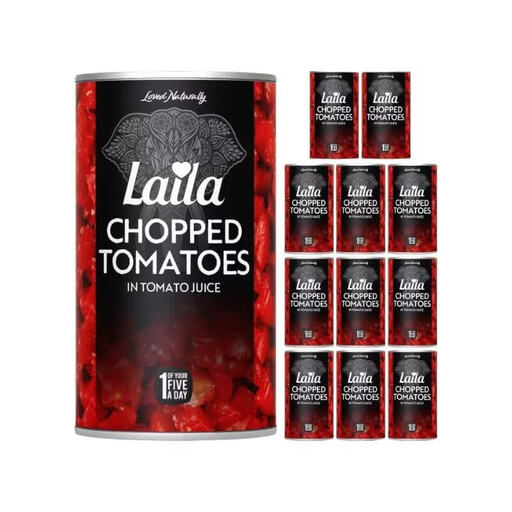
The 12-tin pack is worth considering if chopped tomatoes are a regular cooking ingredient. Check that you can use each 400g tin within its stated period after opening.
 No image available
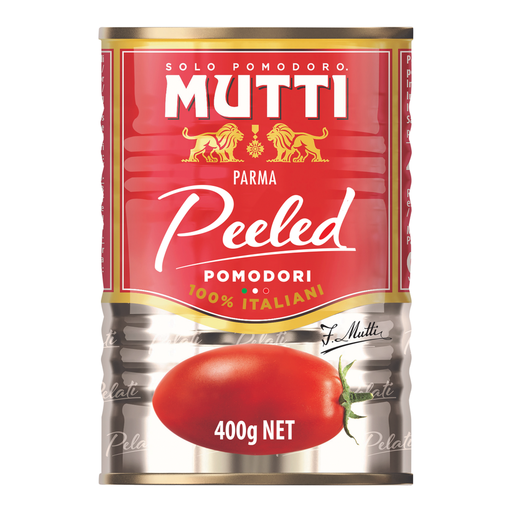
This 400g tin contains peeled rather than pre-chopped tomatoes, so choose it when you want to break up the tomatoes yourself. Check the tin’s per-100g panel and serving information for your recipe.
 No image available
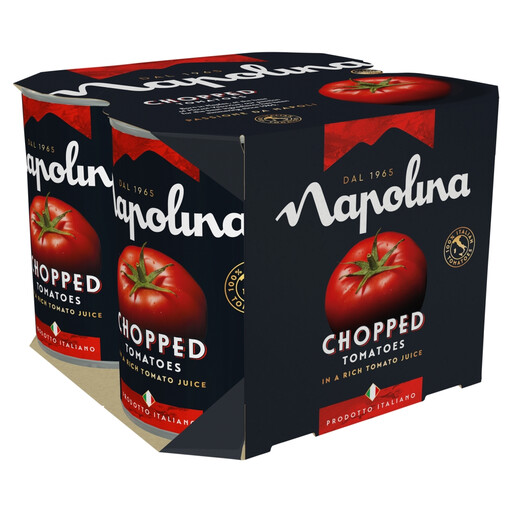
Four 400g tins offer a smaller multipack than the Laila option above. For portion planning, use the pack’s serving information and follow its instructions for any contents left after opening.
 No image available
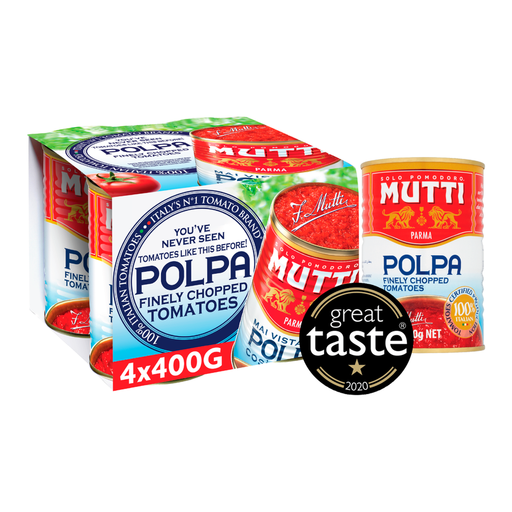
Choose the finely chopped format if you want smaller tomato pieces for a sauce. This is a 4 × 400g pack; compare its current salt and fat figures per 100g with other formats before deciding.
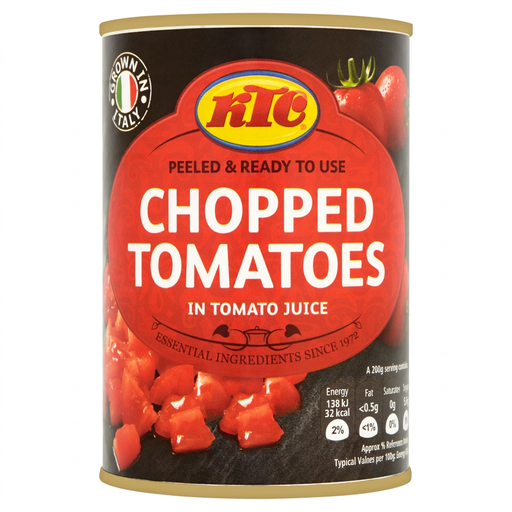 No image available
A single 400g tin may fit a recipe better than buying a multipack. Read its per-100g nutrition panel and the can’s handling instructions before planning what to do with leftovers.
NHS food-label guidance defines low-fat food as containing 3g total fat or less per 100g. Compare the per-100g panel on the tins you are considering, including the separate saturates figure, because stated serving sizes can differ.
Compare the specific tin and the whole recipe against your own clinical plan rather than relying on the tomato label alone. Oxford University Hospitals says its minimal-fat guidance is for people advised to follow it by a healthcare professional; follow the advice given to you by your clinical team or dietitian.
Follow the instructions on that product’s can. For example, Sainsbury’s instructs shoppers to transfer its opened chopped tomatoes to a non-metallic container, refrigerate them and use them within 2 days; do not apply that period to every brand.
No single tin determines the fat content of the finished dish. Check the flavoured product’s own nutrition and ingredients—ASDA Groceries lists sugar and garlic ingredients in Napolina’s garlic variety—and account for the oil, cheese or meat used in the recipe.