Low-fat shoppers who also want less salt
If tomatoes are the base of a sauce, soup, stew or curry, compare the tin’s salt and fat per 100g separately. The salt added through stock, sauces or seasoning also matters to the finished dish.


For a low-fat meal, check the fat in the whole recipe rather than judging it by the tomato tin alone; reducing salt is a separate choice. ASDA lists 0.01g salt and less than 0.5g fat per 100g for its plain chopped tomatoes, while Napolina lists 0.10g salt and 0.2g fat per 100g for its chopped tomatoes. Compare salt on a per-100g basis, choose plain or flavoured tomatoes to suit the recipe, and check the pack before relying on a nutrition figure.
If tomatoes are the base of a sauce, soup, stew or curry, compare the tin’s salt and fat per 100g separately. The salt added through stock, sauces or seasoning also matters to the finished dish.
A tomato tin’s fat figure does not describe the finished meal. Check the amount used alongside cooking oil, dairy, meat and toppings, and follow the individual plan provided by your clinician or dietitian.
Plain tomatoes leave the seasoning to the recipe. If a herb-flavoured tin is more convenient, read its ingredients and nutrition panel separately: ASDA’s plain and Herbs versions, for example, have different declared salt figures.
Start with fat for the tin and the full recipe, then compare salt per 100g and inspect any added ingredients. The Food Standards Agency and Ipsos Northern Ireland interviewed 611 people between 16 September and 23 November 2024 about general food-shopping labels; the label-use figures below do not measure demand for lower-salt tomatoes.
| Priority | What to check | Your needs |
|---|---|---|
| Salt | Compare salt per 100g, not a mixture of serving and per-100g figures. ASDA lists 0.01g per 100g for its plain chopped tomatoes; Napolina lists 0.10g per 100g for its chopped tomatoes. | If I also want to reduce salt, I need to compare the tin separately from its fat figure and allow for salt added during cooking. |
| Fat | Read fat per 100g and account for the amount used. ASDA lists less than 0.5g per 100g for its plain tin; M&S lists 0.2g per 100g for Chopped Italian Tomatoes. Count other recipe ingredients separately. | A low-fat tomato base helps me assess the recipe, but it does not tell me how much fat is in the finished meal. |
| Ingredients | Compare plain and flavoured variants individually. ASDA’s plain tin lists tomatoes, concentrated tomato juice and citric acid; its Herbs tin also lists sugar, dried herbs and flavourings. | For a sauce I season myself, I would choose a plain base; for a flavoured tin, I would check whether its ingredients and salt fit the dish. |
| Label information | Read the nutrition panel on the exact pack. If using traffic-light labelling or a nutrition claim, check what it says about the nutrient you are comparing. | I want the salt and fat figures for the tin I am buying, not an assumption based on a claim. In the Food Standards Agency and Ipsos Northern Ireland’s 2024 survey, 49% actively used traffic-light labelling when shopping for food; 35% named nutritional claims on packs as their primary source of nutrition information. Those are different measures of general food shopping. |
Fat and salt vary independently. ASDA’s plain chopped tomatoes list less than 0.5g fat and 0.01g salt per 100g, while Napolina chopped tomatoes list 0.2g fat and 0.10g salt per 100g, according to their respective product information.
If both nutrients matter to your choice, compare each per-100g figure rather than treating one as a shortcut for the other.
Tesco lists 0.18g salt per half can of its 400g Italian Chopped Tomatoes. A half can is 200g, so that figure equates to 0.09g per 100g.
Put candidates on the same per-100g basis before comparing their declared salt.
ASDA’s Herbs chopped tomatoes list 0.10g salt per 100g and include sugar, herbs and flavourings. Its plain chopped tomatoes list 0.01g salt per 100g.
Check the exact variant, then decide how much seasoning the rest of the recipe needs.
Cooking oil, cheese, cream, meat and toppings contribute fat that is not captured by the tomato tin’s nutrition panel.
Assess the ingredients and portions in the complete dish. If you have a clinician-led fat allowance, use the individual guidance given to you.
These figures describe particular products, not every tin sold under each brand. Compare the exact variant and its current pack when choosing.
ASDA’s plain and Herbs chopped tomatoes show why variants need separate nutrition and ingredient checks.
M&S lists standard and organic chopped Italian tomatoes with distinct nutrition figures.
Tesco Italian Chopped Tomatoes 400g provide an example of nutrition stated for a half-can serving.
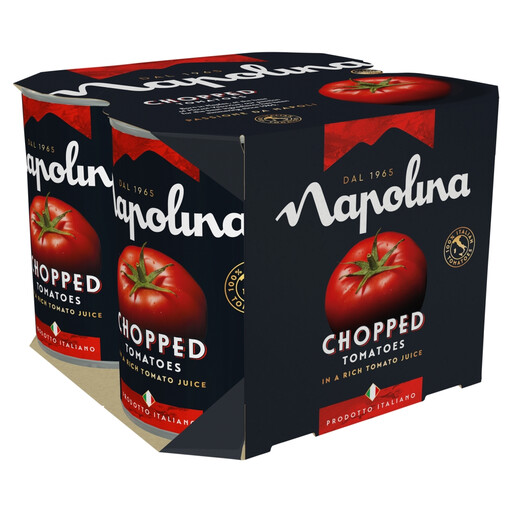
Napolina describes its chopped tomatoes as chunky and suited to thick sauces.
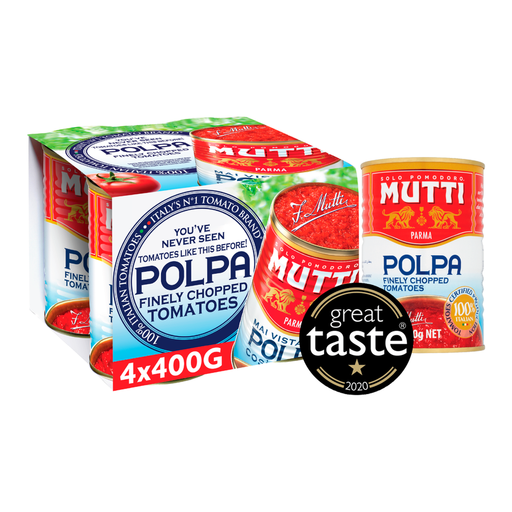
Mutti describes Polpa as finely chopped tomato pulp for longer cooking.
These two multipacks offer different tomato textures for cooking. If keeping salt low is also important, compare their pack labels rather than choosing by texture alone.
 No image available
Consider this chunky chopped-tomato pack for a thick sauce if its texture suits your recipe. Napolina lists 0.2g fat and 0.10g salt per 100g for its chopped tomatoes; check the multipack’s label if salt is a deciding factor. Its opened-pack instructions call for refrigeration in a non-metallic container and use within two days.
 No image available
Consider the finer texture for a longer-cooked sauce if that suits your recipe. Mutti’s Polpa manufacturer page lists added salt, 0.30g salt and 0.2g fat per 100g; check the exact UK pack’s ingredients and nutrition before relying on those figures, particularly if reducing salt is a priority.
Not on the basis of fat alone: salt and fat are separate figures. Check the fat in the complete recipe for a low-fat plan; if you also want to reduce salt, compare tins by salt per 100g and follow any individual advice from your clinician or dietitian.
Put the figures on the same per-100g basis. Tesco lists 0.18g salt per half can of its 400g Italian Chopped Tomatoes, equivalent to 0.09g per 100g; ASDA lists 0.01g per 100g for its plain Chopped Tomatoes. Check that you are comparing the intended variants.
Compare the specific tins rather than assuming all flavoured versions have the same nutrition. ASDA’s plain Chopped Tomatoes list 0.01g salt per 100g, while its Herbs version lists 0.10g per 100g and includes sugar, herbs and flavourings. Plain tomatoes also let you choose the seasoning for the recipe.
Use it alongside the nutrition panel for the exact tin, particularly when comparing salt and fat per 100g. GOV.UK nutrition-labelling guidance says nutrition information must be declared on prepacked food; the pack gives you the figures to compare when a claim does not answer your specific question.
Follow the instructions on the particular pack. M&S says to move leftover Chopped Italian Tomatoes to a non-metallic container, refrigerate them and eat within three days; its Organic Italian Chopped Tomatoes give two days.