For a FODMAP diet, start with a plain tinned-tomato product whose current ingredient list fits your plan, then choose a pack size you are likely to use. A brand name or short ingredient list does not settle how much to serve: Monash FODMAP explains that a food’s FODMAP rating can change with portion size.
Who is this choice for?
Home cooks watching what goes into a FODMAP meal
For sauces, soups or casseroles, a plain tomato base makes it easier to check the tin separately from any garlic, onion or other ingredients added during cooking. Monash FODMAP identifies garlic and onion as foods rich in fructans.
People managing portions during a FODMAP diet
The amount of tomato used in a meal matters as well as the ingredients in the tin. Monash FODMAP advises using its app for food-specific serving guidance; anyone following a reintroduction plan also needs to account for their own stage of that plan.
Regular cooks choosing between tins and multipacks
A four-pack or larger case may suit frequent cooking, while a single tin is simpler to use up. Check each product’s instructions for storing opened contents before deciding how many tins to buy.
What should you check?
Screen the current label and the amount needed for your meal before choosing between a single tin and a multipack.
| Priority | What to check | Your needs |
|---|
| Ingredients |
Read the ingredients on the tin, including any flavour variant. Check for garlic, onion and other additions relevant to your plan; a recipe suggestion is not the ingredient list. |
I want a plain tomato base so I can assess the tin and anything I add to the meal separately. Monash FODMAP identifies garlic and onion as foods rich in fructans. |
| Serving size |
Consult the Monash FODMAP app’s canned-tomato serving guidance. Consider the tomato portion alongside other ingredients in the same meal. |
A plain tin does not tell me how much tomato fits my meal. Monash FODMAP notes that a food’s FODMAP rating can change at larger servings. |
| Pack format |
Compare the number and size of tins, not just the total amount in a multipack. Think about how often you cook with tomatoes. |
If I cook with tomatoes regularly, several 400g tins may be useful; otherwise, I would rather choose a quantity I can use. |
| Opened tins |
Follow the storage and use-by instructions on the specific pack. Plan what to do with any contents left after cooking. |
When a recipe uses only part of a tin, I need to know how to store the rest rather than assume every product gives the same instructions. |
Common buying mistakes
-
Assuming plain tomatoes have no portion limit
Monash FODMAP explains that foods rated low in FODMAPs at one serving can have a different rating at larger amounts. A short ingredient list does not establish the right portion for a meal.
Check the app’s canned-tomato serving guidance and consider the other ingredients you are using.
-
Using a recipe suggestion as an ingredient check
A suggested dish can contain ingredients beyond those in the tin. That distinction matters if you are checking for garlic or onion.
Read the tin’s ingredient list, then assess each addition to the recipe against your own FODMAP plan.
-
Choosing a multipack without planning for opened tins
The number of unopened tins does not tell you how to handle the contents of one you have opened. Storage instructions can differ between products.
Choose a pack size that suits how often you cook, and follow the instructions on each tin after opening.
-
Relying on an older ingredient listing
Retailers including Tesco and Sainsbury’s caution that product information can change. An earlier listing may not describe the tin in your hand.
Recheck the physical label when you buy, particularly if you switch retailer, pack size or flavour variant.
Relevant brand references
These examples show ingredient and format differences to check; a brand name alone does not establish FODMAP suitability.
Just Essentials by ASDA
A plain chopped-tomato option in a 400g tin.
- ASDA Groceries lists tomatoes, tomato juice and citric acid as ingredients.
- Check the current pack label and the serving amount for your meal; the ingredient list is not a product-specific FODMAP rating.
ASDA
An own-label chopped-tomato option for shoppers choosing a single 400g tin.
- ASDA Groceries lists tomatoes, concentrated tomato juice and citric acid.
- Follow the tin’s instructions for transferring and refrigerating leftovers after opening.
Sainsbury’s
An own-label Italian chopped-tomato option in a 4 × 400g pack.
- Sainsbury’s lists tomatoes, concentrated tomato juice and citric acid for this four-pack.
- Check the current label and follow its instructions for any opened tin.
Tesco
An own-label reference for shoppers considering Italian chopped tomatoes.
- A Tesco Italian Chopped Tomatoes 400g product is identified in Tesco Groceries’ product information.
- Read the physical tin’s full ingredient list before using it for a FODMAP meal; Tesco warns that formulations can change.
Napolina
A branded chopped-tomato option to assess by its specific tin and pack format.
- Tesco Groceries lists tomatoes and citric acid for its Napolina Chopped Tomatoes 400g listing.
- Do not assume another Napolina pack has an identical ingredient list; check the variant you buy.
Mutti
A finely chopped tomato option where the finer format matters to the dish you are making.
- ASDA Groceries lists tomatoes and salt for its Mutti Finely Chopped Tomatoes 400g listing.
- Texture and brand do not establish a suitable FODMAP serving; check the current label and portion guidance.
Tinned-tomato pack options on Joybuy
These chopped-tomato options range from four-tin packs to larger cases, with a finely chopped option among them. Choose a format for the way you cook, then check the current ingredients and your meal portion.
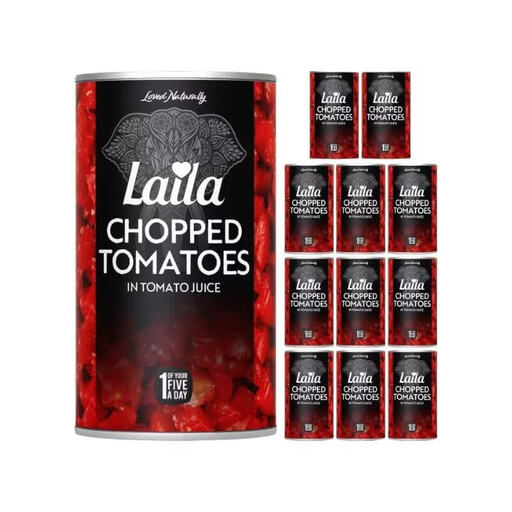 Image unavailable
Laila Canned Chopped Tomatoes, 12 × 400g
The 12 × 400g format is worth considering if you cook with chopped tomatoes regularly. Check the current ingredients on the tins, the Monash FODMAP serving guidance and the instructions for any opened contents.
View on Joybuy
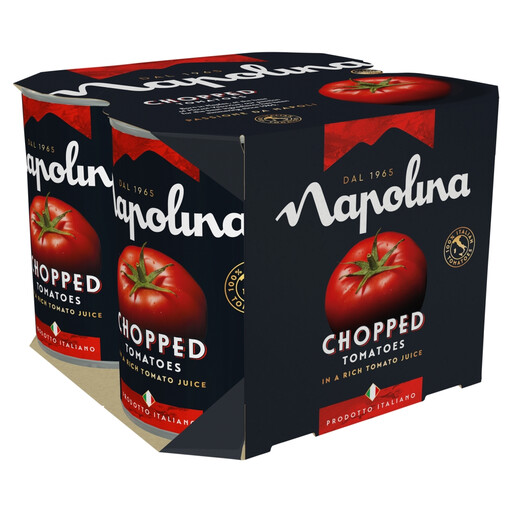 Image unavailable
Napolina Chopped Tomatoes, 4 × 400g
Four 400g tins offer a smaller multipack for regular recipes. Read this pack’s current ingredient label rather than assuming it matches another Napolina format, and check the serving amount for your meal.
View on Joybuy
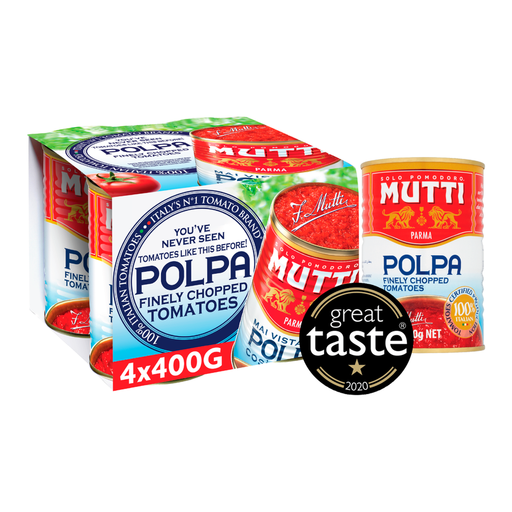 Image unavailable
Mutti Finely Chopped Tomatoes, 4 × 400g
This four-pack offers a finely chopped format if that is what your recipe calls for. Check the current ingredients and opened-tin instructions, and use portion guidance rather than texture to assess the amount for a FODMAP meal.
View on Joybuy
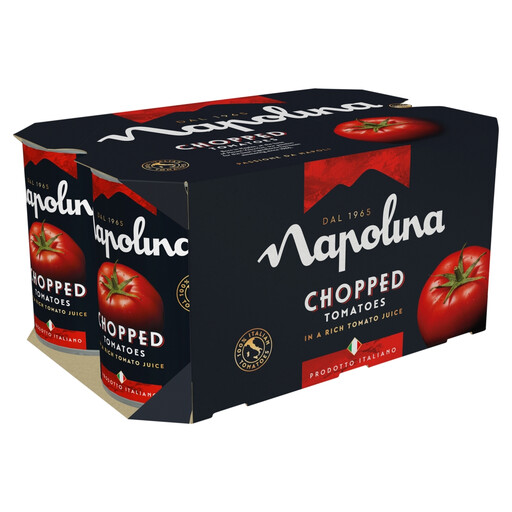 Image unavailable
Napolina Chopped Tomatoes, 6 × 400g
Six 400g tins may suit a household that uses chopped tomatoes across several meals. Check this variant’s label for additions relevant to your plan and follow its instructions after opening a tin.
View on Joybuy
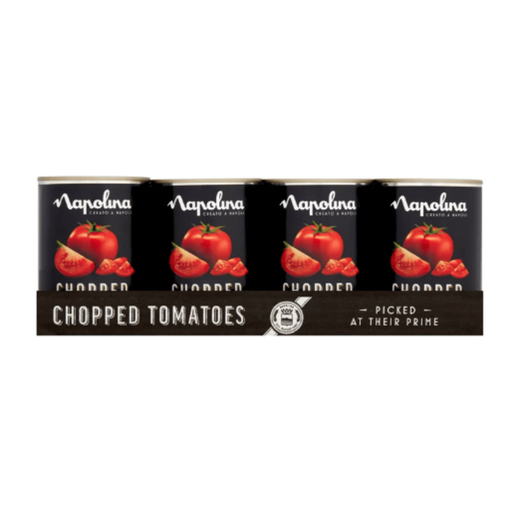 Image unavailable
Napolina Chopped Tomatoes, 24 × 400g
The 24 × 400g case is a substantial quantity for frequent tomato-based cooking. Consider how many tins you will use, check the current ingredients and use Monash FODMAP’s guidance for the portion in each meal.
View on Joybuy
Frequently asked questions
What should I check on a tinned-tomato label for a FODMAP diet?
Start with the current ingredients list, checking for garlic, onion and any other additions relevant to your plan rather than relying on the product name or a pictured recipe. Monash FODMAP identifies garlic and onion as foods rich in fructans. Check the serving amount separately.
Does a plain ingredient list mean I can use any amount?
No. Monash FODMAP explains that a food’s FODMAP rating can change with serving size. Consult its app for canned-tomato serving guidance and account for the other ingredients in the meal.
How do I choose between a single tin and a multipack?
Choose the number of tins around how often you cook with tomatoes, not the assumption that a larger pack is automatically more useful. Check the size of each tin and its instructions for storing contents after opening.
How should I store tomatoes left in an opened tin?
Follow the instructions on that product’s current label. ASDA and Sainsbury’s product guidance calls for transferring leftovers to a suitable non-metallic container and refrigerating them; check the individual pack for how soon to use them.


