Focaccia and pizza-style bread bakers
If you want tomatoes to spread into an even topping or sauce, a fine cut is worth considering. Mutti describes its Polpa as finely cut pulp in juice; still follow the bread recipe’s tomato and liquid quantities.


Choose finely chopped tomatoes for a more even topping or sauce, and standard chopped tomatoes when visible pieces suit the bread. Both contain juice: follow the recipe’s directions for draining, cooking or measuring them rather than substituting a whole tin for the dough’s stated liquid.
If you want tomatoes to spread into an even topping or sauce, a fine cut is worth considering. Mutti describes its Polpa as finely cut pulp in juice; still follow the bread recipe’s tomato and liquid quantities.
If recognisable pieces are part of the result you want, standard chopped tomatoes are a starting point. Napolina describes its chopped tomatoes as chunky and packed in juice, which the recipe needs to account for.
Choose a single tin or multipack according to how many recipes you plan to make. If a bake uses only part of a tin, check that product’s instructions for storing the remainder.
Start with the texture the recipe calls for, then check how it handles the tomato juice, ingredients and any leftovers.
| Priority | What to check | Your needs |
|---|---|---|
| Tomato cut | Check whether the tin contains finely cut pulp or chunkier pieces. Mutti describes Polpa as finely cut; Napolina describes its standard chopped tomatoes as chunky. | For a fairly even tomato topping or sauce, I would choose a fine cut. If I want pieces to remain visible, standard chopped tomatoes are the closer fit. |
| Juice and recipe quantities | Check whether the recipe calls for tomatoes drained, cooked down or measured with their juice. Good Food’s Italian bread guidance stresses getting the recipe ratios right. | I want the tomato flavour in the bake without changing the dough’s liquid quantities by adding an undrained tin without accounting for it. |
| Ingredients | Read the current label for tomato, juice, salt and acidity regulators, as well as any added flavourings. Ingredient lists differ: Mutti lists tomato and salt for Polpa, while Tesco lists tomato, concentrated tomato juice and citric acid for its Italian Chopped Tomatoes. | If tomatoes are a prominent topping, I want to know what else the tin will add to my recipe. |
| Pack and leftovers | Match the number and size of tins to planned recipes. Check the exact label for instructions on transferring, refrigerating and using tomatoes left after opening. | A multipack suits me if I will use several tins; for a recipe using only part of one, I need a plan for the remainder. |
Chopped tomatoes come with juice. Adding that liquid to dough without accounting for it changes the recipe’s stated proportions.
Use a recipe written for tinned tomatoes, and drain, cook down or measure them only as its method directs.
Sky News’s chopped-tomato taste test was not a test of bread toppings or dough. Its result cannot establish which cut or amount of juice a particular bake needs.
Check the tomato texture and the recipe method alongside any flavour preference.
Opened-product instructions vary. Marks & Spencer specifies three days for its standard chopped Italian tomatoes; Napolina’s Joybuy listing specifies two days for its chopped-tomato multipack.
Follow the exact tin’s directions for transferring leftovers to a container, refrigerating them and using them within its stated period.
These references describe particular chopped-tomato lines, not every product made by each brand.
Polpa is Mutti’s finely cut tomato pulp in juice, a cut to consider for an even-textured topping or sauce.
Napolina describes its standard chopped tomatoes as chunky and packed in tomato juice.
Tesco Italian Chopped Tomatoes are a standard chopped-tomato option packed in tomato juice.
M&S lists standard and organic chopped Italian tomato products.
Casalinga Chopped Tomatoes were among the tins awarded five stars in a Sky News taste test of 23 chopped-tomato tins.
These chopped-tomato tins offer single-can and multipack options for recipes that call for tinned tomatoes. Check the cut where a particular topping texture matters.
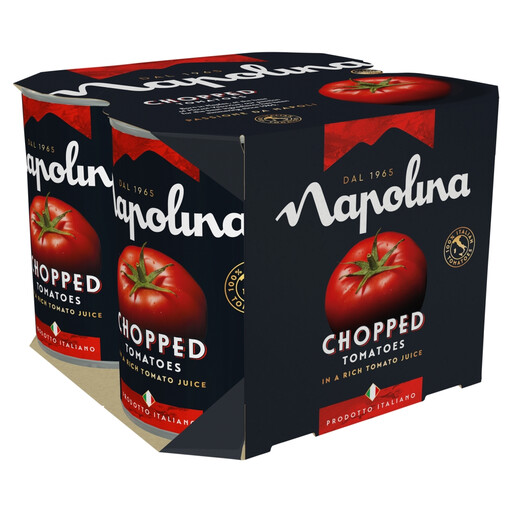 Image unavailable
Consider this four-tin pack when the recipe suits recognisable tomato pieces: Napolina describes its standard chopped tomatoes as chunky and packed in juice. Follow the recipe’s directions for that juice.
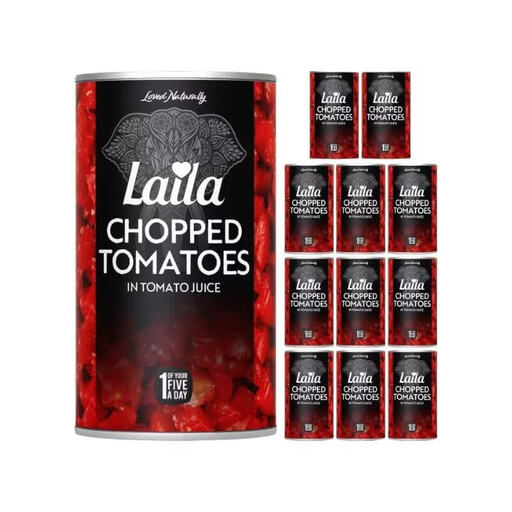 Image unavailable
The twelve 400g tins suit a plan involving several tomato recipes. Check the cut on the product label if a finely textured or notably chunky topping matters to your bake.
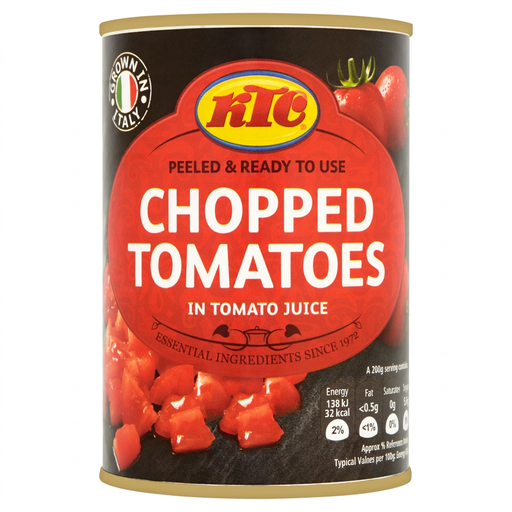 Image unavailable
This single 400g tin is an option for a recipe calling for chopped tomatoes. Check the label for cut size if topping texture matters, and follow its directions for any leftovers.
Use finely chopped tomatoes for a more even topping or sauce; choose standard chopped tomatoes when you want visible pieces. Both can contain juice, so follow the recipe’s instructions for draining, cooking or measuring them.
Do not substitute a tin directly for the recipe’s stated water. Good Food’s Italian bread guidance emphasises correct recipe ratios, while chopped tomatoes contain both tomato pieces and juice. Use a recipe written for tinned tomatoes and follow its method.
Follow the exact product label for transferring, refrigerating and using the remainder. Marks & Spencer specifies a non-metallic container, refrigeration and use within three days for its standard chopped Italian tomatoes; Napolina’s Joybuy listing specifies use within two days for its chopped-tomato multipack. Food Standards Scotland also advises checking the label’s post-opening instructions.
Read the current tin’s ingredients and any dietary declaration, alongside the other ingredients in the bread recipe. Do not assume that every flavoured or prepared tomato product has the same ingredients as plain chopped tomatoes.
No. M&S lists organic tomatoes and organic tomato juice for its organic chopped product, but that ingredient description does not tell you how the topping’s liquid should be handled. Match the cut and the recipe method as well as any sourcing preference.