Breakfast teams with changing guest numbers
Separate 400g cans allow staff to decide how much to open as demand becomes clearer, while keeping unopened cans available for another service.


For a hotel breakfast buffet with variable guest numbers, a four-pack of 400g cans lets staff open tomatoes as needed rather than opening a larger container at once. Choose standard chopped tomatoes if visible pieces suit the dish, or trial finely chopped tomatoes for a more even texture. Whatever the pack size, plan batches around the service process: Food Standards Agency guidance says hot food must be kept at 63°C or above using suitable hot-holding equipment.
Separate 400g cans allow staff to decide how much to open as demand becomes clearer, while keeping unopened cans available for another service.
The choice between standard and finely chopped tomatoes matters when a recipe calls for either visible pieces or a more even finished texture.
Pack choice needs to fit the kitchen’s batch plan, hot-display controls and the ingredient information used for buffet dishes.
Start with the number of cans staff can use in a manageable batch, then check the texture in the actual breakfast recipe.
| Priority | What to check | Your needs |
|---|---|---|
| Batch size | Check the can count and net quantity, not just the case description. A 4 × 400g pack contains four separately opened cans; match the amount prepared to expected covers. | When guest numbers change, I want to open cans in batches rather than commit a large container to one service. |
| Hot service | Check that suitable equipment and the kitchen’s procedures can keep prepared hot food at 63°C or above, as stated in Food Standards Agency catering guidance. Plan separate replenishment batches. | I need a pack format that fits the amount staff can prepare and manage safely on the buffet. |
| Texture | Check whether the recipe needs visible pieces or a finer chop. Napolina describes its chopped tomatoes as chunky; Mutti describes Polpa as especially finely chopped. Trial the exact product after cooking and holding. | For a dish with an even tomato base, I would check the finished texture before ordering a case. |
| Ingredients | Read the current label for the exact can and keep it linked to the buffet recipe. Check again if the product or recipe changes. | Guests need accurate information about allergens in the prepared dish, not an assumption based on plain tomatoes. |
Two cases can contain different numbers of cans, changing how much stock staff need to store and rotate.
Confirm the can count and net quantity for the exact product before setting an order quantity.
Napolina describes its standard chopped tomatoes as chunky, while Mutti describes Polpa as especially finely chopped. Neither description establishes how the hotel’s finished recipe will look.
Cook and hold a trial batch using the intended recipe, then decide whether visible pieces or a finer texture fits.
A larger supply does not change hot-holding requirements. Food Standards Agency guidance says hot food must be kept at 63°C or above using suitable equipment.
Size each preparation batch to the expected service and replenish with a separate batch rather than mixing new food into a tray already on display.
The information guests need concerns the prepared dish actually served. UK allergen guidance requires catering businesses to provide allergen information for non-prepacked food.
Keep the current product label or supplier specification with the recipe information and update it when an ingredient or supplier changes.
These references describe named tomato products and formats; check the exact pack and label when ordering.
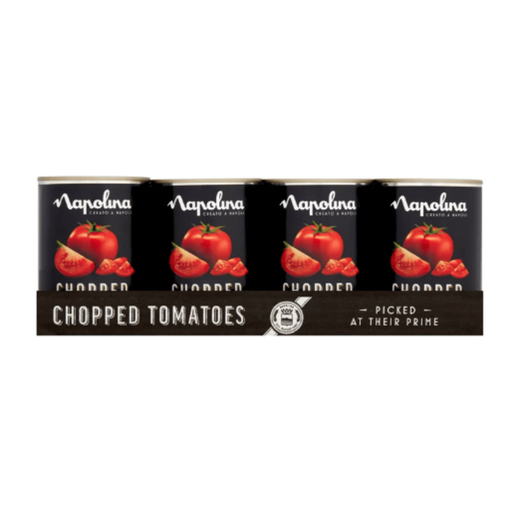
Napolina offers chopped tomatoes in a 4 × 400g format as well as individual cans.
Mutti Polpa is a finely chopped tomato option offered in a 4 × 400g format.
Tesco lists its own-label Italian chopped tomatoes in a 400g can.
M&S lists chopped Italian tomatoes in a 400g can.
These chopped-tomato multipacks cover four-can packs and larger cases for breakfast-buffet batch planning. Check the can quantity and trial the texture against the intended dish.
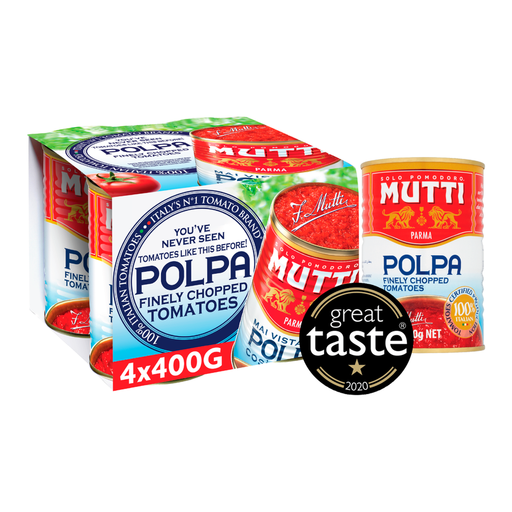 No image available
Four separate 400g cans suit a plan to open tomatoes in batches. Mutti describes this finely chopped product as having smaller pieces; trial it in the finished breakfast dish before choosing it for texture.
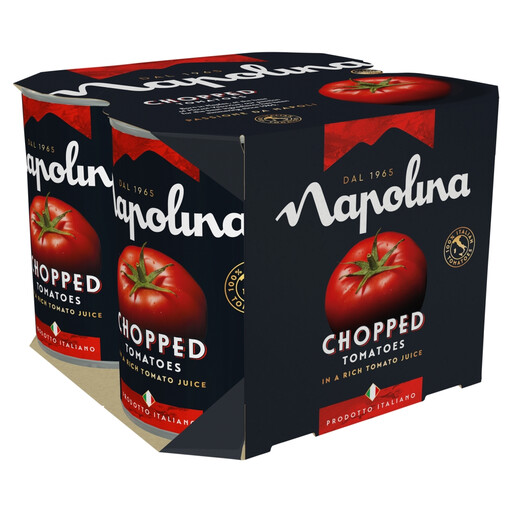 No image available
Four separate 400g cans allow staff to open tomatoes as needed. Napolina describes its chopped tomatoes as chunky, so check whether visible pieces suit the breakfast recipe.
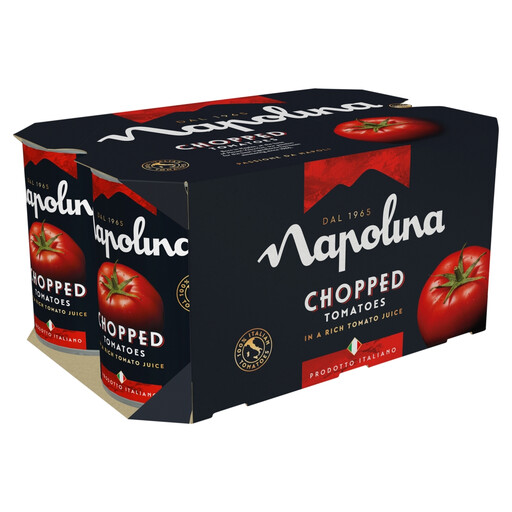 No image available
This pack contains six 400g cans, allowing separate cans to be opened across preparation batches. Match the larger supply to expected covers and storage space; check the current label for instructions after opening.
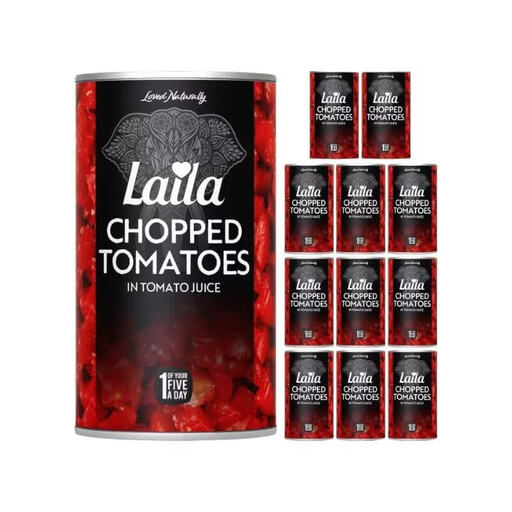 No image available
The listed pack contains twelve separate 400g cans for a kitchen planning repeated batches. Trial the chopped tomatoes in the intended dish to check whether their finished texture fits.
 No image available
The listing title says 24 × 400g, but its description gives a conflicting quantity. Confirm the actual can count and net quantity before using this case for storage or batch planning. The tomatoes are described as chunky, so trial them if the recipe needs a fine finish.
Food Standards Agency catering guidance says hot food must be kept at 63°C or above, using suitable hot-holding equipment for buffet display. Plan preparation and replenishment around the kitchen’s food-safety procedures rather than relying on the serving container alone.
Do not mix a new batch with food already on display. Food Standards Agency buffet guidance warns that this can leave older food out too long; replenish with a separate batch instead.
Yes. UK government allergen guidance requires catering businesses to provide allergen information for non-prepacked food. Use the current ingredients for the exact cans and the complete prepared recipe when providing information about a buffet dish.
Follow the instructions on the exact product label. For its chopped Italian tomatoes, M&S instructs users to move the contents to a non-metallic container, refrigerate them and eat them within three days; that instruction should not be applied automatically to other products.