Organisers making savoury bakes
If you are preparing pizza slices, tomato pinwheels or similar items, the tin is only one part of the recipe. Choose a texture that works for the filling or topping, and plan how each batch will be stored and served.


For savoury school bake-sale recipes, start with plain chopped tomatoes and compare ingredients and declared sugars per 100g, then consider any sugar added elsewhere in the recipe. A tin with no sugar named in its ingredients does not automatically make the finished item a reduced-sugar food. Keep an ingredient record for each batch and plan how the food will be prepared, stored and served.
If you are preparing pizza slices, tomato pinwheels or similar items, the tin is only one part of the recipe. Choose a texture that works for the filling or topping, and plan how each batch will be stored and served.
The sugars figure on a tomato tin includes sugars present in the tomatoes. Read the ingredients to see whether sugar is named, then check sauces, pastry and toppings before describing the finished bake.
Keep the packaging or a complete ingredient record for every batch. Families may need information about pastry, cheese, egg wash or toppings as well as the tomatoes.
Choose the tomato format for the recipe, compare labels on the same per-100g basis, and plan for the finished food rather than judging the bake by its tomato tin alone.
| Priority | What to check | Your needs |
|---|---|---|
| Declared sugars | Compare ‘of which sugars’ per 100g on the exact tins. Check the ingredients separately for sugar named as an ingredient. | I want to know what the tomatoes contribute without confusing their declared sugars with sugar added to the recipe. |
| Whole recipe | Review sauces, pastry, chutney and toppings alongside the tomatoes. Assess any claim about the finished item against the finished recipe, not a single ingredient. | For a savoury bake sale, I need the description of each item to reflect everything that goes into it. |
| Texture | Check whether the tomatoes are chopped or finely chopped. Allow for cooking or draining if the filling or topping needs a thicker consistency. | A pinwheel filling needs to stay in place; a pizza topping may call for a different texture. |
| Batch size | Count the 400g tins needed for the planned recipe. Compare single tins and multipacks by usable quantity, and check the current label on the pack purchased. | If I am making several batches, I want enough tomatoes without opening more tins than I can use. |
| Event handling | Check tin condition and opened-tin storage instructions. Plan cleaning, chilling, cooking and separation of foods during preparation and service. | I need a workable preparation and storage plan for food served to children and families. GOV.UK and the Food Standards Agency say food supplied at community events, including school fetes, must be safe to eat; Food Standards Scotland sets out these food-hygiene practices. |
| Ingredient records | Record every ingredient used in each batch and retain packaging where practical. Check the finished item for ingredients such as wheat pastry, cheese, egg wash or sesame toppings. | If a family asks about ingredients, I need an answer for the complete bake, not just its tomato base. |
A tomato tin can declare sugars per 100g even when sugar is not named in its ingredients. The finished bake may contain other ingredients that change its overall composition.
Compare the tins’ per-100g labels, then review the full recipe. Do not call the finished item ‘reduced sugar’ solely because its tomato tin has no sugar listed as an ingredient.
Descriptions such as ‘Italian’ or ‘naturally sweet’ do not tell you the declared sugars, salt or whether the tomato pieces suit your filling.
Read the exact product’s nutrition and ingredients, and choose its texture for the dish you are making.
Pastry, cheese, egg wash and toppings can introduce ingredients that are absent from the tomato tin. Preparation can also bring foods into contact with one another.
Keep a record for each complete recipe and organise preparation so ingredient information remains accurate for each batch.
Pack formats and product information can change, so a previously viewed listing may not describe the tin used on the day.
Check the quantity needed, inspect the tins and read the physical packaging before preparing food for sale.
These examples show why the exact product label matters: figures for one tin or pack format should not be applied to every product from the same brand.
KTC Chopped Tomatoes 400G is a tomato-and-juice option for a cooked savoury sauce or filling.
Mutti Finely Chopped Tomatoes 400g offers smaller tomato pieces where a finer sauce texture is wanted.
Napolina chopped tomatoes come in pack formats that may suit repeated bake-sale batches.
The checked M&S Chopped Italian Tomatoes contain chopped tomatoes, tomato juice and citric acid.
Tesco's tinned-tomato range includes own-label and branded options for comparing formats.
These chopped-tomato options include a single 400g tin and multipacks for savoury bake-sale preparation. Choose a pack size for your recipe, then check the label of the product you use.
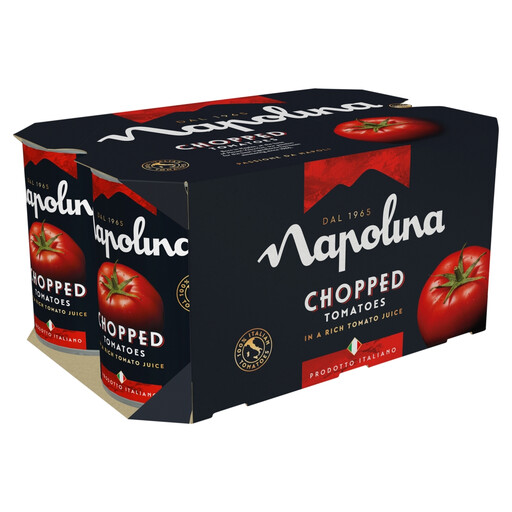 No image available
Six 400g tins give you separate tins to open across repeated batches. Check this six-tin pack's nutrition and ingredients before using its tomatoes in a bake-sale recipe; figures for a different Napolina pack should not be assumed to apply.
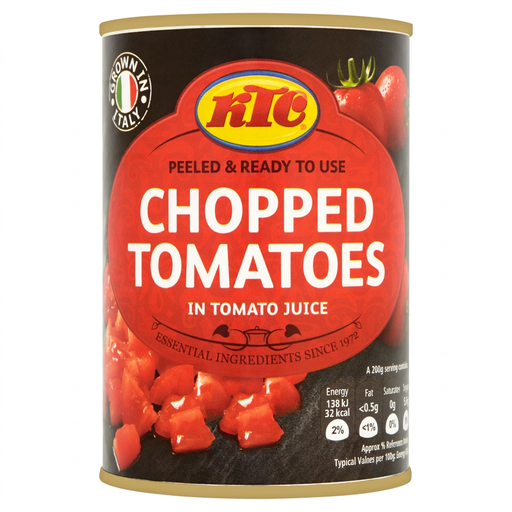 No image available
A single 400g tin suits a recipe that does not call for a multipack. Joybuy lists 2.8g sugars per 100g and ingredients of tomatoes, tomato juice and citric acid for this product. Check its label for opened-tin storage instructions.
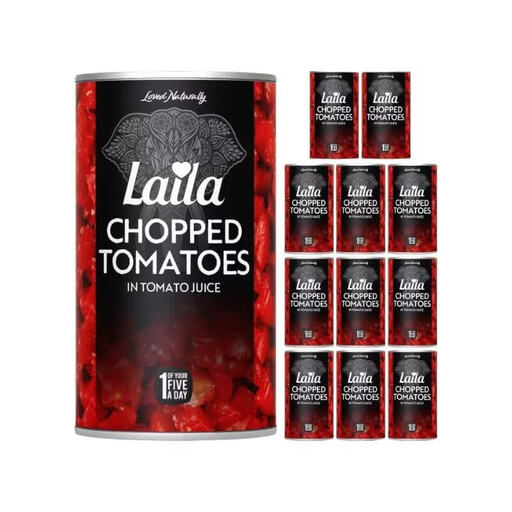 No image available
This 12-pack of 400g tins is an option when the confirmed recipe calls for a larger quantity of chopped tomatoes. Check the pack's ingredients, sugars per 100g and opened-tin instructions before preparing the batches.
No. Tomatoes can declare naturally occurring sugars even when sugar is absent from the ingredients list, and the finished bake contains other ingredients. Do not use a ‘reduced sugar’ description for the finished item based on its tomato tin alone.
Sainsbury's and Joybuy list 2.8g sugars per 100g for KTC Chopped Tomatoes 400G. Sainsbury's lists 3.6g per 100g for Napolina Chopped Tomatoes 4x400g, while M&S lists 3.8g per 100g for its checked Chopped Italian Tomatoes. These figures identify particular products and pack formats, so read the tin used for your recipe.
Keep a complete ingredient record for each bake-sale recipe and retain packaging where practical. Record pastry, cheese, egg wash and toppings as well as the tomatoes, so questions about the finished item can be answered accurately.
Follow that product's opened-tin instructions rather than applying another brand's directions. Check the packaging for the container, refrigeration and use-by guidance before planning to use leftovers in another batch.