Parents planning quick school-week dinners
If you use cupboard tins for pasta sauces, soups or stews, comparing the tomato base gives you one straightforward way to manage the salt added to a recipe.


Compare salt per 100g on the exact tin, then choose a texture that suits the meal. Marks & Spencer lists 0.02g per 100g for its Chopped Italian Tomatoes and 0.03g for its organic version; Napolina lists 0.10g for its standard Chopped Tomatoes, while Mutti lists 0.30g for its finely chopped tomatoes. A lower-salt tomato base is only one part of the choice: consider the salt added to the recipe and whether you can use opened contents within the product’s storage instructions.
If you use cupboard tins for pasta sauces, soups or stews, comparing the tomato base gives you one straightforward way to manage the salt added to a recipe.
Salt per 100g offers a consistent basis for comparing tins before you consider texture and ingredients. In the Food Standards Agency and Ipsos Northern Ireland’s 2024 tracker, 49% of 611 people interviewed in Northern Ireland said they actively used traffic-light labelling when shopping for food; this was about food shopping generally, not tinned tomatoes.
A tomato tin with less salt can reduce one source in a family recipe. Stock, cheese, sauces and salt added during cooking still contribute to the finished meal.
Start with the salt figure on the exact variant, then match the tomato texture and pack size to meals you expect to make.
| Priority | What to check | Your needs |
|---|---|---|
| Salt and ingredients | Compare salt per 100g on the exact tin, including flavoured variants. Check the ingredients for added salt and consider how much tomato the recipe uses. Nidirect’s guidance defines low salt as 0.3g or less per 100g. | I want to compare tomato bases on the same measure, rather than assuming that plain, organic and flavoured tins contain the same amount of salt. |
| Tomato texture | Check whether the tin contains chopped, finely chopped or whole peeled tomatoes. Napolina describes its standard chopped tomatoes as chunky; Mutti’s finely chopped tomatoes provide a finer format. | Visible tomato pieces suit some sauces and stews; for a more uniform base, I would choose a finer texture or plan to break down whole tomatoes. |
| Pack and leftovers | Compare the number and size of tins with your likely use. Follow the chosen product’s instructions for transferring, refrigerating and using opened contents. | A multipack makes sense for my cupboard only if I expect to use the tins, and I need a plan for any tomatoes left after cooking. |
The named products differ: Marks & Spencer lists 0.02g salt per 100g for its standard chopped tomatoes, while Mutti lists 0.30g for its finely chopped tomatoes. A different flavour variant also needs its own label check.
Read salt per 100g on the exact tin you intend to use, rather than choosing by brand or an organic label alone.
Stock cubes, cheese, processed meat, condiments and added salt can all contribute to a school-week sauce or soup.
Choose the tomato base using its label, then account for the other ingredients before adding salt to the finished dish.
Instructions for opened contents differ between products, so a large tin or multipack still needs a practical meal plan.
Check the selected label’s refrigeration and use-within instructions, and transfer leftovers to the container it specifies.
These label figures describe named products, not every tomato tin made by each brand; check the current pack before buying.
Two chopped-tomato options for sauces, soups and stews when a low listed salt figure is the main consideration.
A chopped-tomato option for dishes where visible pieces and a thicker sauce texture are wanted.
A finely chopped tomato format to consider when a more uniform texture matters to the recipe.
These Joybuy options include chopped tomatoes for sauces and soups, whole plum tomatoes for recipes where you can break down the fruit, and a finely chopped option. Compare their listed salt per 100g alongside the format and pack size.
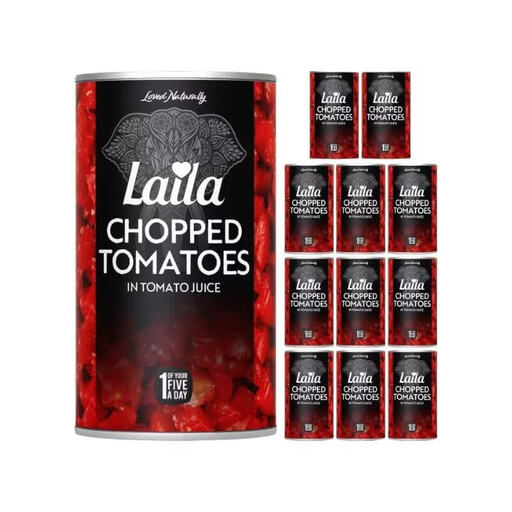 Image unavailable
Chopped tomatoes for sauces, soups, curries or stews. The listing gives 0.03g salt per 100g and names tomatoes, tomato juice and citric acid as ingredients. Consider whether you will use a 12-tin pack; after opening, the listing says to transfer contents to a non-metallic airtight container, refrigerate and use within 2 days. Check the current pack label for its salt figure and instructions.
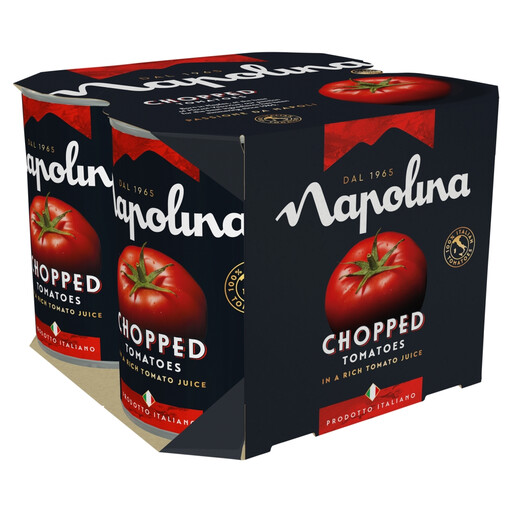 Image unavailable
A chunky chopped format for sauces where tomato pieces are welcome. The listing gives 0.10g salt per 100g for this four-tin pack. It says to transfer opened contents to a covered non-metallic container, refrigerate and use within 2 days. Check the current label and exact variant when comparing salt.
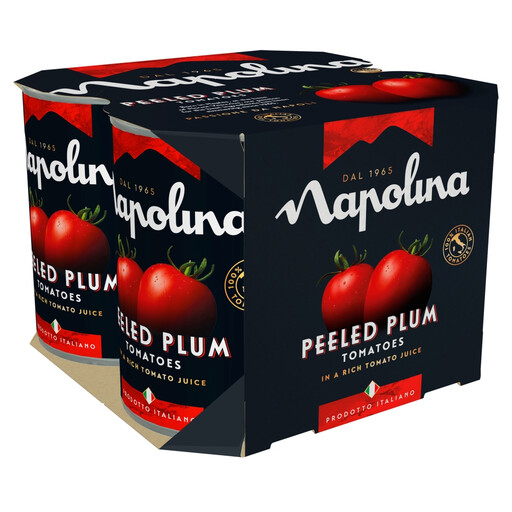 Image unavailable
Whole peeled plum tomatoes for sauces, soups and stews; unlike chopped tomatoes, they may need breaking down for the texture you want. The listing gives 0.13g salt per 100g for this four-tin pack. It says to transfer opened contents to a non-metallic container, refrigerate and use within 2 days. Check the current pack label before choosing.
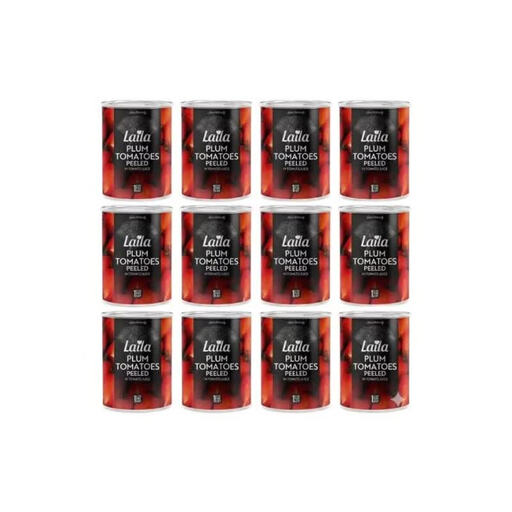 Image unavailable
Whole peeled plum tomatoes for sauces, soups or stews, rather than a ready-chopped base. The listing gives 0.1g salt per 100g and identifies a 12-tin pack, so consider both the texture and how often you will use it. Opened contents should be transferred to a non-metallic airtight container, refrigerated and used within 2 days according to the listing; check the current label.
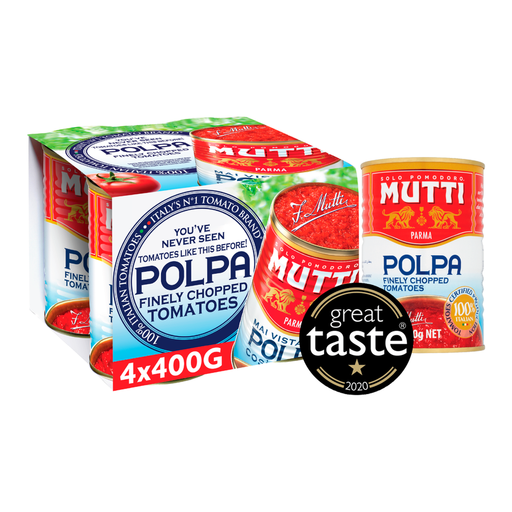 Image unavailable
A finely chopped format for sauces or pizza bases when smaller tomato pieces suit the dish. The listing gives 0.30g salt per 100g for this four-tin pack, exactly at nidirect’s low-salt cutoff, and lists salt as an ingredient. It says to refrigerate opened contents and use within 5 days; check the current pack label for full instructions.
Nidirect’s public guidance defines low salt as 0.3g of salt or less per 100g. Compare that same per-100g measure on each tin, rather than comparing one product’s serving figure with another product’s per-100g figure.
No. It can reduce the salt contributed by the tomato base, but stock, cheese, sauces and salt added during cooking also count towards the finished recipe.
Follow the instructions on that product’s label. The listed Napolina Chopped Tomatoes say to transfer contents to a covered non-metallic container, refrigerate and use within 2 days; the listed Mutti Finely Chopped Tomatoes say to refrigerate opened contents and use within 5 days. Do not assume the same window applies to every tin.
Use the stated salt per 100g to compare the exact tins you are considering. Traffic-light colours can draw attention to label information, but the per-100g figure gives you a like-for-like measure across products.