Home workers making quick tomato-based lunches
If you keep tomatoes in the cupboard for pasta, soup, beans or eggs, compare the cut and the salt declaration before treating two tins as interchangeable.


You do not need a tin labelled ‘reduced salt’ to choose a lower-salt tomato base: compare the salt declaration per 100g on similar products. Marks & Spencer lists 0.02g per 100g for its Chopped Italian Tomatoes, while Mutti lists 0.30g per 100g for Polpa Finely Chopped Tomatoes. Texture matters for a short lunch break, and the salt in any ingredients you add matters too.
If you keep tomatoes in the cupboard for pasta, soup, beans or eggs, compare the cut and the salt declaration before treating two tins as interchangeable.
Check the value per 100g on the exact product, then consider the other ingredients in your lunch. The NHS says salt already in food and salt added during or after cooking both count towards daily intake.
Mutti describes Polpa as finely chopped and suited to short cooking times. Its declared salt value is 0.30g per 100g, so check whether that texture suits your lunch before choosing it in preference to a tin with a lower declared value.
Start with the nutrition panel on comparable tomato products, then choose the texture that works for the meal you plan to make.
| Priority | What to check | Your needs |
|---|---|---|
| Salt declaration | Compare salt per 100g on similar tins, rather than comparing tin sizes. Check how much tomato you intend to use and what else goes into the lunch. | I want to compare the tomato bases on the same measure and account for ingredients added later. The NHS says adults should have no more than 6g of salt a day, including salt already in food and salt added during cooking or at the table. |
| Texture | Check whether the product is chopped, finely chopped or whole plum tomatoes. Mutti describes its finely chopped Polpa as suited to short cooking times; that is the manufacturer’s description, not a measured cooking-time comparison. | For a brief lunch break, I may prefer tomatoes that already have the texture my sauce or soup needs. |
| Label claims | Read a ‘reduced salt’ claim alongside the per-100g declaration and ingredients. Under UK-applicable nutrition-claims rules published by legislation.gov.uk, ‘reduced’ describes a reduction against a comparable product, not the lowest value across all tins. | Seeing ‘reduced salt’ on the front of a tin would prompt me to check its nutrition panel before choosing between similar products. |
A reduction is relative to a comparable product; it does not rank a tin against every plain tomato option. UK-applicable nutrition-claims rules published by legislation.gov.uk set the basis for the claim.
Compare the declared salt per 100g on similar products, whether or not they carry that wording.
Product declarations differ: Marks & Spencer lists 0.02g salt per 100g for its Chopped Italian Tomatoes, while Mutti lists 0.30g per 100g for Polpa Finely Chopped Tomatoes.
Check the exact product’s nutrition panel and ingredients, then decide whether its texture suits the meal.
The NHS notes that daily salt intake includes salt already in foods and salt added during or after cooking. Stock cubes, cheese, sauces and other additions can change the salt content of a tomato-based lunch.
Consider the ingredients going into the whole dish rather than judging it by the tomato tin alone.
A product’s ingredients or nutrition declaration can change, so a description you have seen before may not match the tin you are about to use.
Read the current pack for its salt value, ingredients and storage instructions.
A reference point for comparing plain chopped tomatoes by their declared salt value.
Another plain chopped-tomato example to compare on a per-100g basis.
A branded chopped-tomato option to compare with the same measure on the label.
Polpa is worth considering when a finely chopped texture is important to the recipe.
A retailer reference for considering different tomato formats.
These chopped and plum tomato tins offer different pack formats for tomato-based lunches. Compare their listed salt declarations and check the current pack before choosing.
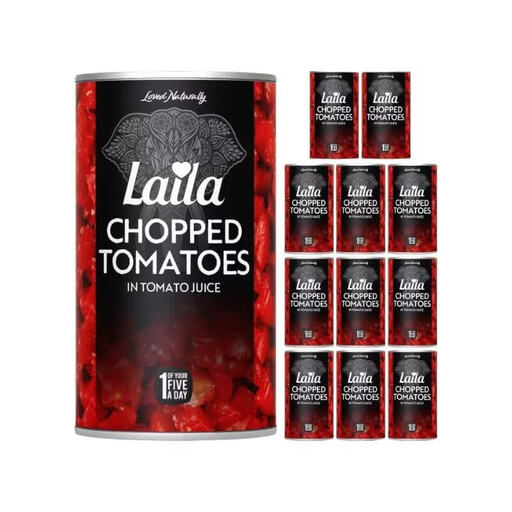 Image unavailable
A chopped tomato base for lunches such as sauces or soups. The listing states 0.03g salt per 100g and names tomatoes, tomato juice and citric acid as ingredients. Check the current pack’s nutrition panel and ingredients.
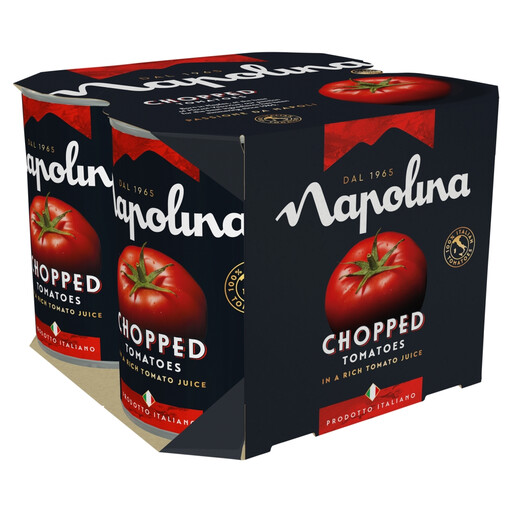 Image unavailable
A four-tin pack of chopped tomatoes for tomato-based lunches. The listing states 0.10g salt per 100g and names tomatoes, tomato juice and citric acid as ingredients. Check the current pack before comparing its declaration with another tin.
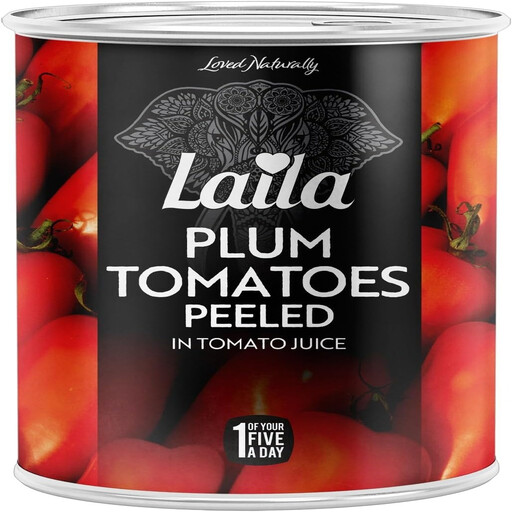 Image unavailable
A whole-plum alternative if you do not need ready-chopped tomatoes. The listing states less than 0.1g salt per 100g, rather than an exact value, and names plum tomatoes, tomato juice and citric acid as ingredients. Check the current pack for its nutrition declaration.
No. Compare the declared salt per 100g on similar tomato products: a tin without the claim may list less salt than one carrying it. Under UK-applicable nutrition-claims rules published by legislation.gov.uk, ‘reduced’ describes a comparison with a similar product, not a comparison with every tin.
Yes. NHS guidance says adults should have no more than 6g of salt a day, including salt already in food and salt added during cooking or at the table. Consider the whole lunch, not only the tomatoes.
Follow the storage and use instructions on the exact pack. Do not assume that instructions for another brand or tomato product apply to yours.