Students preparing lunches before lectures
Tinned tomatoes can form the base of pasta, soup, chilli or bean-based lunches. Check how much a recipe uses before opening a 400g tin, particularly if you are cooking one portion at a time.


For a lower-salt lecture lunch, compare similar chopped-tomato tins by salt per 100g: product pages from M&S, Sainsbury's and Tesco list 0.02g, 0.07g and 0.10g respectively for their 400g examples. The NHS describes 0.3g salt or less per 100g of food as low salt, but the tin is only part of the lunch: check other ingredients and plan how you will use or store any tomatoes left over.
Tinned tomatoes can form the base of pasta, soup, chilli or bean-based lunches. Check how much a recipe uses before opening a 400g tin, particularly if you are cooking one portion at a time.
Use the declared salt per 100g to compare similar tins, then consider the stock cubes, cheese, cured meat or sauces going into the finished lunch.
If a recipe needs only some of the tomatoes, check the pack's instructions for transferring, refrigerating and using the remainder.
Start with salt per 100g on a comparable tomato format, then choose a tin size and recipe that work for your lecture-week meals.
| Priority | What to check | Your needs |
|---|---|---|
| Salt comparison | Compare salt per 100g on similar chopped-tomato tins, not figures for different serving sizes. The NHS defines 0.3g or less per 100g of food as low salt. | I want to compare tins on the same basis before choosing a tomato base for lunch. |
| Whole recipe | Check the ingredients list on the tin and the labels of any stock, sauce or other prepared ingredients. Account for seasoning added during cooking or packing. | A lower-salt tin matters to me, but I also want to know what goes into the finished meal. |
| Amount and storage | Check how much tomato the recipe needs and the tin's instructions for opened contents. The researched M&S, Sainsbury's and Napolina products have different stated use-within periods. | If I open a 400g tin for one lunch, I need a plan for the rest. |
| Tomato format | Check whether the tin contains chopped or whole plum tomatoes, then read its own salt figure rather than transferring a value from another product or pack. | For a quick sauce, I need a format that suits my recipe without assuming all tomato tins have the same nutrition. |
Similar-sounding tomato products can have different declared salt values; Mutti's Polpa page, for example, lists added salt. Its listed formulation should not be assumed to be the current UK retail pack.
Read the ingredients and salt per 100g on the exact tin you intend to use, and compare like-for-like formats where possible.
A serving figure changes with the amount defined as a serving, so it cannot be compared directly with another product's per-100g figure.
Compare salt per 100g first. Then use the amount of tomato your recipe calls for when considering the lunch as a whole.
Using only part of a tin leaves opened tomatoes that need to be stored and used according to that product's instructions.
Plan another portion or a suitable cooked dish, transfer the remaining tomatoes as directed and follow the pack's refrigerated use-within period.
Unplanned leftovers may go to waste if you cannot use them within that period.
An online product page does not establish that a tin will be available when you shop, and product information can change.
Check current stock and the nutrition panel on the pack before planning several lunches around one product.
These figures refer to specific tomato products, not every tin sold under the same brand or retailer name.
Its 400g Chopped Italian Tomatoes are one UK own-brand reference for comparing chopped tins.
Its Chopped Tomatoes Can 400g is listed as a two-serving own-brand option.
Napolina Chopped Tomatoes 400g is a branded chopped-tomato reference for sauces and other cooked lunches.
Mutti describes its finely chopped Polpa as a tomato product for sauces and longer cooking.
These options cover chopped tomatoes for sauces and whole plum tomatoes for recipes where you can use that format. They include single tins and multipacks, so check both the current salt label and the quantity that suits your lunch plans.
 No image available
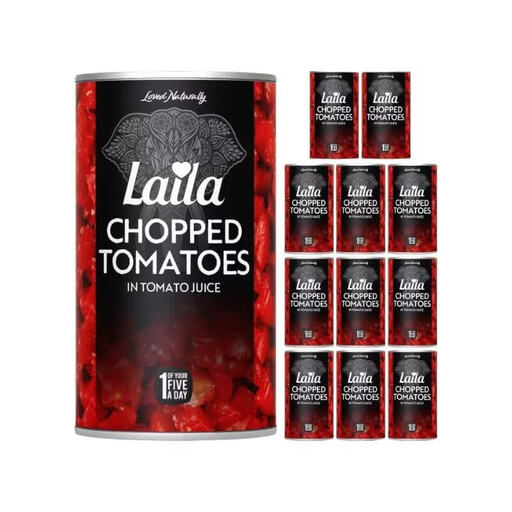
The chopped format suits a recipe that calls for chopped tomatoes across several prepared lunches. This is a 12-tin pack, with 400g in each tin; check that you have room for the quantity and compare the current salt per 100g on the pack.
 No image available
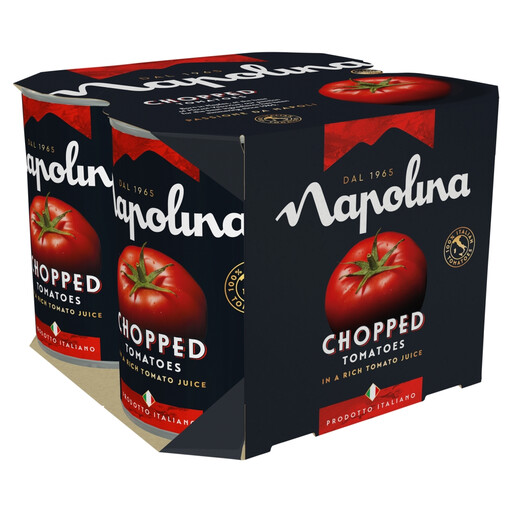
Four chopped-tomato tins give you separate 400g cans for tomato-based lunches on different days. Compare the salt panel on this multipack's tins with other chopped tomatoes, and plan what to do with any contents left after opening a can.
 No image available
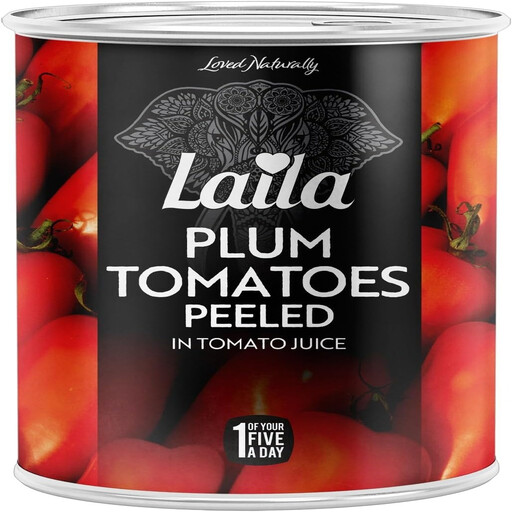
This single 400g tin is an option for a lunch recipe that can use whole plum tomatoes. If you need chopped pieces, account for preparing them yourself; check this tin's own salt per 100g rather than using a chopped-tomato figure.
 No image available
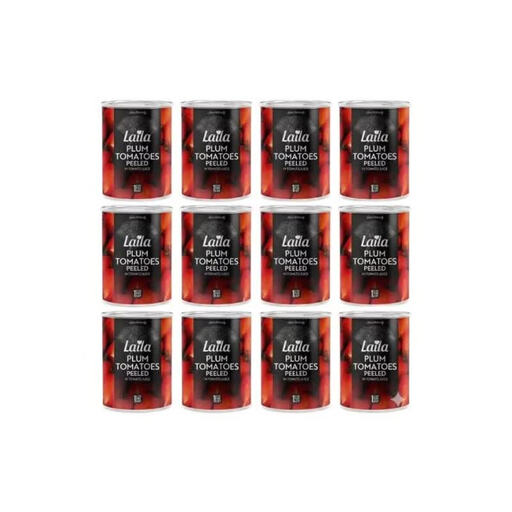
The whole plum format is worth considering if your batch-cooked recipe can use it. The pack contains twelve 400g tins, so weigh up cupboard space and likely use before choosing it; read the current salt panel on this product.
 No image available
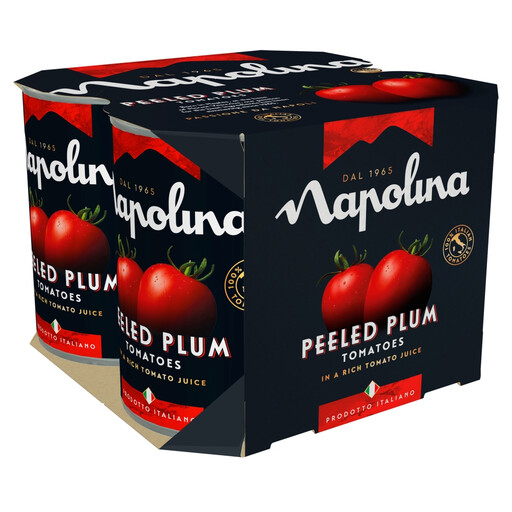
These whole peeled plum tomatoes fit a cooked lunch recipe that does not require ready-chopped pieces. There are four 400g tins in the pack; check the salt per 100g on this variant and whether the format suits your preparation time.
For food, the NHS describes 0.3g salt or less per 100g as low salt. Compare the per-100g figures on similar tins rather than comparing a whole-can figure with a serving figure.
No: the tomato tin is only one ingredient. The NHS notes that salt can already be present in food or be added during and after cooking, so check any stock cubes, ready-made sauces, cheese, cured meat, condiments and seasoning used in the meal.
Follow the instructions on the individual pack and transfer the contents out of the tin as directed. The researched M&S product says to refrigerate them in a non-metallic container and use them within three days; the researched Sainsbury's and Napolina products state two days.
Look for salt per 100g in the nutrition information on the back or side of the pack. The NHS explains that pre-packed food nutrition information uses a per-100g or per-100ml basis; use the numeric panel when comparing similar tomato tins, whether or not a front-of-pack traffic-light label is shown.