Weekly meal planners watching salt
If you use tinned tomatoes in several meals, comparing salt per 100g gives you a consistent way to choose between similar tins. Consider the other ingredients and any salt you add while cooking, too.


When salt is your main consideration, compare similar tins by the declared salt per 100g rather than choosing by flavour or texture descriptions. Tesco Italian Chopped Tomatoes lists 0.09g per 100g and Napolina Chopped Tomatoes lists 0.10g, while Mutti Polpa lists 0.30g; the finer texture of Mutti Polpa may still suit a particular recipe. Check the current label and choose a pack size you will use.
If you use tinned tomatoes in several meals, comparing salt per 100g gives you a consistent way to choose between similar tins. Consider the other ingredients and any salt you add while cooking, too.
A multipack may fit repeated sauces, curries, soups or stews if you have room to store it and expect to use the tins. Napolina’s checked 4 x 400g chopped-tomato pack declares 0.10g salt per 100g.
Mutti Polpa offers a finely chopped tomato base for recipes where that texture matters. Mutti declares 0.30g salt per 100g and lists salt as an ingredient, so compare its label with plainer chopped options if salt is the priority.
Start with the salt figure for the format your recipe needs, then decide how many tins you will use.
| Priority | What to check | Your needs |
|---|---|---|
| Reading the label | Compare salt per 100g on similar tins. Use front-of-pack traffic-light labelling as a prompt to read the nutrition panel, not as a substitute for it. | I want to compare the figures rather than rely on the front of the tin. In the Food Standards Agency and Ipsos Northern Ireland’s 2024 survey, 49% of 611 people interviewed in Northern Ireland between 16 September and 23 November said they actively use traffic-light labelling when shopping for food. That measures label use, not interest in lower-salt tomatoes. |
| Salt in the dish | Tesco Groceries lists 0.09g salt per 100g for its Italian Chopped Tomatoes; Napolina lists 0.10g for its chopped tomatoes, and Mutti lists 0.30g for Polpa. Check the current tin and the salt contributed by other ingredients. | If I cook with tomatoes often, I want a lower declared salt figure without overlooking stock, cheese, sauces or seasoning elsewhere in the meal. |
| Tomato texture | Check whether the recipe calls for chopped pieces, finely chopped pulp or whole peeled tomatoes. Mutti’s Polpa contains salt as an ingredient and declares 0.30g salt per 100g. | For a particular sauce, the texture may matter more to me than choosing the lowest salt figure among the checked chopped tins. |
| Pack quantity | Count the tins and check their size: the checked Napolina chopped-tomato multipack contains 4 x 400g. Consider storage space and how often you cook with tomatoes. | A multipack suits my shop if I will use the tins across several meals; otherwise, a single tin may better match my plans. |
The checked Napolina chopped tomatoes declare 0.10g salt per 100g, while Mutti Polpa declares 0.30g. A description such as finely chopped does not tell you the salt figure.
Compare salt per 100g first when that is your priority, then choose the texture your recipe needs.
A reduced-salt claim describes a comparison; it does not tell you that the tin contains no salt.
Read the declared salt per 100g and consider how much tomato and other ingredients you will use in the dish.
Four tins are useful for repeated cooking, but the pack still needs cupboard space and may exceed what you need for one week.
Match the quantity to the meals you expect to make and check the dates on the tins.
Ingredients and nutrition declarations can change, so a previously checked figure may not describe the tin in your basket.
Read the current pack’s salt-per-100g declaration when making it a regular weekly purchase.
These references cover particular products or tomato ranges; they do not establish a salt figure for every tin a brand or retailer sells.
Its chopped tomatoes are offered as single tins and multipacks.
Polpa is a finely chopped tomato product for recipes that call for a finer texture.
Its Italian Chopped Tomatoes come in a 400g tin.
Its tinned-tomato range includes single tins and multipacks, including Napolina and Mutti products.
Its tinned-tomato range includes Napolina single tins and multipacks.
Its Foodhall range includes chopped and plum tomatoes, cherry-tomato varieties and passata.
These chopped and peeled plum tomato packs offer different quantities for repeat cooking. For a lower-salt choice, compare the current salt-per-100g labels of the formats that suit your recipes.
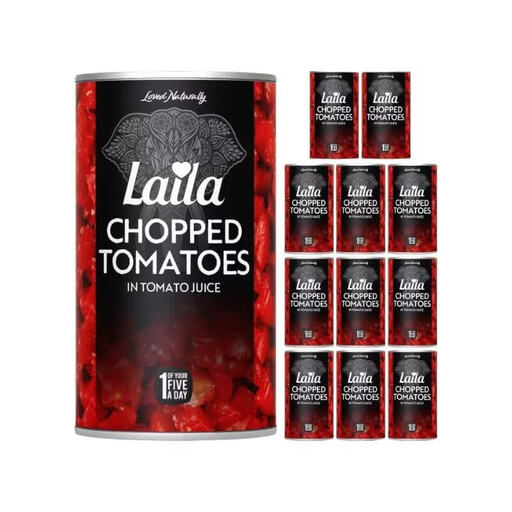 No image available
A 12-tin chopped-tomato pack for regular cooking if you have room to store it. Compare the current pack’s salt per 100g before choosing it for a lower-salt shop.
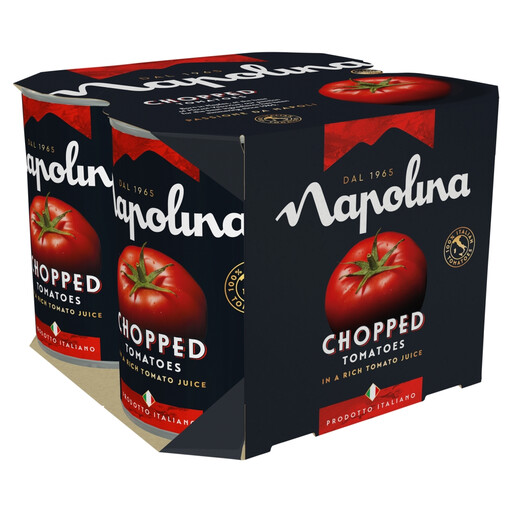 No image available
A four-tin chopped-tomato pack for repeated meals. The checked Napolina product information declares 0.10g salt per 100g; confirm the current pack label before buying.
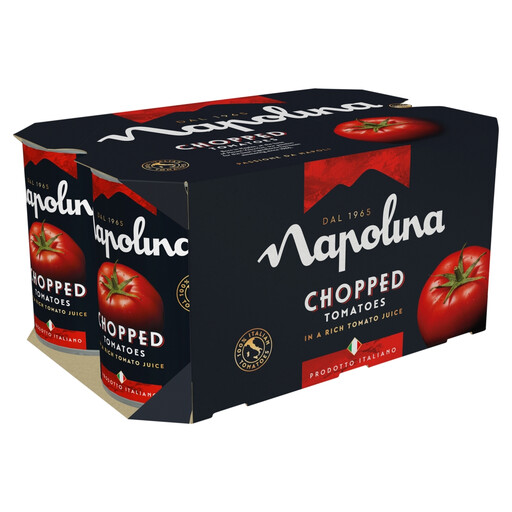 No image available
Six chopped-tomato tins may suit a household planning several tomato-based meals. Check this pack’s salt per 100g rather than assuming it matches another pack size.
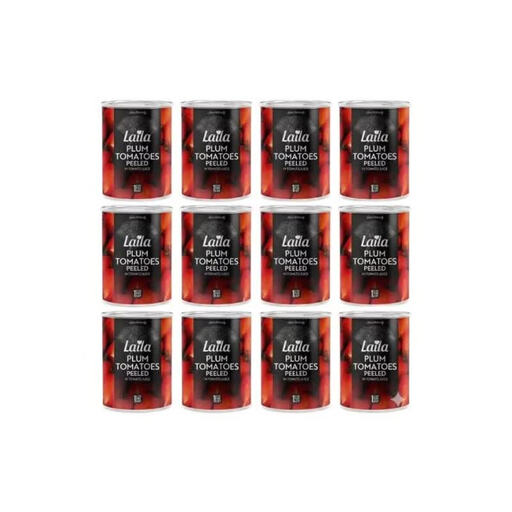 No image available
A 12-tin pack for recipes that call for plum rather than chopped tomatoes. Allow for the quantity in your cupboard plans and read this product’s current salt panel.
 No image available
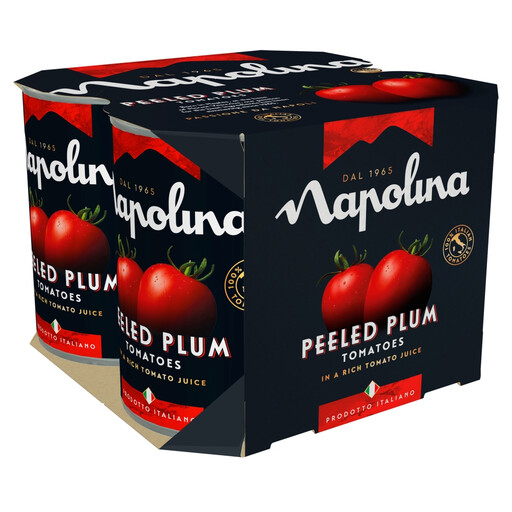
A four-tin peeled plum option for meals where that format suits the recipe. Check its own salt-per-100g declaration before comparing it with chopped tomatoes.
No. “Reduced salt” is comparative wording, not a statement that the tin contains no salt. Read the declared salt per 100g to see the amount in the product you are buying.
Compare salt per 100g on tins with a format that suits your recipe. Tesco Groceries lists 0.09g for its Italian Chopped Tomatoes, Napolina lists 0.10g for its chopped tomatoes, and Mutti lists 0.30g for Polpa; confirm the current label before making a repeat purchase.
Taste the dish before deciding whether to add any. Salt from stock, cheese, cured meat or sauces also contributes to the finished meal; the NHS advises considering salt already in food as well as salt added during cooking.
Follow the storage and time-after-opening instructions on that product’s pack. If it directs you to transfer the contents to another container, follow that instruction rather than keeping them in the opened tin.