Roast cooks watching the salt in their sauce
If the meal also includes gravy, stock or cured meat, compare the tomato tin's salt declaration without treating it as the only source of salt in the meal.


For a Sunday roast sauce, compare salt per 100g on the current tin, then choose a texture that suits the dish. The UK product pages for M&S, Sainsbury's, Tesco and Napolina list 0.02g, 0.07g, 0.09g and 0.10g salt per 100g respectively for the chopped tomatoes discussed here; Napolina describes a chunkier texture, while finely chopped Mutti Polpa offers a different texture but needs its UK tin checked before relying on the manufacturer's salt figure. Gravy, stock and added seasoning also affect the salt in the finished roast.
If the meal also includes gravy, stock or cured meat, compare the tomato tin's salt declaration without treating it as the only source of salt in the meal.
Visible tomato pieces may suit a rustic accompaniment. A finely chopped tomato product is another option when a more even texture matters, but its salt declaration still needs a separate check.
Compare the same per-100g salt measure across the exact products you are considering, rather than assuming that an Italian-style description tells you their salt content.
Start with salt per 100g, decide how much tomato the recipe needs, then check whether the tin's texture suits the sauce you plan to make.
| Priority | What to check | Your needs |
|---|---|---|
| Salt | Compare the current label per 100g. M&S lists 0.02g, Sainsbury's 0.07g, Tesco 0.09g and Napolina 0.10g salt per 100g for their respective chopped-tomato products. Use the amount going into your sauce when working out its contribution. | I want the tomato component to contribute less salt, without assuming the rest of the roast has the same salt content. |
| Texture | Check whether the tomatoes are chopped or finely chopped. Napolina describes its chopped tomatoes as chunky and suited to thick sauces; Mutti describes Polpa as finely chopped pulp suited to long cooking. Check the UK tin's salt value if choosing Polpa. | For a rustic sauce, I'd like visible tomato pieces. For a more even texture, I'd consider a finer chop as long as its salt declaration fits the meal. |
| Ingredients | Read the ingredient list on the exact tin. The M&S, Sainsbury's and Tesco chopped-tomato examples list tomatoes, tomato juice or concentrated tomato juice, and citric acid; check separately for any seasoning in another variant. | I'd rather decide how to season the tomato sauce myself than assume two similarly named tins have the same ingredients. |
| Pack size | Check the number of 400g tins and how much the recipe uses. If a listing gives salt per serving, check the serving weight too: the Sainsbury's and Tesco examples use a 200g half-can serving. | A multipack makes sense for me only if I have room for the remaining tins and expect to use them. |
The named chopped-tomato products have different listed salt values even though they can all be considered for a tomato sauce.
Compare salt per 100g on the exact variant in your basket, then account for the amount you will use.
Gravy, stock, sauces and added seasoning can contribute salt alongside the tomato base. The NHS notes that its adult daily salt maximum includes salt already in food as well as salt added during and after cooking.
Check those ingredients too, and taste the sauce before adding salt.
A finer texture does not establish a lower salt value. Mutti's manufacturer page lists added salt and 0.30g salt per 100g for Polpa, though that page is not a UK retail label.
Choose the texture for the recipe, then read the current UK tin's salt declaration before deciding.
Retailers warn that product information can change, so a page used to shortlist a tin may not describe the pack in hand.
Read the physical tin's salt value, ingredients and storage instructions before cooking.
These figures and texture descriptions refer to the named products, not every tin made by each brand.
Chopped Italian Tomatoes 400g are worth comparing when the tomato tin's listed salt value is the main consideration.
Italian Chopped Tomatoes offer another own-label figure to compare on a per-100g basis.
Italian Chopped Tomatoes provide a standard chopped option for comparison with other named tins.
Chopped Tomatoes are an option when a chunkier tomato sauce is the aim.
Polpa offers a finely chopped texture for a sauce cooked for longer.
These options include chopped tomatoes for a roast-side sauce and one whole plum-tomato alternative. Compare the current tin's salt declaration and choose a pack quantity you expect to use.
 No image available
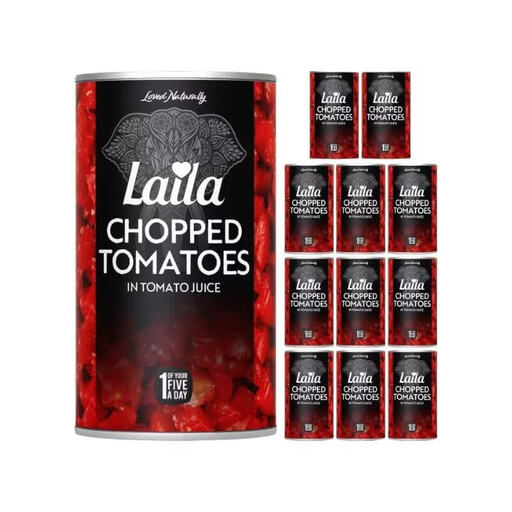
A chopped-tomato base to consider for a roast-side sauce. The pack contains 12 × 400g tins; check the salt value on the current tin and whether you will use the full quantity.
 No image available
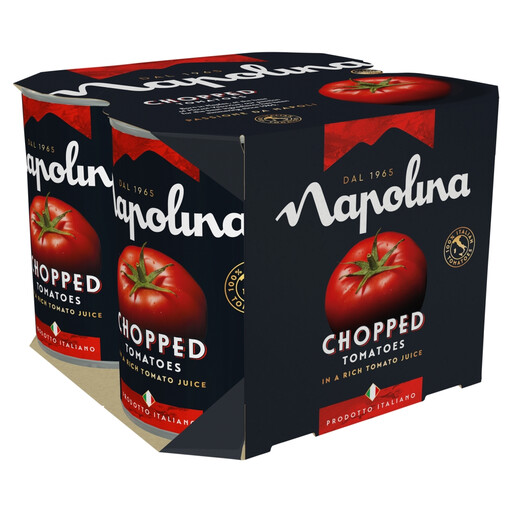
Napolina describes its chopped tomatoes as chunky and suited to thick sauces. This pack contains 4 × 400g tins; compare the current tin's salt value with other textures you are considering.
 No image available
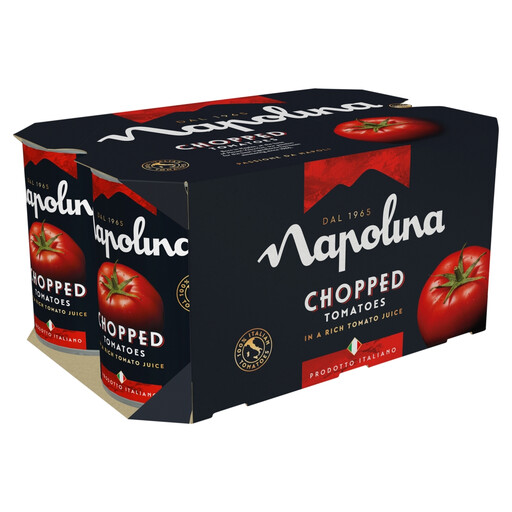
For a sauce where you want Napolina's stated chunky texture, this variant contains 6 × 400g tins. Check the current salt declaration and whether the pack quantity suits your plans.
 No image available
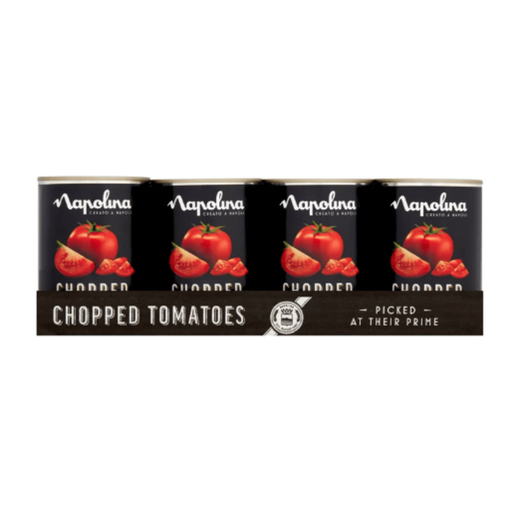
These chopped tomatoes offer Napolina's stated chunky texture in a 24 × 400g pack. Consider storage and future use as well as the salt value on the current tins.
 No image available
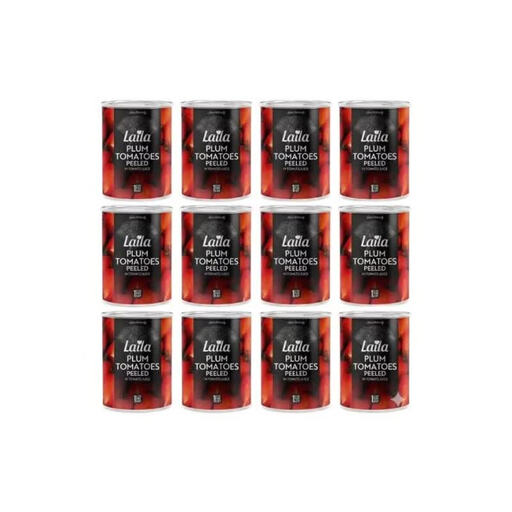
These are whole plum tomatoes rather than chopped tomatoes, so allow for breaking them down if your sauce needs smaller pieces. The pack contains 12 × 400g tins; check the current salt declaration.
No. Compare the tomato tin's salt per 100g and the amount used, but check gravy, stock, sauces and added seasoning too. The NHS notes that salt already in food and salt added while cooking both count towards the adult daily maximum.
Among the named UK product pages, M&S Chopped Italian Tomatoes lists 0.02g salt per 100g, compared with 0.07g for Sainsbury's Italian Chopped Tomatoes, 0.09g for Tesco Italian Chopped Tomatoes and 0.10g for Napolina Chopped Tomatoes. These are product-specific listed figures, so check the tin you buy.
Choose chopped tomatoes if you want visible pieces; Napolina describes its version as chunky and suited to thick sauces. Consider finely chopped tomatoes for a more even texture or longer cooking, but check salt separately: Mutti's Polpa manufacturer page lists added salt, and its figure should be checked against the UK tin.
Check salt per 100g, ingredients and the amount of tomato the recipe calls for. Read the current pack's storage instructions as well, particularly if you will use only part of a tin.